Saturday Oct 10, 2026
Saturday Oct 10, 2026
Saturday, 10 October 2026 00:00 - - {{hitsCtrl.values.hits}}
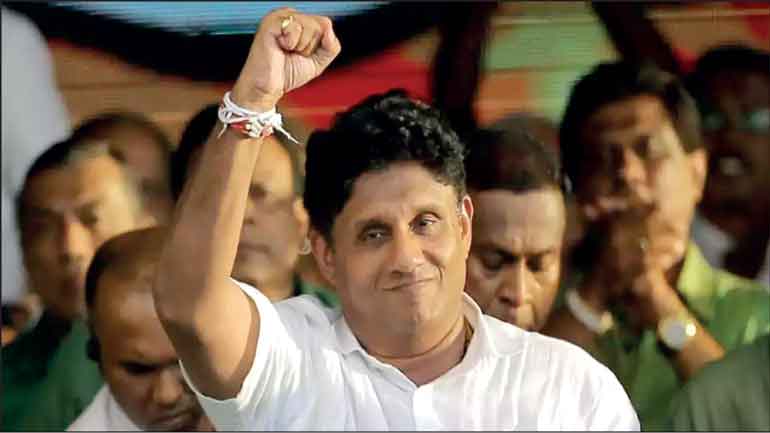
If Sajith Premadasa is considered unsuitable to lead the Opposition, why is his participation and the strength of the SJB regarded as indispensable to creating a credible united Opposition?
 Dr Dayan Jayatilleka’s Daily FT column, “Opposition›s strategic dilemmas, Easter massacre matrix,” published on 1 October 2026, raises an important question about the future architecture of Sri Lanka’s Opposition.
Dr Jayatilleka argues that the Samagi Jana Balawegaya (SJB), despite being the largest Opposition party, cannot afford to “go it alone”. He contends that a “One-Party State” project cannot be defeated by a “One-Party Opposition”, that Sajith Premadasa as Leader of the Opposition must represent the interests of the broader Opposition, and that the SJB should form alliances, blocs and partnerships with diverse parties on matters of common concern.
There is considerable merit in cooperation among opposition parties when constitutional safeguards, democratic institutions, civil liberties and matters of national importance are at stake.
But there is another side to this argument.
Must parliamentary cooperation necessarily evolve into political coalition? And is reconstructing the traditional grand-alliance model necessarily the right response to the political transformation Sri Lanka experienced through Aragalaya and the elections of 2024?
This is where I respectfully differ from Dr Jayatilleka’s strategic prescription.
The Opposition is not facing a national election tomorrow
Sri Lanka is not presently in an imminent presidential or parliamentary election campaign.
This matters.
An electoral coalition may become necessary when an election approaches and the political landscape, public opinion, candidates and electoral arithmetic are clearer. But several years before such a contest, the more important responsibility of a political party may be to strengthen itself.
For Sajith Premadasa, therefore, the immediate question need not be how many opposition parties can be assembled around one table.
How can the SJB use this period to become a stronger political institution, develop a broader national constituency, establish a distinctive political identity and demonstrate that it is capable of forming a credible alternative government?
There is a profound difference between building an Opposition and building an alternative government.
The latter requires far more than assembling politicians who happen to oppose the incumbent administration.
It requires organisation, policy, discipline, competent people, internal renewal, public credibility and a recognisable governing philosophy.
The “20% bunker” requires qualification
Dr Jayatilleka argues that the SJB has failed twice to escape what he describes as the approximately 20% electoral bunker inherited from the UNP.
The electoral evidence is more nuanced.
At its first parliamentary election in 2020, the SJB secured 2,771,980 votes, or 23.90%, and 54 seats.
At the 2024 presidential election, Sajith Premadasa received 4,363,035 first-preference votes, representing 32.76% of the national vote. Ranil Wickremesinghe received 17.27%, while Namal Rajapaksa received 2.57%.
Two months later, the SJB performed substantially less strongly at the parliamentary election, receiving 1,968,716 votes, or 17.66%, and 40 seats. The NPP won 159 seats, while the SLPP won three.
These figures certainly expose a major challenge for the SJB. But that challenge is not adequately described simply as permanent imprisonment within a 20% bunker.
Sajith Premadasa has already demonstrated that he can attract well over four million votes in a national presidential contest.
The more useful question is why that sizeable presidential constituency did not translate into equivalent parliamentary strength, and how that gap can be addressed.
That requires political diagnosis before coalition arithmetic.
The local government election points to recovery
There is another electoral result that deserves greater weight in assessing the SJB’s present trajectory: the May 2025 Local Government Election.
The SJB secured 2,258,480 votes, representing 21.69% of the national vote, and won 1,767 local council seats, finishing as the second-largest political force nationally. The NPP remained comfortably ahead with 43.26%, while the SLPP received 9.17% and the UNP 4.69%.
Viewed against the November 2024 parliamentary election, the movement is noteworthy. The SJB had received 1,968,716 votes, or 17.66%, at that election. By the local government election six months later, its vote had increased by almost 290,000, while its national vote share had risen by 4.03 percentage points to 21.69%.
Local government and parliamentary elections are, of course, different contests. Turnout, candidates, local issues and voting behaviour differ, and comparisons must therefore be made cautiously. The May 2025 result cannot simply be projected onto a future parliamentary or presidential election.
Nevertheless, it is difficult to reconcile these figures with a narrative of uninterrupted SJB stagnation.
The more defensible conclusion is that, after the severe electoral setback of November 2024, the SJB demonstrated a measurable degree of recovery and retained its position as the principal national Opposition force.
This matters strategically.
If a party is showing signs of rebuilding its electoral base between national elections, the logical response need not automatically be to dissolve its political identity into a broad coalition. There is an equally legitimate argument for allowing that party to continue strengthening its grassroots organisation, improve its policy offering, recruit credible candidates and test how far its independent support can expand.
Indeed, the local government result reinforces the case for using the present non-election period for consolidation rather than premature coalition-building.
It also places the relationship between the SJB and UNP in an interesting perspective. The UNP separately obtained 488,406 votes, or 4.69%, and 381 local council seats. These votes cannot simply be added to the SJB tally and treated as automatically transferable. Voters do not belong permanently to parties. Nevertheless, the fact that the two historically connected political formations together continued to command a significant constituency strengthens the rationale for exploring a carefully structured common program before attempting a much wider and potentially contradictory Opposition coalition.
The strategic question therefore becomes even more pertinent:
If the SJB is already demonstrating measurable electoral recovery, why should Sajith Premadasa prematurely dilute its political identity by entering an all-encompassing Opposition arrangement, rather than first testing how far the SJB itself, potentially in a renewed common platform with the UNP, can grow?
The local government election does not prove that the SJB has found the complete answer to its electoral challenge.
But it does suggest that the party’s trajectory after November 2024 should be understood as one of partial recovery rather than continuing decline.
That distinction is important when determining what Sajith Premadasa should do next.
Aragalaya changed the political landscape
Perhaps the greatest danger in analysing Sri Lanka’s future Opposition is to do so through the strategic assumptions of an earlier political era.
Aragalaya changed the environment.
Whatever disagreements may exist about the movement itself, the upheaval of 2022 reflected profound public dissatisfaction with economic mismanagement, corruption, patronage, dynastic politics and the established political order.
Then came the political earthquake of 2024.
A political movement that had only three members in the previous Parliament went on to win 6.86 million votes, 61.56% of the parliamentary vote and 159 seats.
Whatever one thinks of the NPP today, one lesson from that transformation is impossible to ignore: political identity and public credibility can become more powerful than traditional party arithmetic.
The NPP did not reach 159 seats by absorbing every opposition politician available. It built a distinctive political proposition and persuaded millions of voters to move towards it.
That does not mean the SJB should imitate the NPP ideologically or organisationally.
But it does mean that the old equation of simply adding party vote banks together deserves reconsideration.
SJB votes + UNP votes + SLPP votes + smaller opposition-party votes do not necessarily equal the arithmetic sum of their previous performances.
Voters are not parcels belonging permanently to political parties.
They migrate. They respond to candidates, credibility, political circumstances and perceptions of integrity.
Coalitions can attract people. They can also drive people away.
That is one of the clearest lessons of post-Aragalaya Sri Lanka.
Cooperation is not coalition
Dr Jayatilleka is entirely justified in arguing that the SJB cannot behave as though it possesses a monopoly over Opposition politics.
But acknowledging political pluralism does not require an electoral or governing coalition with every other opposition formation.
There are several forms of political cooperation.
The SJB and SLPP may vote together against a constitutional amendment.
The UNP, SJB and other parties may jointly defend judicial independence.
Opposition MPs may cooperate in parliamentary committees, challenge legislation or defend democratic rights.
None of those actions requires a common presidential candidate, common electoral list or future Cabinet.
Issue-based parliamentary cooperation and political integration are fundamentally different things.
A mature democracy should be capable of the former without automatically requiring the latter.
The alternative to a grand coalition is therefore not political isolation.
A contradiction within the wider Opposition
There is another practical difficulty which deserves attention.
Some groups within the wider Opposition have repeatedly criticised Sajith Premadasa’s leadership while simultaneously calling for a broader united Opposition involving the SJB.
At an August media briefing, representatives associated with a Joint Opposition platform publicly described Premadasa as an ineffective Opposition Leader and questioned confidence in his leadership.
They are entitled to that criticism.
But it raises an obvious question.
If Sajith Premadasa is considered unsuitable to lead the Opposition, why is his participation and the strength of the SJB regarded as indispensable to creating a credible united Opposition?
There is a structural asymmetry here.
The SJB provides 40 parliamentary seats, nationwide organisation and an Opposition Leader who secured more than four million presidential votes.
Yet some smaller political formations want access to that collective strength while retaining the ability to promote alternative national leaders and criticise Sajith’s leadership.
Again, they have every democratic right to do so.
But Sajith Premadasa equally has reason to ask whether his immediate responsibility is to strengthen their political projects or his own.
The SJB-UNP relationship is different
Dr Jayatilleka himself recognises an important distinction in this regard.
His column argues that the UNP should recognise Sajith as leader and candidate and enter an arrangement in which the SJB is the principal force.
Here there is considerable common ground.
The SJB-UNP relationship is qualitatively different from an indiscriminate alliance incorporating every opposition organisation.
The SJB arose largely from the same broad political tradition. There remain considerable overlaps in ideology, organisation, supporters, political history and personnel.
More importantly, a process of rapprochement has already begun.
On 17 September, Sajith Premadasa publicly called for the SJB and UNP to develop a common program, describing the proposed relationship as policy-driven rather than one constructed around positions or personal advantage. Former President Ranil Wickremesinghe was present at the event.
There is therefore a credible argument for first repairing this historically divided political space.
But even SJB-UNP reunification cannot simply mean turning the clock backwards.
Post-Aragalaya Sri Lanka is unlikely to be satisfied by merely reconstructing the political establishment that existed before 2020.
The relevant question must be whether such cooperation represents restoration or renewal.
A new common platform would need new thinking, younger leadership, professional expertise, internal democracy, policy competence and credible standards of public integrity.
Otherwise, reunification may solve an organisational division without addressing the deeper political discontent that produced the upheaval of 2022 and 2024.
Integrity is political capital
This brings us to another dimension that should not be treated as secondary.
A future Opposition cannot credibly promise clean government while treating integrity as negotiable whenever coalition arithmetic becomes convenient.
This does not mean declaring political opponents guilty merely because accusations have been made against them.
Allegations are not convictions. The presumption of innocence must apply irrespective of political affiliation.
But unresolved serious legal proceedings are nevertheless politically relevant when parties contemplate formal alliances.
Consider the present circumstances surrounding Namal Rajapaksa.
On 29 September, the Colombo Chief Magistrate’s Court further remanded him until 13 October in proceedings relating to allegations of a Rs. 100 million bribe associated with the Airbus transaction. Investigators informed court that the relevant investigations had been completed and material forwarded towards possible indictment.
On 30 September, he obtained bail in a separate money-laundering proceeding relating to the Airbus matter, subject to conditions including a foreign travel restriction, while remaining in remand in the separate bribery matter.
These are allegations and proceedings, not findings of guilt.
That distinction must be preserved.
But the political question remains legitimate:
Would a formal alliance with political actors facing serious unresolved corruption-related proceedings strengthen or weaken the credibility of an Opposition seeking to present itself as an alternative political culture?
That question cannot simply be dismissed in the pursuit of numerical unity.
Do not claim integrity. Institutionalise it
Nor should the SJB respond by proclaiming itself inherently “cleaner” than every other party.
Such claims are subjective and vulnerable to contradiction.
The stronger approach would be to institutionalise integrity.
A future SJB-UNP common platform could establish objective standards relating to asset declarations, conflicts of interest, campaign finance, candidate vetting, procurement interests, serious criminal proceedings and codes of public conduct.
The standards should apply equally to SJB members, UNP members and anyone seeking to join from another political formation.
That would transform the discussion.
The message would no longer be: “Our politicians are good; your politicians are bad.”
It would become: “Everyone participating in this political project must satisfy the same publicly declared standards.”
That is a much stronger foundation for political credibility.
Build the platform before building the coalition
There is therefore another model available to the Opposition.
First, allow the SJB to strengthen its own organisation and political identity.
Second, consolidate the historically divided SJB-UNP political space around an agreed program.
Third, establish transparent standards of governance, integrity and candidate selection. Fourth, open that platform to credible political figures, professionals, younger leaders and others from across the country who accept those principles.
A broader Opposition can then emerge organically around a recognisable political project.
This reverses the conventional coalition model.
Instead of asking: “Which party leaders must Sajith accommodate?” the question becomes: “Who is willing to subscribe to the principles, program and standards of a credible alternative government?”
Individuals from other opposition parties should not be excluded simply because of their political origins.
There are undoubtedly experienced, competent and principled people across Sri Lanka›s political spectrum.
But neither should entire political organisations, leadership structures and historical liabilities automatically be absorbed merely because they currently oppose the NPP.
A broader coalition can develop later, when circumstances require it.
There is no strategic necessity to import every piece of political baggage today.
Sajith’s political identity
This may ultimately be Sajith Premadasa’s most important challenge.
He already occupies the constitutional position of Leader of the Opposition.
But leadership of the Opposition and leadership of an alternative government are not synonymous.
The latter must be earned through public confidence.
The task is therefore not merely to inherit everyone who opposes the NPP.
It is to define what the SJB represents.
Is it social democratic?
Is it committed to a competitive market economy with strong social protection?
What are its standards on corruption?
How will it reform the State?
How will it govern differently?
How will it bring professionals and younger people into decision-making?
How will it strengthen democratic institutions while avoiding the patronage systems of the past?
Those questions matter more today than determining which opposition politician stands on which platform three years before a national election.
Two competing theories
Ultimately, the debate with Dr Jayatilleka concerns two different theories of political consolidation.
One is coalition arithmetic.
Fragmentation weakens the Opposition, therefore opposition parties must combine.
The other is credibility-first consolidation.
First establish political identity, organisational strength, integrity standards and a compelling governing program. Then allow broader political consolidation to develop around that foundation.
Neither guarantees electoral victory.
And circumstances closer to an election may require compromises that cannot be predicted today.
But Aragalaya and the extraordinary voter movements of 2024 suggest that the second theory deserves far more serious consideration than traditional political arithmetic permits.
The fundamental problem confronting Sri Lanka’s Opposition may not simply be that it is fragmented.
The deeper problem may be that large sections of the electorate remain sceptical of the traditional political establishment itself.
If that diagnosis is correct, merely recombining the components of that establishment will not necessarily constitute political renewal.
Sajith Premadasa therefore does not have to choose between isolation and indiscriminate unity.
There is a third path.
Strengthen the SJB.
Rebuild the historically divided SJB-UNP political space on a genuinely renewed basis.
Protect a distinctive identity through objective standards of integrity and governance.
Cooperate with every democratic party where the national interest, Constitution or parliamentary process requires it.
And allow a broader alternative to grow around a credible political platform rather than assembling a coalition merely because its members share a common opponent.
The question for Sri Lanka’s Opposition is therefore larger than who can be brought together against the NPP.
What kind of political alternative can persuade a post-Aragalaya electorate that Sri Lanka is being offered something genuinely different from the political culture it rejected?
That, more than coalition arithmetic, may define the next phase of Opposition politics.
(The author is Senior Advisor to Sajith Premadasa on Strategic and Policy Affairs and Principal Advisor on Environmental and Wildlife Conservation).




