Monday Sep 07, 2026
Monday Sep 07, 2026
Monday, 7 September 2026 03:38 - - {{hitsCtrl.values.hits}}
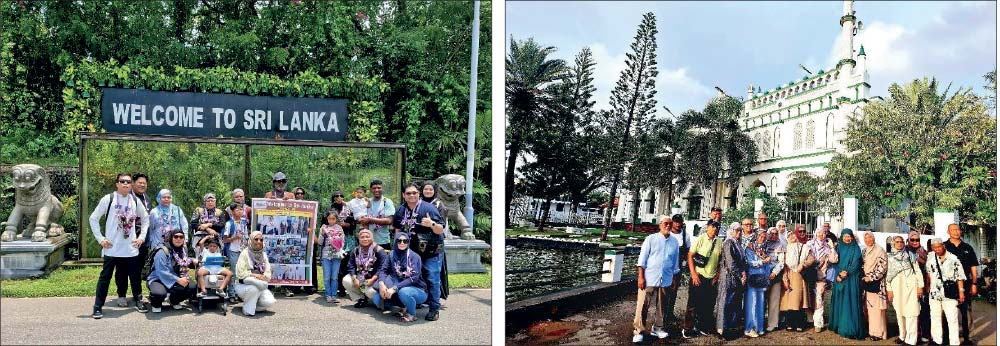
 Perhaps Sri Lanka’s greatest advantage is its authenticity. The country has a long-established Muslim community, historic mosques and Islamic heritage sites, and a culinary tradition that naturally offers a wide range of halal-friendly food. From Colombo’s historic Islamic quarters to Beruwala, Kandy and other parts of the country, there is an Islamic heritage story waiting to be properly curated and presented to international visitors
 Sri Lanka has long been celebrated for its breathtaking landscapes, rich cultural heritage and warm hospitality. Yet, as global tourism evolves, there is another opportunity that the country can no longer afford to overlook: Muslim-friendly tourism.
The global Muslim travel market is among the fastest-growing segments of international tourism. Sri Lanka already has many of the ingredients needed to compete; an established Muslim community, centuries of Islamic heritage, halal culinary traditions, mosques across the country, beautiful beaches, wildlife, wellness and family-oriented experiences. The challenge is not whether Sri Lanka can serve Muslim travellers. It is whether it can do so systematically, consistently and strategically.
According to the latest figures outlined in a strategic proposal for developing Muslim-friendly tourism in Sri Lanka, Muslim visitor arrivals to the country reached 350,858 in 2025, surpassing the previous peak recorded in 2017. Sri Lanka is also ranked 60th in the Global Muslim Travel Index 2025 (GMTI 2025), indicating both an existing presence and considerable room for improvement.
A timely initiative
There are encouraging signs that this opportunity is beginning to receive greater attention.
Marshad Barry, immediate past President of the Sri Lanka–Malaysia Business Council, has recently taken an initiative to promote Muslim-friendly tourism in Sri Lanka, with the support of Malaysia’s Islamic Tourism Centre (ITC). The initiative included an awareness program bringing together academia, tourism industry professionals and policymakers an important first step in creating a common understanding of what Muslim-friendly tourism means and why it matters.
This is significant because Muslim-friendly tourism is not simply about providing halal food or a prayer room. It is about designing a complete visitor experience that takes into account the cultural, religious and service expectations of Muslim travellers.
As the strategic assessment of Sri Lanka’s tourism opportunity highlights, the country’s strengths are considerable from its compact geography and natural attractions to its Islamic heritage and culinary traditions. However, fragmented offerings, inconsistent halal assurance, limited international visibility and gaps in workforce readiness remain important challenges.
Infrastructure alone will not be enough
The global authority on Muslim-friendly travel, ratings, accreditation, GMTI insights and halal tourism strategy, CrescentRating Founder snf CEO Fazal Bahardeen puts the opportunity into perspective:
“Sri Lanka has real strengths to build on, but capturing its share of a market headed for 262 million Muslim arrivals and $ 310 billion in expenditure by 2030 will take more than infrastructure. The country needs sustained capacity building across the hospitality sector, formal accreditation for hotels and tourism properties, and destination marketing that actively targets high-value Muslim travellers.”
This is an important message for Sri Lanka. The country does not necessarily need to build an entirely new tourism industry. Rather, it needs to upgrade, standardise and strategically market what it already has.
Countries such as Thailand, Hong Kong and Taiwan demonstrate what is possible. Their success in attracting Muslim travellers has not come simply from adding halal restaurants and prayer facilities. They have invested in staff training, service design, Muslim-friendly facilities, digital information and targeted marketing, particularly in Middle Eastern and Southeast Asian source markets.
For Sri Lanka, this is where the real opportunity lies. Muslim travellers from the Gulf, Malaysia, Indonesia and other Asian markets are not simply looking for a hotel room. They are looking for confidence: Can I find halal food? Where can I pray? Will the hotel understand my needs? Can my family enjoy the destination comfortably? Is the information reliable?
From opportunity to policy
There is also growing recognition within Sri Lanka’s academic and policy circles.
University of Colombo Professor of Tourism Economics Prof. (Dr.) D.A.C. Suranga Silva, a member of Sri Lanka’s Tourism Advisory Committee, has already prepared a concept paper outlining how this lucrative segment could be promoted as part of the country’s wider tourism development strategy. He intends to present it to the Advisory Committee.
Such initiatives could help move the discussion beyond isolated projects towards a more coordinated national approach.
Aventra Travels Ltd. Founder/CEO Mafaz Mashood, one of the pioneers in Muslim-friendly tour operations in Sri Lanka, sees the opportunity directly from the marketplace.
He notes that his company has consistently received enquiries from Muslim travellers overseas asking about the availability of Muslim-friendly accommodation, halal food and other services in Sri Lanka. At present, however, many of these arrangements are handled in a fragmented manner.
“I highly recommend that the Sri Lanka Tourism Development Authority recognise this fast-growing segment and include Muslim-friendly tourism within the national tourism framework of Sri Lanka,” he says.
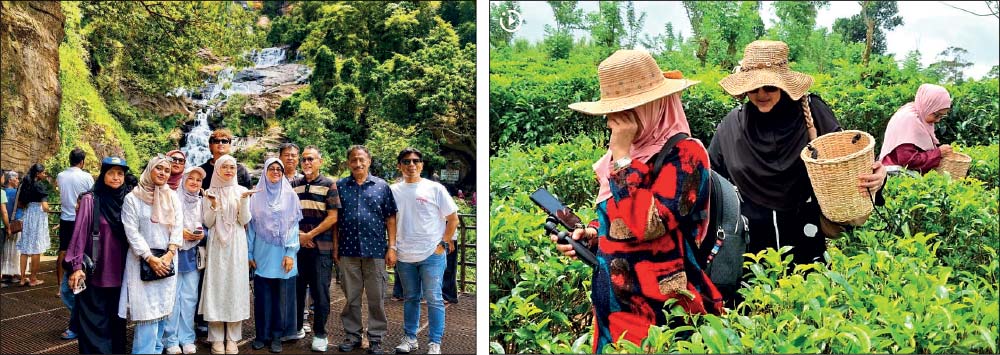
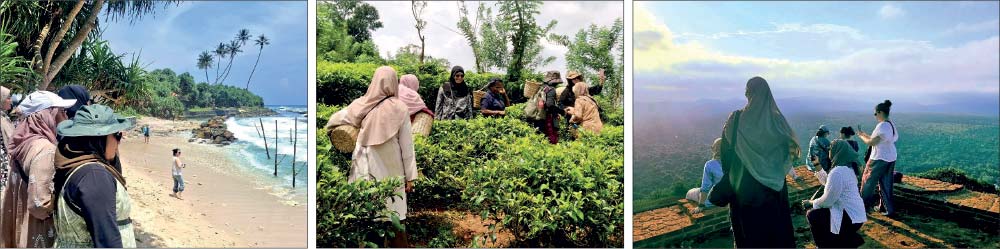
The demand is not theoretical. Mashood recently concluded a women-only Muslim tour group from Europe, demonstrating that specialised Muslim travel segments are already looking towards Sri Lanka.
Building the ecosystem
The next step should be to create a genuine Muslim-friendly tourism ecosystem, rather than a collection of individual initiatives.
The country’s tourism authorities, hotel associations, tour operators, travel agents and tourist-guide associations all have a role to play. Universities and hotel schools should consider incorporating Muslim-friendly tourism, cultural awareness and service requirements into their tourism and hospitality curricula.
At the industry level, organisations such as the Sri Lanka Tourism Development Authority, hotel and hospitality associations, tour operators, travel agents and tourist-guide associations should regularly invite specialists in Muslim-friendly tourism to conduct awareness programs for their members.
This is particularly important for frontline employees. A destination can have excellent infrastructure, but one poorly informed staff interaction can undermine the entire visitor experience.
The strategic pathway proposed for Sri Lanka similarly emphasises education, certification, capability building and the development of a credible rating and accreditation framework for hotels, resorts, restaurants and attractions.
Sri Lanka has something others cannot easily replicate
Perhaps Sri Lanka’s greatest advantage is its authenticity.
The country has a long-established Muslim community, historic mosques and Islamic heritage sites, and a culinary tradition that naturally offers a wide range of halal-friendly food. From Colombo’s historic Islamic quarters to Beruwala, Kandy and other parts of the country, there is an Islamic heritage story waiting to be properly curated and presented to international visitors.
This should not mean turning Sri Lanka into a destination exclusively for Muslim travellers. Quite the opposite. Muslim-friendly tourism is about making a destination more inclusive and accessible while retaining its authentic identity.
The same facilities and service improvements; better food information, cleaner prayer spaces, culturally aware staff, family-friendly services and clearer digital information can enhance the experience for many other visitors as well.
The questions Sri Lanka must now ask
The opportunity is clear. But opportunity alone does not create competitiveness.
Are we reaching the right Muslim source markets or are we simply waiting for them to find us?
Are our current tourism strategies effectively addressing the needs of this fast-growing segment?
Are our hotels, restaurants, tour operators, guides and attractions genuinely ready to deliver a consistent Muslim-friendly experience?
And perhaps the most important question:
Will Sri Lanka allow Muslim-friendly tourism to remain a collection of individual efforts or will it have the vision to make it part of the country’s national tourism strategy?
Sri Lanka already possesses many of the ingredients. What it needs now is coordination, standards, skills, confidence and a clear market strategy.
The next chapter of Sri Lankan tourism may not require discovering a new attraction. It may simply require the country to look at its existing strengths through the eyes of a new generation of travellers and make them feel that Sri Lanka was ready to welcome them all along.
(The author is a Global Muslim-Friendly Tourism and Halal Industry consultant. He can be contacted via email: [email protected])



