Thursday Oct 22, 2026
Thursday Oct 22, 2026
Wednesday, 7 January 2026 04:17 - - {{hitsCtrl.values.hits}}
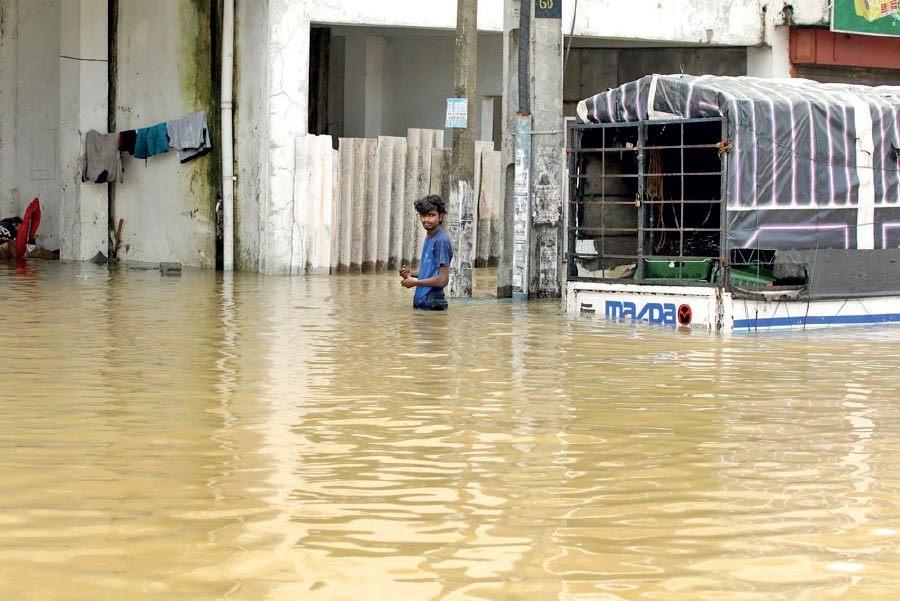
 Sri Lanka stands at a familiar crossroads. We can choose the old path, repair quickly, announce success, and wait for the next failure. Or we can choose a harder but wiser path, learn from our mistakes, enforce standards, and demand accountability
 Sri Lanka’s economic recovery is now threatened not only by past crises, but by a growing governance vacuum in how financial distress is resolved. At present, the fate of thousands of small and medium enterprises (SMEs), many affected by terrorism, pandemics, economic collapse, and natural disasters, rests almost entirely with individual commercial banks. This concentration of power, exercised through unilateral parate action, carries serious risks for fairness, transparency, and long-term economic stability.
In no mature financial system should the determination of business viability, recovery options, and asset disposal be left solely to creditor institutions with direct financial and commercial interests. Yet in Sri Lanka, there is no effective independent oversight body empowered to assess whether enforcement action is proportionate, justified, or in the broader national interest.
This is a dangerous omission.
The absence of oversight
SMEs in tourism, agriculture-linked services, manufacturing, and regional enterprises did not fail in isolation. Their distress is the result of nationally recognised shocks—the Easter Sunday attacks, COVID-19 shutdowns, currency collapse, extreme interest rate volatility, and repeated climate-related disruptions. These are systemic events. Systemic problems require systemic solutions, not fragmented decisions taken bank by bank.
Allowing each commercial bank to independently declare a borrower “non-viable” and proceed with parate execution creates wide scope for inconsistency, arbitrariness, and abuse. Two similar enterprises, affected by identical external shocks, can receive entirely different outcomes depending on the bank involved. Such unpredictability undermines confidence in the financial system and discourages future investment.
More critically, the absence of oversight opens the door to outcomes that are economically and ethically questionable. Distressed assets such as hotels, factories, land, and operating businesses, are often auctioned during weak market conditions, at values far below replacement or long-term earning potential. In such an environment, there is a real risk that interested parties can acquire strategic assets at discounted prices through the banking system, while original investors, employees, and entire rural economies bear the cost.
When businesses collapse in this manner, the damage extends well beyond shareholders. Jobs are lost, supply chains are broken, villages dependent on tourism or agriculture lose income, and regional development stalls. This is not merely a borrower-bank issue; it is a socio-economic failure.
For this reason, the Central Bank and the Government cannot remain passive observers. Their role is not to protect bad borrowers, but to ensure that enforcement mechanisms do not destroy viable economic capacity or facilitate asset stripping under the guise of recovery.
The need for an independent statutory oversight mechanism
Sri Lanka urgently requires an independent, statutory mechanism—such as a Financial Distress Review Commission or strengthened Ombudsman framework—with representation from the Central Bank, Treasury, legal experts, industry specialists, and independent professionals. This body should be mandated to review cases involving calamity-affected SMEs above defined thresholds before parate action is permitted.
Such a mechanism would assess whether distress arises from external shocks, whether restructuring options have been genuinely exhausted, whether valuations reflect fair and normalised conditions, and whether enforcement serves both financial prudence and national economic interest. Its role would not be to override banks arbitrarily, but to introduce balance, transparency, and accountability into a process currently dominated by unilateral discretion.
International experience shows that economies recover faster when viable enterprises are preserved, not dismantled. Regulatory oversight during periods of systemic stress is not market distortion; it is market protection.
If Sri Lanka allows unchecked enforcement to continue, it risks replacing productive entrepreneurship with speculative asset transfers, eroding trust in both banking and governance institutions. Recovery cannot be built on fear, uncertainty, and perceived injustice.
The Central Bank and the Government must act not to weaken banks, but to protect the integrity of the financial system and the real economy it is meant to serve.
(The author is a senior hotelier with over 47 years of experience in Sri Lanka’s tourism sector and a long-standing advocate for responsible financial governance and inclusive economic recovery.)




