Thursday Oct 15, 2026
Thursday Oct 15, 2026
Thursday, 11 June 2026 00:20 - - {{hitsCtrl.values.hits}}
 Not every dollar that flows into Sri Lanka actually builds a stronger future for the country. Some investments light up factories, create real skills, and drive exports. Others look impressive on paper but end up quietly shipping most of the profits overseas. For a nation still healing from economic crisis and dreaming of sustainable growth, understanding the difference between genuine Foreign Direct Investment (FDI) and clever value extraction isn’t just academic, it’s essential.
BEPS Pillar 2 (GloBE rules) incentives like the Substance-Based Income Exclusion (SBIE) and Qualified Refundable Tax Credits (QRTCs) primarily promote real economic substance- tangible investments, employment, skill and knowledge transfer and productive activities in a jurisdiction rather than pure tax base erosion or profit shifting (value extraction) without presence.
The spirit of the BEPS Pillar 2 framework provides a powerful mechanism for developing nations to shift the narrative from predatory profit shifting to genuine economic partnership. By strategically utilising Qualified Refundable Tax Credits (QRTCs) and Substance-Based Income Exclusions (SBIEs), governments can effectively filter out parasitic “value extractors” in favour of long-term commitments. These tools allow policymakers to move beyond a race to the bottom, instead of fostering an environment where real, tangible investment is rewarded. Ultimately, this approach empowers countries to cultivate a sustainable economic landscape built on the contributions of true value creators.
Get this right, and Sri Lanka could climb toward upper-middle-income status with real resilience. Get it wrong, and we’ll keep chasing flashy numbers while the real benefits slip away.
Real promise of FDI for Sri Lanka
Think of real FDI like planting a coconut grove. You prepare the soil, nurture the young trees, and patiently wait for the long-term harvest that feeds families and strengthens the whole community for generations.
For years, Sri Lanka has extended an open invitation to global capital through the Board of Investment (BOI), the Strategic Development Project (SDP) regime, and the Port City project, dangling a suite of generous tax holidays and prime concessions. Yet, one must ask: has the nation performed the rigorous calculus required to distinguish between genuine value creators and mere value extractors? While official registers boast impressive inflows of debt and equity, these top-line statistics often mask a hollow reality. 
Beneath the veneer of investment figures, the true economic impact frequently reveals a predatory cycle where extractors repatriate far more capital than they ever contribute to the local economy. It is time to look past the superficial metrics and demand a deeper accounting of the actual, tangible wealth be it through job creation, skill transfers, or infrastructural growth that remains within our border.
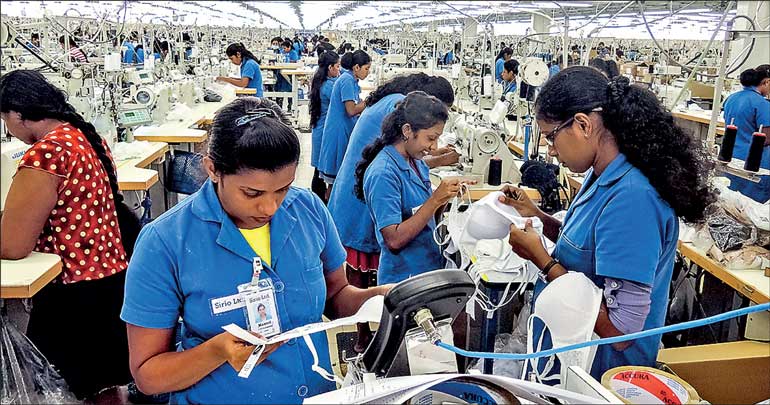
When investment works the way it should, the impact is transformative. Take our apparel industry, for example: global brands haven’t just set up factories they’ve built deep, reliable supply chains and helped turn Sri Lanka into a respected force in the global fashion market. These partnerships have created hundreds of thousands of jobs, provided our workers with world-class skills, and ensured a steady flow of foreign exchange. Similarly, our tourism sector has successfully leveraged our natural beauty and heritage to build a sustainable, recurring revenue stream for the country.
It is time to take a harder look at our major port projects. Readers need to ask the critical question: are these developments truly building value for Sri Lanka, or otherwise?
The hidden side: Investment that extracts more than it gives
But not all foreign money behaves this way. Some companies come in mainly to tap Sri Lanka’s market or resources yet structure their operations so that most of the value ends up elsewhere. Local revenue from consumers gets funnelled out through high management fees, royalties, overpriced imports, or offshore accounting tricks.
It’s investment in appearance only, lots of activity, but very little real accumulation.
You’ll see this in several common ways:
After the 2022 crisis, this kind of leakage is particularly dangerous. We’re still focused on rebuilding reserves and managing debt. Every rupee that leaves weakens our foundation and leaves ordinary Sri Lankans wondering why new hotels, malls, and services don’t seem to create more lasting wealth in local banks, SMEs, or public services.
Sri Lanka’s FDI story: Progress mixed with gaps
There are encouraging signs. In 2025, FDI finally crossed the $1 billion mark, a strong 72% jump, led by manufacturing, ports, tourism, and telecom. Partners like Singapore, India, and France are showing renewed interest, with projects such as the Sinopec refinery in Hambantota and developments in Colombo Port City.
Still, we’ve historically struggled. FDI has usually stayed around just 1% of GDP, far below our potential and what many regional peers achieve. Too often, the headline numbers look good, but when you look at what actually stays in the country after profits are sent home, the picture is less impressive.
Many investments stay in lower-value activities instead of pushing into high-tech manufacturing or research and development.
The 2022 crisis laid bare our vulnerabilities: sudden capital outflows, heavy import dependence, and thin financial buffers. While the apparel sector has shown how foreign investment can create real backward linkages with local suppliers, other cases have delivered disappointingly little technology transfer or local industry growth.
We also have to carefully manage political sensitivities around sovereignty, especially with big port and energy projects.
Builders vs. rent collectors: How to tell them apart
So how do you spot the difference on the ground?
Genuine builders tend to show:
Rent collectors (value extractors) usually do the opposite:
The difference shows up clearly in economic ripple effects. Builders create jobs that generate spending, which supports more businesses and brings in tax revenue for roads, schools, and hospitals. Extractors can create buzz and activity but often leave the economy with weaker finances and less resilience.
Smarter policy roadmap for Sri Lanka
Sri Lanka doesn’t need to shut its doors to foreign capital. We just need to open them more wisely. The BOI, SDP and Port city regimes, and the Government can refine their approach to attract builders while limiting leakage.
This would essentially encompass;
1.Real substance requirements: Only give incentives to companies that actually operate here, with local staff, decision-making power, and tangible assets. Pure letterbox or trading operations shouldn’t get the same treatment.
2.Updating tax rules for the digital world: Modernise old concepts like permanent establishment. Introduce Significant Economic Presence rules so companies that make serious money from Sri Lankan consumers pay their fair share, even if they don’t have a traditional office. This is crucial for e-commerce, fintech, and streaming services.
3.Stronger transfer pricing and anti-avoidance tools: Keep a closer eye on royalties, management fees, and interest deductions. Country-by-country reporting and General Anti-Avoidance Rules can help separate honest business from aggressive profit shifting.
4.Performance-based incentives linked to QRTCs and SBIE: Design incentives as Qualified Refundable Tax Credits (QRTCs) tied directly to measurable substance such as local payroll, training programs, tangible asset investments, local content, exports, and technology transfer.
Link these to the Substance-Based Income Exclusion (SBIE) principles under BEPS Pillar 2. Even BEPS Pillar 2, through its SBIE, explicitly encourages builders over renters by carving out a portion of income based on eligible payroll costs and tangible assets in the jurisdiction.
This rewards real economic activity and physical presence rather than paper profits or offshore extraction. Performance-based QRTCs aligned with SBIE can help Sri Lanka attract high-quality FDI while minimising top-up tax risks for genuine investors and ensuring the incentives deliver lasting local benefits.
5.Focus on strategic sectors: Concentrate on areas where we have real potential: higher-value apparel and rubber products, IT and knowledge services, renewable energy, precision manufacturing, and community-linked tourism. Make the most of our free trade agreements and strategic location in the Indian Ocean. Government incentives should have QRTCs and SBIES to promote the priority sectors.
6.Building the right ecosystem: Invest seriously in skills training that matches investor needs, reliable power and digital infrastructure, and consistent regulations. Cut down on sudden policy changes that scare away serious investors. Government should also complement the building of the right eco system by embedding the QRTCs and SBIEs. 
Leadership challenge: Looking beyond the headlines
Our leaders face tough pressures, massive debt payments, youth unemployment, and big infrastructure gaps. After recent hardships, the temptation to accept almost any investment is understandable.
Countries in East Asia proved that FDI can be a ladder to climb rather than a permanent crutch. Sri Lanka can do the same, learn deeply from garments and logistics, then move into design, branding, and innovation.
The digital economy: New opportunities, new risks
Digital investments in streaming, e-commerce, and cloud services bring exciting potential, but they also make traditional FDI tracking much harder. A big platform can earn massively from Sri Lankan users with almost no physical presence here. Smart policies, like digital services taxes, fairer taxing rights, and substance-linked incentives, will help us capture our proper share while favouring builders.
Real successes and important lessons
The apparel industry remains our best example: foreign investment combined with local entrepreneurship created a globally competitive sector. Tourism has similar promises when it’s developed responsibly with local communities.
At the same time, we’ve seen cautionary examples, projects with heavy debt structures or minimal spillovers. Colombo Port City and Hambantota show both the opportunities and the need to balance strategic partnerships with clear national interests.
Creating an ecosystem where good FDI thrives
Quality investment doesn’t happen in isolation. It needs support from:
Road ahead: Let’s choose builders
Sri Lanka will grow strongest when we attract genuine builders rather than rent collectors. Real FDI puts down roots and multiplies value. Extraction simply takes what it can and moves on.
Policymakers, the BOI, SDP, Pot City, tax officials, and business leaders all have a role. We should celebrate new investments, but we must also track what they actually deliver.
We can negotiate confidently, making the most of our educated workforce, stunning natural beauty, and prime geographic position, while using tools like substance-linked QRTCs and alignment with BEPS Pillar 2’s SBIE to tilt the playing field toward real value creation. Sri Lanka should at least embrace spirit of the BEPS Pillar two compliant incentives modelled in the nature of the QRTCs and SBIE linked incentives.
The world is full of capital, ideas, and markets ready to flow. Nations that practice smart openness, welcoming real partnerships while protecting their own interests, will come out ahead. Those chasing sheer volume risk watching wealth flow through the economy like monsoon rains: you see it, but it doesn’t stay.
The real choice isn’t between being open or closed. It’s between naive openness and strategic engagement. Between short-term relief and lasting prosperity. Between renting out our potential and owning the orchard.
Sri Lanka - which future will we build?
With disciplined leadership, smarter policies (including substance-based incentives aligned with global standards like BEPS Pillar 2), and a clear focus on quality over quantity, we can turn FDI into a genuine engine for inclusive and resilient growth. What we need now is the courage to choose substance over statistics.
(The author was awarded Tax Practice Leader of the Year 2024 (ASPAC) by International Tax Review (ITR) and was a top-four finalist for Tax Litigation and Disputes Practice Leader of the Year (ASPAC)).




