Saturday Nov 14, 2026
Saturday Nov 14, 2026
Saturday, 14 November 2026 00:00 - - {{hitsCtrl.values.hits}}
Kavantissa
 The title poses a difficult and uncomfortable question. Before dismissing it, however, it is worth examining the remarkable chain of events that followed the alleged shooting of Kavantissa in late September. Failures appear to have occurred, or been permitted to occur, at every stage, from the incident itself through to Kavantissa›s burial and its aftermath. Such widespread failures rarely stem from a simple error of judgement by one individual or the shortcomings of a single institution. More often, they point to something deeper and more serious. This article explores those possibilities, but first we must establish the facts.
The facts
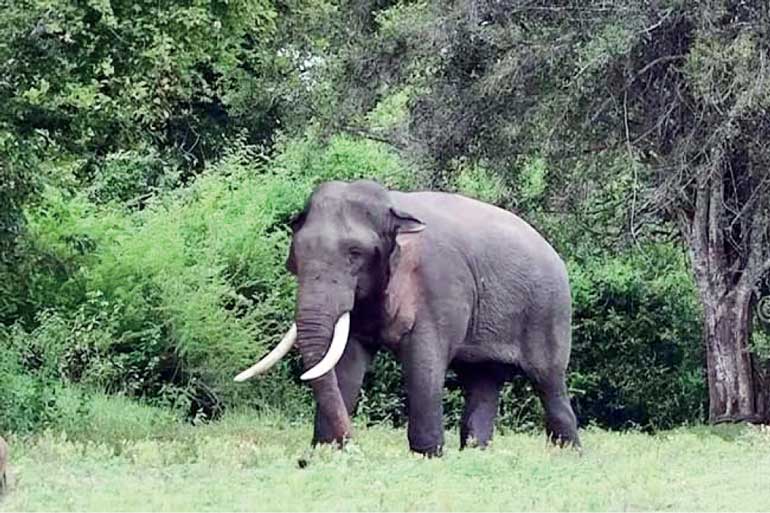
Kavantissa, the legendary tusker from Galgamuwa, believed to be about 45 years old, died on 16 October 2026 after his health deteriorated over several weeks following a reported shooting in September. Many wildlife conservationists, enthusiasts, animal lovers, and others reportedly kept the authorities regularly informed of Kavantissa›s condition through various channels. Many accounts point to what appears to have been a striking lack of engagement by the authorities responsible for Kavantissa›s welfare. Given the animal’s iconic status, critics, such as Dr Ajantha Perera and Tissa Jananayake, publicly argue that the response of the Department of Wildlife Conservation and other officials fell far short of what the situation warranted.
On 31 October 2026, a Sri Lankan television channel broadcasted a report alleging serious misconduct and a shocking lack of professionalism on the part of wildlife veterinarians responsible for treating Kavantissa. According to another credible media report published in early November, the tusker had reportedly been allowed to go missing for approximately six days during treatment in early October, causing critical delays in the administration of essential follow-on medication, although the accuracy of this report has not yet been conclusively established. Meanwhile, according to another media report, an interim post-mortem report submitted to the court on 11 November revealed that three bullets had been found in Kavantissa›s abdomen region.
The controversy did not end with Kavantissa›s death. Reports alleged that the animal’s body was severed at the neck into two parts and buried separately within hours, in a manner that many regarded as undignified and deeply disrespectful to one of Sri Lanka›s most celebrated tuskers. The handling of the remains sent shockwaves throughout the country and compounded the grief and outrage felt by thousands of people. We saw grown men and women crying in public.
Throughout the entire saga, the apparent indifference displayed by senior Government leaders, including the President, was particularly striking. Despite widespread public concern, there appeared to be little acknowledgement of responsibility, little expression of remorse, and little urgency in addressing the growing criticism surrounding the case. Yet, within days of Kavantissa›s death, the Government announced a new initiative aimed at safeguarding all elephants and ensuring their proper treatment across Sri Lanka.
The Questions
Given the extraordinarily high public profile of this tusker, and the fact that many private individuals had offered to make funding available for Kavantissa›s treatment, many people have questioned why the authorities did not promptly devote more resources to his care. If the wildlife authorities had sought additional resources, there were individuals willing to provide them. If they had requested expertise, there were individuals ready to offer it. And if they had sought international expertise, there were individuals willing and able to fund the engagement of specialists from overseas.
The alleged shooting was a failure of wildlife protection. The untimely death was a failure of wildlife treatment. The undignified burial was a failure of compassion and remorse. Together, these events have left thousands of grieving Sri Lankans asking one simple question: Why was Kavantissa, an innocent animal with no known history of attacking humans, treated in this manner? Was this merely a failure of an individual or an institution, or does it point to something more sinister that every Sri Lankan should be concerned about?
The Communist Ideology
Janatha Vimukthi Peramuna (JVP), the dominant force within the NPP coalition Government, is rooted in a political tradition heavily influenced by communist ideology. Communist ideology is broad, but one of its central principles is the pursuit of greater social and economic equality, and at its core lies a deep suspicion of privilege, hierarchy, and special treatment. While the pursuit of equality is a noble objective, problems emerge when equality is interpreted so rigidly that excellence, distinction, and achievement are viewed as undesirable or even threatening.
Traditionally, Sri Lankan society has been almost the opposite of this strict interpretation of equality. We celebrate and reward fellow Sri Lankans who distinguish themselves through beauty, intellect, musical talent, acting ability, public speaking, writing, or sporting achievement. As a result of their talents and accomplishments, such individuals often acquire greater wealth, influence, or recognition. In Sri Lankan society, as in most non-communist societies, such outcomes have generally been regarded as legitimate rewards for merit and effort. In contrast, some interpretations of communist ideology view the emergence of exceptional individuals and the concentration of status or wealth as obstacles to a more equal society because they create visible social distinctions and hierarchies.
An ideological message?
When senior NPP-JVP figures declare, “we have the Government, but not the State,” they are revealing more than they intend, and far more than many Sri Lankans realise. The significance of that statement deserves a detailed discussion of its own, but we do not have space to discuss the meaning of this statement in detail here. In essence, however, it suggests that while political power has been secured through electoral victory, the broader project of transforming the nation›s institutions, values, culture of governance, and ultimately its constitutional order strictly along communist lines remains incomplete. In that context, Kavantissa was more than a tusker, but an ideologically uncomfortable, symbolically profound obstacle.
Kavantissa was a distinguished tusker, celebrated for his size, stature, temperament, and grandeur. He was a symbol of distinction, prestige, and public admiration. To an ideology uncomfortable with distinction, prestige, and status such a symbol can become an obstacle, not much as a physical obstacle, but as a powerful psychological one. When an ideology seeks to reshape a society, it does not stop with changing institutions. It seeks to redefine what people admire, respect, and aspire to become.
This raises a troubling question: Was the handling of Kavantissa›s case, culminating in his death and followed almost immediately by an initiative to protect all elephants, intended to send an ideologically charged message rooted in communist thinking that the NPP-JVP Government would grant special treatment to no one, regardless of merit, circumstance, and public sentiment, even when the consequence is the loss of a valuable life?
Are you, as a Sri Lankan, prepared to be a victim of such an ideology? Today it may be Kavantissa. Tomorrow, could it be you?
(The author, an Engineering Professor born, bred, and educated in Sri Lanka, a graduate from the Faculty of Engineering at the University of Peradeniya with First Class Honours, can be reached via: [email protected])




