Wednesday Oct 21, 2026
Wednesday Oct 21, 2026
Saturday, 22 August 2026 01:39 - - {{hitsCtrl.values.hits}}
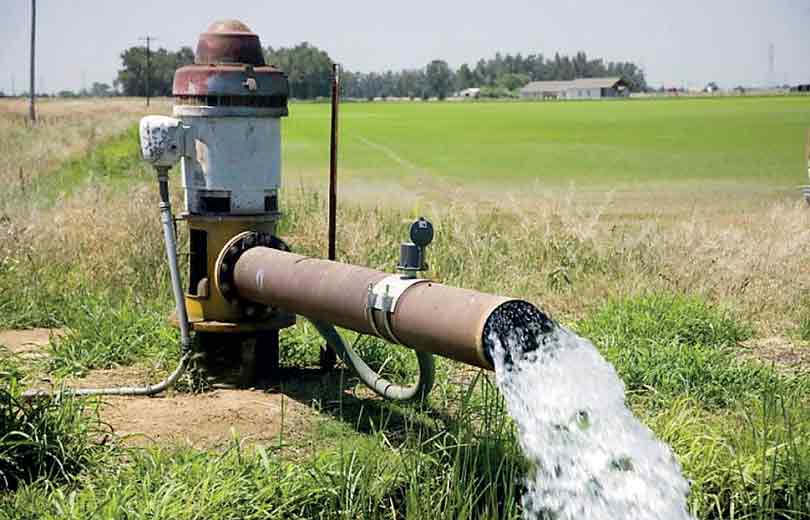
Pumping from deep confined aquifers
 Groundwater is a hidden but finite national resource. Sustainable management today ensures water security tomorrow. Water security in the 21st century will depend not only on the reservoirs we see, but also on the aquifers we cannot see. Delaying decisive action today may compromise the sustainability of this vital resource for future generations.
Sri Lanka’s total renewable freshwater resources are estimated at approximately 52 billion cubic metres of surface water, 7 billion cubic metres of groundwater, and a further 7 billion cubic metres of overlapping water resources. Annual water consumption is estimated at 13–15 billion cubic metres, of which about 87% is used for agriculture, 6% for industry, and 6% for domestic (drinking) purposes. Importantly, nearly 80% of rural domestic water supply is sourced from groundwater, underscoring its critical role in sustaining rural communities.
Groundwater is Sri Lanka’s most overlooked national asset. Hidden beneath the surface, it quietly sustains rural drinking water supplies, supports highland agriculture, feeds agro-industries, and acts as a buffer during droughts. Yet growing evidence suggests that this invisible reserve is under increasing stress.
Nearly 90% of Sri Lanka is underlain by Precambrian crystalline hard rock. These formations store water mainly within weathered layers and fractures, making storage capacity limited and highly localised. Recharge depends almost entirely on monsoonal rainfall. In dry zone areas, only about 5–10% of annual rainfall contributes to groundwater recharge.
 A legally enacted National Water Resources Policy, with clear provisions for groundwater licencing, monitoring, extraction limits, and aquifer protection, is urgently needed. Institutional coordination among irrigation, agriculture, environment, and drinking water agencies must also be strengthened. Responsible management today will determine whether this hidden resource continues to sustain communities and agriculture in the decades to come
Since the late 1970s, agro-well construction has expanded rapidly across the dry zone and there are more than 50,000 wells in operation. In Jaffna peninsula there are more than 100,000 wells of which 15,000 wells are agro-wells. These wells enabled farmers to cultivate high-value crops during dry months. While this has strengthened rural livelihoods, poorly planned well spacing and uncontrolled pumping have led to declining water levels in some areas.
Emerging challenges are becoming evident. In agro-well-dense regions, closely spaced wells compete for limited recharge. Coastal aquifers show signs of salinity intrusion. Rising nitrate levels in intensively farmed areas raise public health concerns. Scientists have also examined possible links between groundwater chemistry and chronic kidney disease in certain dry zone districts, although further research is required to establish definitive conclusions.
Climate variability adds another layer of risk. Erratic rainfall patterns may reduce recharge while increasing irrigation demand, placing additional pressure on already stressed aquifers.
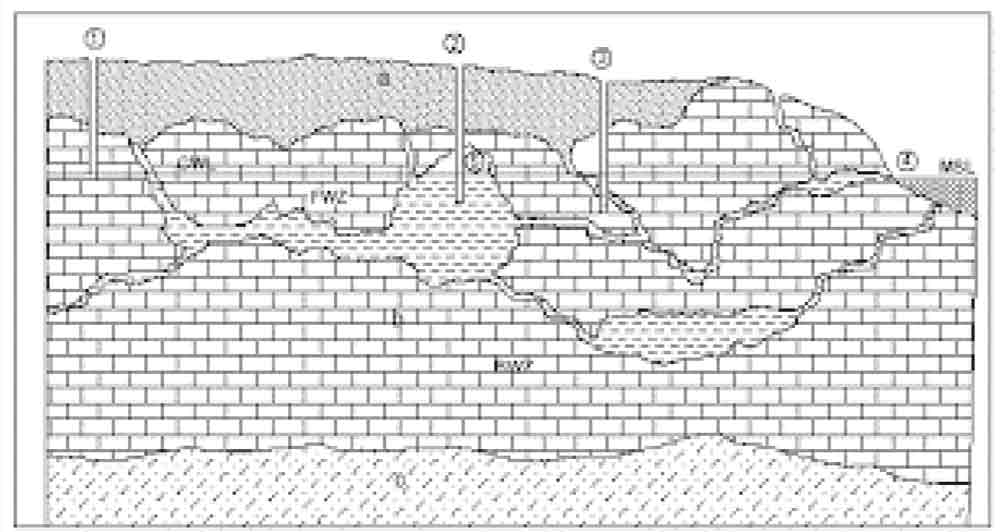
Karstic limestone aquifer in the Jaffna Peninsula
Aquifer diversity and vulnerability
Sri Lanka’s aquifers differ significantly in their characteristics and vulnerabilities:
1)Hard rock regolith aquifers (dry zone) store limited, seasonal water and are highly sensitive to over-extraction. The rapid expansion of agro-wells since the late 1970s has significantly increased groundwater abstraction in these formations.
2)Coastal sand aquifers in Kalpitiya, Puttalam, Mannar, Nilaveli, and Batticaloa are highly productive but contain only a thin freshwater lens floating above saline water. Excessive pumping increases the risk of seawater intrusion and nitrate contamination from intensive agriculture.
3)Karstic limestone aquifer of the Jaffna Peninsula allows rapid groundwater movement through solution cavities, making it productive but extremely vulnerable to contamination and saline intrusion.
4)Deep confined aquifers in the northwestern and northern coastal plains provide relatively stable yields; however, over-exploitation could cause long-term pressure to decline and salinity intrusion.
5)Lateritic (cabook) aquifers in the south-western region recharge rapidly during inter-monsoonal rains but face over-pumping and urban contamination risks, particularly around Colombo.
6)Alluvial aquifers along river valleys are closely connected to rivers; excessive pumping may reduce base flows and affect downstream ecosystems.
Need for management and regulation
The increasing dependence on groundwater highlights the urgent need for proper management and regulation. Indiscriminate drilling of wells, uncontrolled pumping, contamination from agricultural chemicals and domestic waste, and salinity intrusion in coastal areas pose serious threats to long-term sustainability. Groundwater must be treated as a strategic national resource requiring scientific oversight.
Establishing clear guidelines for well construction, maintaining appropriate spacing, monitoring groundwater levels and quality, and promoting community-based groundwater management are essential steps. Sri Lanka’s ancient irrigation civilisation demonstrated a deep understanding of water stewardship. As we increasingly turn to groundwater to meet modern demands, the same principles of sustainability must guide its use.
Current institutional responsibility
At present, groundwater regulation falls primarily under the mandate of the Water Resources Board, operating under the Water Resources Board Act. The Board plays an important technical role in investigations, monitoring, advisory services, and management planning. However, its regulatory and enforcement capacity remains limited. In practice, groundwater extraction, particularly for agriculture and small-scale commercial use, often occurs with minimal oversight. This gap between technical knowledge and legal authority weakens long-term sustainability.
Why this matters now
Climate variability is intensifying. Rainfall patterns are becoming more erratic. Surface storage alone cannot guarantee water security. Under such conditions, groundwater serves as a strategic buffer, an underground reservoir that stabilises supply during dry spells.
But groundwater is not unlimited. Recharge rates in many dry zone hard rock areas are as low as 5–10% of annual rainfall. Over-extraction today can translate into well failures tomorrow. Contamination from unregulated waste disposal, septic systems, and agro-chemical runoff further compounds the risk. Unlike surface water pollution, groundwater contamination can persist for decades.
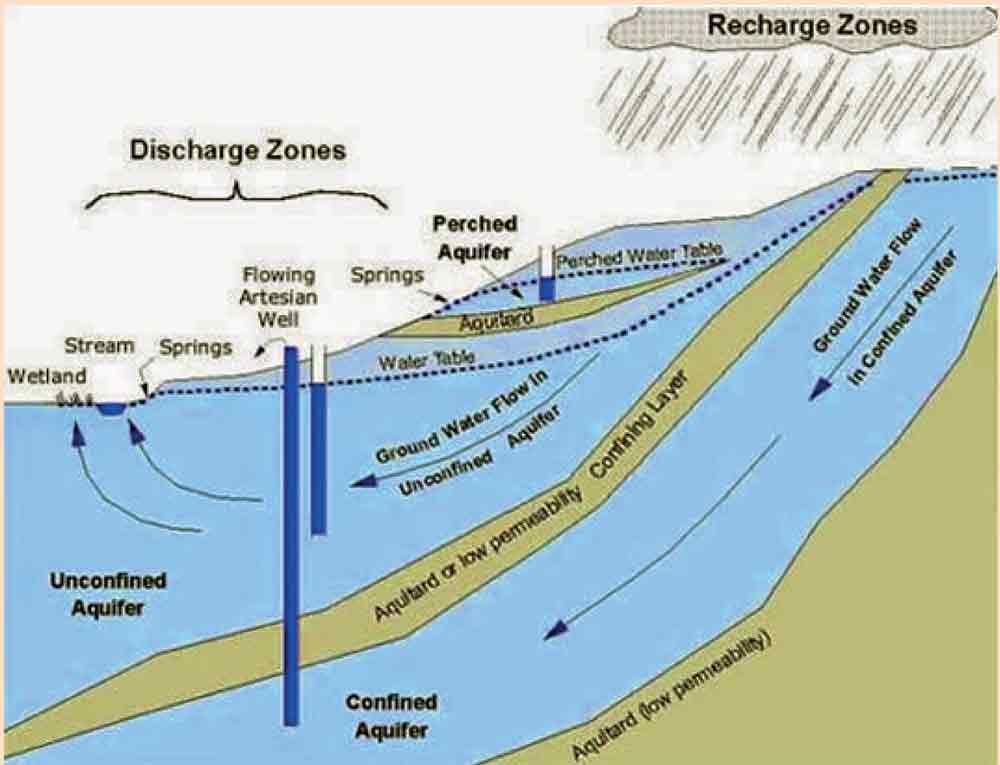
Map showing occurrence of groundwater
Time for action
A legally enacted National Water Resources Policy, with clear provisions for groundwater licencing, monitoring, extraction limits, and aquifer protection, is urgently needed. Institutional coordination among irrigation, agriculture, environment, and drinking water agencies must also be strengthened. Responsible management today will determine whether this hidden resource continues to sustain communities and agriculture in the decades to come.
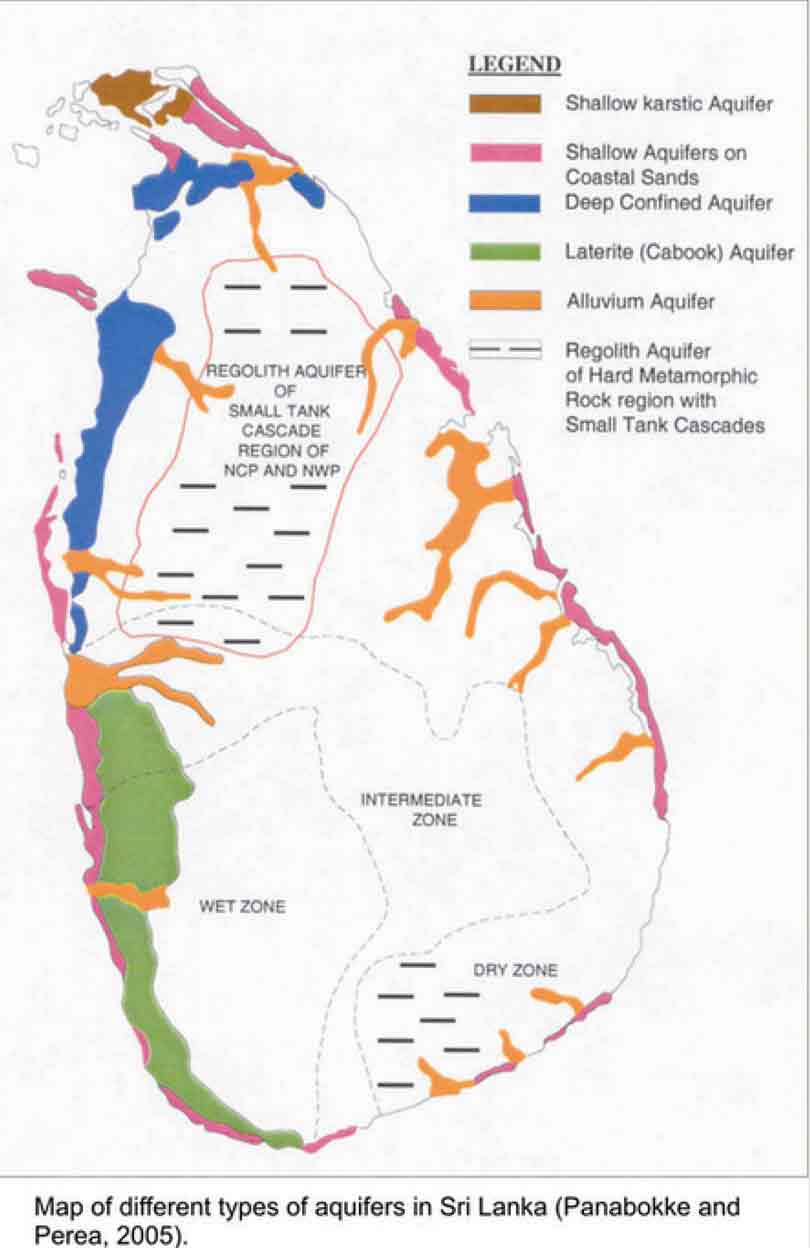
Occurrence of groundwater in Sri Lanka
(The author holds a B.Sc. in Agricultural Engineering and M.Sc. in Soil and Water Management. He was a former Director of Natural Resources Management Centre, Department of agriculture, Sri Lanka. He has worked with FAO in Sri Lanka and Bangladesh)




