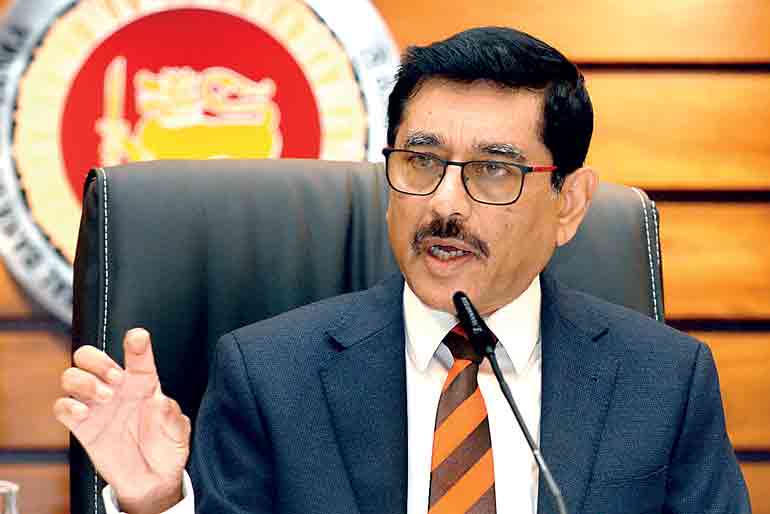
Central Bank Governor Dr. Nandalal Weerasinghe
Following is an open letter to the Central Bank Governor Dr. Nandalal Weerasinghe from Institute of Political Economy Co-Founders Charith Gunawardena and Professor Kanchana N. Ruwanpura
Dear Governor,
We write to you as co-organisers of the statement endorsed by 121 economists and academics from around the world. The signatories include Joseph Stiglitz, who is a Nobel laureate and former chief economist of the World Bank, former finance ministers of their countries (Martin Guzman, Yanis Varoufakis), former employees or advisers to high-level UN bodies and other governments. Many of the signatories have direct knowledge and/or experience of the harmful impacts of IMF programs for countries undergoing debt distress. The call is for the immediate suspension of Sri Lanka’s external sovereign debt repayments as a first step to negotiate a comprehensive restructuring to restore debt sustainability in light of current conditions.
The critique of the statement made during an interview on Ada Derana Hyde Park on 1 January 2026, necessitates a considered response to provide further clarification.
We believe that the current conditions and targets arising from the IMF›s Debt Sustainability Analysis (DSA) constrain the fiscal space to prioritise the wellbeing of people and the environment. Since the newly elected Government came with a democratic mandate, promoting effective governance necessitates an independent DSA to promote economic sovereignty of the country. These conditions help the State and Government to deliver on its democratic mandate over the interests of predatory lenders and creditors.
The monetary policies implemented under the current governorship therefore exert a profound influence on Sri Lanka’s economy and the ability of the current Government to deliver on its progressive program, particularly in the context of the ongoing sovereign debt and climate crises.
The robust defence of the IMF program, unqualified endorsement of the debt sustainability analysis, and uncritical support of private creditors undermine democratic governance and the role of public officials in promoting the economic sovereignty of Sri Lanka.
We wish to comment on a number of your quotes and have included the time stamp during interview (these are shown in brackets).
1.
“As a result of the cyclone impact, the Government has announced no new debt will be raised.” (40:53)
- The IMF has extended a $ 206 million loan to Sri Lanka under its Rapid Financing Instrument, while India has provided assistance amounting to $ 450 million, of which US$350 million takes the form of loans. Although these facilities are offered on concessionary terms, they add to Sri Lanka’s already substantial external debt stock and will require future debt servicing, thereby intensifying fiscal and balance-of-payments pressures.
2.
“So what is the justification for us to ask for another restructuring if the IMF DSA is not going to be affected?” (41:52)
- Even prior to the cyclone, the IMF itself acknowledged that Sri Lanka’s path to debt sustainability was “knife-edged,” with the country only narrowly meeting program targets and facing an estimated 50% probability of a renewed default. At the same time, more than 25% of Government revenue is allocated to external debt servicing, leaving virtually no fiscal space to meet the substantial reconstruction costs now confronting the State. In this context, Sri Lanka’s future foreign-currency expenditure should be prioritised toward reconstruction, restoration, and development needs rather than debt servicing.
3.
“As the Government is going to use the saving they have without raising new debt, there will be no impact on the DSA.” (42:47)
- With usable foreign exchange reserves of less than $ 5 billion Sri Lanka has limited capacity to absorb additional external economic shocks. At the same time, the World Bank has estimated cyclone-related physical losses at approximately $ 4.1 billion a figure that excludes income losses, business interruptions, and the costs of recovery and reconstruction. This implies that Sri Lanka’s foreign exchange requirements substantially exceed its currently available reserves, underscoring the severity of the external financing constraint
4.
“What we ask businesses to do with regard to debt repayments is the same as for a country. The Government is saying they are not going to raise additional debt for debt servicing and going to use savings generated through revenue.” (44:10)
- It remains unclear whether the Government was advised to continue external debt servicing without pursuing a significant reduction in the debt stock as part of a more sustainable resolution. Unlike private firms, which benefit from bankruptcy protections, sovereign states lack comparable legal safeguards internationally against reckless lending and the accumulation of odious debts. In this context, questions also arise as to why creditors that charged high interest rates as a risk premium continue to demand full repayment from distressed countries, without facing meaningful consequences for inadequate due diligence.
5.
“This was the same group (of economists and academics) who were asking during our restructuring negotiations with the IMF, not to pay any debts.” (44:33)
- The previous statement stated the following “private creditors own almost 40% of Sri Lanka’s external debt stock, mostly in the form of International Sovereign Bonds, but higher interest rates mean that they receive over 50% of external debt payments. Such lenders charged a premium to lend to Sri Lanka to cover their risks, which accrued them massive profits and contributed to Sri Lanka’s first ever default in April 2022. Lenders who benefited from higher returns because of the “risk premium” must be willing to take the consequences of that risk.”
- The statement continues to mention how “The Sri Lankan case will provide an important indicator of whether the world—and the international financial system in particular—is equipped to deal with the increasingly urgent questions of sovereign debt relief and sustainability; and to ensure a modicum of justice in international debt negotiations. It is therefore crucial not only for the people of Sri Lanka, but to restore any faith in a multilateral system that is already under fire for its lack of legitimacy and basic viability.”
6. “I don’t know what the intentions of the group are. To me their intentions are not to help the country.” (46:23)
- The group of economists and academics is motivated by a commitment to support underprivileged populations in Sri Lanka and across the Global South who bear the heaviest burdens of debt and climate crises. They have consistently highlighted the consequences of the unjust global economic order, the risks associated with the weaponisation of the global reserve currency, and the undemocratic structures of international financial institutions. Committed to raising awareness among policymakers worldwide, they seek to share their research and experiences to help countries protect themselves from these systemic risks. They are also prepared to assist governments, including Sri Lanka, that lack the capacity to conduct independent debt sustainability analyses prioritising the welfare of their citizens over the interests of external creditors, and address the critical gaps of the IMF DSA.
The interview also raised a few other points that need commenting.
i. “The country should prepare for this kind of event and keep building savings. As a household if you have an unexpected event in your family, if you don’t have savings in your bank you are going to go through a difficult cycle.” (12:01)
- While the Government does require foreign currency reserves to meet external debt obligations, comparing the finances of a sovereign, currency-issuing state to those of a household is misleading and distorts public understanding of State finances. Treating the Government as if it were financially constrained like a household can result in chronic underinvestment, delayed emergency responses, and unnecessary human suffering. Unlike households, Sri Lanka’s Government can always meet its domestic debt obligations through monetary financing and can continue to do so until the economy reaches its full productive capacity. Any inflationary pressures from such financing can be managed through taxation, which withdraws excess currency from circulation and stabilises prices.
ii.“During the last year, the Government built a buffer of Rs 1 trillion in the Finance Ministry with State banks. Rs. 500 billion can be used now on recovery efforts.” (10:43)
- Given that Parliament, under the Appropriation Bill 2026, can instruct the Central Bank to facilitate payments through advances from the Consolidated Fund at the Government’s disposal, claims suggesting a need for a “buffer” are misleading. These payments are executed electronically through the national banking system, with the Central Bank ensuring settlement. The critical issue is not the availability of Government funds, but whether the country possesses the domestic capacity and sufficient external flexibility, particularly in foreign exchange and import availability, to absorb and deploy essential emergency spending effectively.
iii. “When the Government spends money for reconstruction and rebuilding there will be an additional demand for imports such as cement, steel, building and construction material.” (4:20)
- Estimates of the cost of rebuilding have ranged between $ 6–7 billion.However, Sri Lanka’s challenge extends beyond simple reconstruction. The priority should be to initiate ecologically sensitive reconstruction and development to facilitate local community resourcefulness and social protection against future external and climate-related shocks. Achieving this will require substantial foreign exchange inflows over the next several years. At the same time, debt servicing obligations are likely to remain a binding constraint on available fiscal and external resources. Additionally, many businesses affected by the cyclone will need to import replacement machinery and equipment, further increasing foreign exchange demand in the short to medium term.
We urge the Central Bank of Sri Lanka to encourage the Government, the Finance Ministry, and the IMF to recognise the value of assembling a dedicated team to collaborate with external experts to build capacity and technical skills in conducting an independent debt sustainability analysis to prioritise the wellbeing of the Sri Lankan population. Such an analysis would strengthen the Government’s position in the remaining IMF program reviews and provide a credible roadmap for achieving a sustainable external debt position and the elimination of odious debt.
We (like the signatories) remain committed to promoting the interests and welfare of Sri Lankan citizens hardest hit by the debt and climate crisis.
References
Statement by 121 Economists and Academics - Dec 2025
https://ipe-sl.org/wp-content/uploads/2025/12/121-Experts-Statement.pdf
Statement by 182 Economists and Academics - Jan 2023
https://debtjustice.org.uk/wp-content/uploads/2023/01/Sri-Lanka-debt-statement.pdf
Interview by the CBSL Governor
https://youtu.be/ria4ZeW6ajw?si=vyKYxZchAeyISYpj




