Tuesday Sep 22, 2026
Tuesday Sep 22, 2026
Tuesday, 22 September 2026 04:38 - - {{hitsCtrl.values.hits}}
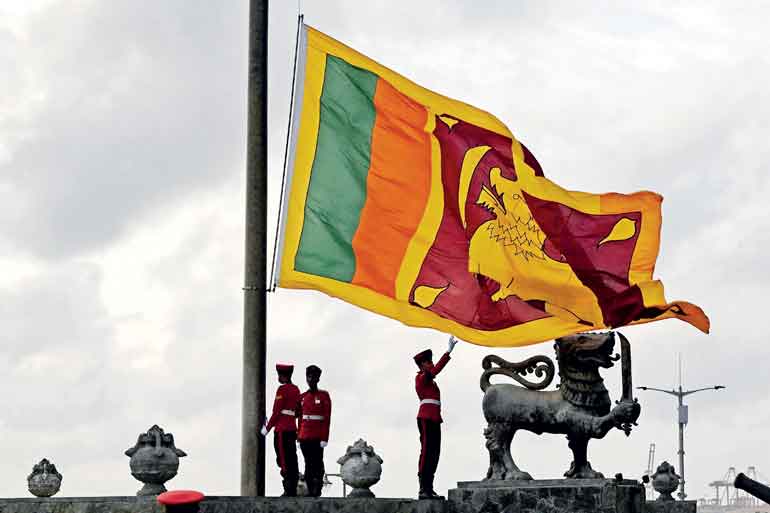
 Sri Lanka continues to pay a heavy price for the lack of accountability of its national leaders in the past fifty years. To them, accountability was an indispensable irritant.
To me, accountability has been the uncompromised constant of a fifty-four-year corporate journey, spanning from an entry-level accounts clerk at Lever Brothers (Ceylon) Limited, Finance Director and Managing Director at Anglo American Corporation (Central Africa) Limited, Group Finance Director and Executive Director at John Keells Holdings PLC, to Leadership Coach/Mentor. Accountability was a self-satisfying objective that anchored every step of my journey.
The hierarchical level of my job role or designation never defined accountability. It was singularly defined by my obsession with delivering the expected outcomes of my various roles as best I could and, most importantly, with being fully answerable for the actual outcomes of my actions. Whether inputting a single line item on a ledger as a young clerk, analysing the cost structures as a management accountant, steering the long-term enterprise strategy as a corporate leader, or leading an organisation in pursuing its vision, goals and objectives, I have always believed that accepting complete ownership of outcomes was, and is, the ultimate source of earned authority.
Early in my career, accountability took the form of relentless accuracy, discipline, and personal integrity. At top management levels, it evolved into moral courage to stand at the bow of the ship and
Accountability is not a single tool in a leader’s kit. It is the electric current running through the entire architecture of authority. It operates as a powerful 3-in-1 force that transforms ordinary managers into visionary stewards
unflinchingly take responsibility for failures and missteps, and the consequences of my decisions. I learnt that true accountability is not a burden to avoid but an empowering choice which dissolves fear, eliminates blame, and replaces bureaucratic deflection with decisive action. It taught me that responsibility is non-transferable, standards are absolute, trust is the foundational currency of all relationships, and that true leadership is forged through the courage to own every outcome. When leaders operate with total transparency and accept responsibility for actions, they set a powerful tone across the country and organisation. To me, conscious accountability at every stage of the journey was not merely a professional habit; it was a vital in building credibility. I realised that without the trait, behaviour was mere performance; without the behaviour, outcomes dissolved into empty promises; but when all three were aligned, accountability ceased to be a burden. It became my driving force.
Few moments in modern history have inspired me more than the responsibility assumed by President Harry S. Truman when he authorised the use of atomic weapons against Hiroshima and Nagasaki in August 1945. The decision ushered in a nuclear age, altering global warfare, geopolitical strategy, and human history forever. Regardless of how history weighs the strategic necessity of such action against the profound human cost, the defining quality of Truman’s leadership during that era was his absolute refusal to evade the consequences of his choice. In an era when corporate and political leaders routinely hid behind committees, systemic complexities, or strategic deflection, Truman established an enduring benchmark for governance. Famous for the desk sign that declared “the buck stops here,” he did not delegate moral culpability to the military command, nor did he seek refuge behind the Manhattan Project. He publicly, explicitly, and repeatedly affirmed that the ultimate responsibility for unleashing atomic power rested solely on his shoulders. He understood a fundamental truth of true authority, i.e., while delegation of tasks is necessary, delegation of ultimate responsibility is impossible.
Accountability is not measured during times of easy consensus or effortless triumph. Its true depth is revealed when a leader must step forward in the aftermath of high-stakes, life-altering decisions
Accountability is not measured during times of easy consensus or effortless triumph. Its true depth is revealed when a leader must step forward in the aftermath of high-stakes, life-altering decisions and say, “I made this call, and I answer for the outcome.” Truman’s stance following the bombings serves as a powerful reminder that real leadership demands more than vision and intellect. It requires moral courage to own the full magnitude of one’s decisions. As we examine what it takes to guide organisations through complex, high-risk environments today, that single principle remains non-negotiable: true authority begins and ends with absolute accountability.
In 1982, seven people died in Chicago after consuming Extra-Strength Tylenol capsules laced with potassium cyanide. Though investigators quickly confirmed that the lethal tampering occurred at the retail store level, leaving parent company Johnson & Johnson blameless for the act itself, executives refused to hide behind legal technicalities. Instead, Johnson & Johnson chose absolute ownership. CEO James Burke immediately prioritised public safety over profit, issuing nationwide warnings and executing a massive recall of 31 million bottles worth roughly $100 million. The company pioneered triple-seal, tamper-resistant packaging, transforming an entire industry’s standards. By accepting moral accountability when fate dealt a devastating blow, Johnson & Johnson saved lives, rebuilt public trust, and turned a potential corporate collapse into the gold standard of ethical leadership.
Not a single tool
Accountability is not a single tool in a leader’s kit. It is the electric current running through the entire architecture of authority. It operates as a powerful 3-in-1 force that transforms ordinary managers into visionary stewards. First, as a trait, accountability is your psychological foundation. It is an internal bedrock of unyielding integrity and personal discipline. It is a silent commitment to total ownership, where excuses are rendered obsolete before they are ever spoken. Second, as a behaviour, it becomes dynamic action. You witness it when leaders step up to own a failure publicly, shield their teams from blame, and operate with absolute transparency. It is daily, visible courage, setting crystalline expectations and living by the very standards you demand. Finally, as a deliverable, it turns into immovable proof. Accountability yields measurable organisational excellence: rock-solid trust, operational alignment, and a culture engineered for continuous resilience.
Since the early eighties, Sri Lanka’s political class has treated accountability not as a non-negotiable obligation, but as an uncomfortable inconvenience to be evaded, outsourced, or weaponised against adversaries. Across successive regimes, the fundamental pillars of executive accountability have been systematically subverted in favour of short-term political survival, dynastic self-preservation, and systemic impunity
In 2014, Satya Nadella publicly owned a major misstep regarding women’s pay, immediately apologising rather than deflecting. He turned that psychological accountability (trait) into transparent policy changes (behaviour), driving a massive culture shift and record-breaking organisational trust at Microsoft (deliverable).
The good news is that accountability is neither a genetic accident nor an automatic environmental result. It is a learned discipline forged where innate capacity meets deliberate habit. Nature provides the foundational psychological raw materials. Innate traits, such as high conscientiousness, emotional stability, and an internal locus of control, predispose individuals to duty, impulse control, and self-regulation. These traits make it easier to confront difficult truths without shifting blame. However, raw temperament is merely unformed potential. Capacity alone never guarantees responsible action. Nurture transforms this baseline potential into an enduring habit. The developmental process begins in childhood, where clear boundaries demonstrate that choices carry consequences. In modern organisations, this discipline is sustained through psychological safety and ethical leadership. When executives model radical transparency and reward intellectual honesty over blame, they cultivate high-trust environments where individuals own their outcomes without fear of retaliation. Ultimately, accountability demands sustained personal reflection, objective self-evaluation, and the active rejection of self-serving deflections. Inheriting a conscientious predisposition is merely the starting point. Absolute ownership requires a conscious daily decision, refined disciplined practice, principled leadership, and personal character.
Uncomfortable inconvenience
Since the early eighties, Sri Lanka’s political class has treated accountability not as a non-negotiable obligation, but as an uncomfortable inconvenience to be evaded, outsourced, or weaponised against adversaries. Across successive regimes, the fundamental pillars of executive accountability, i.e., taking ownership of failures, maintaining structural integrity, and delivering protection to the citizenry, have been systematically subverted in favour of short-term political survival, dynastic self-preservation, and systemic impunity. Rather than an internal trait of integrity, leadership in Sri Lanka has reduced accountability to theatrical exercises. Systemic crises or atrocities consistently triggered “Commissions of Inquiry” rather than personal ownership or institutional resignations. Dozens of presidential commissions, from the post-1983 anti-Tamil pogroms to state-sponsored disappearances, have produced voluminous reports that have been routinely buried, leaving high-ranking figures unscathed. Mistakes became political landmines to conceal rather than governance lessons. Refreshingly, the present NPP Government appears to be treading a different path, forcing the truth out from behind the facade.
Evaluating NPP’s performance requires balancing its genuine operational reforms against past and emerging structural limitations. On the positive side, the NPP has tangibly shifted the country’s governance culture. Conversely, significant drawbacks and vulnerabilities remain
Behaviourally, successive leaders abdicated responsibility during national catastrophes to shield themselves. During the 2019 Easter Sunday bombings, despite receiving specific, actionable foreign intelligence beforehand, leaders and executives deflected blame across a fractured cohabitation Government through public finger-pointing, demonstrating a total collapse of accountability. Economically, this non-accountability culminated in the historic 2022 sovereign default. Decades of unsustainable debt, crony capitalism, financial mismanagement, overnight macroeconomic experiments such as the 2021 chemical fertiliser ban, and unbudgeted tax cuts were implemented without risk governance. When foreign reserves ran dry, causing severe shortages of fuel, medicine, and food, ruling leaders laid the blame on external factors rather than acknowledging policy failure. Similarly, concentrated power enabled scandals like the Central Bank Bond Scam to pass with few consequences at the top levels.
The ultimate deliverable of leadership, being a trustworthy, resilient, and self-correcting state, has been replaced by institutional frameworks engineered to protect power from consequences. In sum, post-independence Sri Lankan leadership has provided a masterclass in anti-accountability. Authority was routinely claimed, but the responsibilities tied to that authority were systematically disowned. Until the nation establishes an institutional architecture in which failure carries immediate personal and political consequences, accountability will remain a rhetorical weapon on campaign trails rather than a foundational pillar of Sri Lankan governance.
NPP’s mandate
The National People’s Power (NPP) Government under President Anura Kumara Dissanayake assumed office on a decisive mandate to dismantle elite impunity, curb institutional corruption, and restore public trust in Sri Lanka’s governance. Most importantly, it promised a culture of accountability. Evaluating its performance requires balancing its genuine operational reforms against past and emerging structural limitations. On the positive side, the NPP has tangibly shifted the country’s governance culture. The administration has empowered independent oversight bodies, such as the Commission to Investigate Allegations of Bribery or Corruption (CIABOC), to reopen long-stalled financial crime investigations without executive interference. Through legislative actions like the Proceeds of Crime Act, the Government has established frameworks for asset recovery while holding former high-ranking officials accountable. By drastically reducing executive perks, curtailing cabinet expenditure, and enforcing stricter financial discipline, the administration has demonstrated an initial commitment to public austerity and institutional integrity.
High-profile investigations are giving rise to performative accountability. The requirement is for -swift, legal convictions within Sri Lanka’s notoriously slow judicial pipeline. Key systemic promises, such as the complete repeal of the draconian Prevention of Terrorism Act (PTA) and the full resolution of major historical financial scandals, have faced delays. Furthermore, civil society monitors have raised concerns over transparency in recent Government procurement and state contracts
Conversely, significant drawbacks and vulnerabilities remain. High-profile investigations are giving rise to performative accountability. The requirement is for -swift, legal convictions within Sri Lanka’s notoriously slow judicial pipeline. Key systemic promises, such as the complete repeal of the draconian Prevention of Terrorism Act (PTA) and the full resolution of major historical financial scandals, have faced delays. Furthermore, civil society monitors have raised concerns over transparency in recent Government procurement and state contracts. They ask whether the NPP’s internal mechanisms are enforcing the same rigorous scrutiny on its own appointees as they applied to past political opponents. If the NPP fails to demonstrate genuine accountability, it risks eroding public trust and alienating the voting citizens who demanded reform.
Accountability is the single load-bearing pillar upon which all true leadership rests. Without it, vision is merely a dream, strategy is an academic exercise, and authority is an empty title. It is the ultimate filter of character. While talent and intellect may open the boardroom door, it is absolute ownership, i.e. the refusal to pass the buck, shift blame, or hide behind circumstances, that secures a leader’s legacy. When leaders step forward to shoulder the weight of a crisis and demand uncompromised standards, they do something profound. They earn unshakeable trust. Accountability transforms workplace culture. It replaces fear with psychological safety and converts passive compliance into collective ownership. Teams do not follow charts or slogans; they align behind leaders whose word is ironclad and whose commitment to integrity is absolute. When accountability anchors every decision, transparency becomes the default, execution becomes precise, and organisational resilience becomes permanent. Strip away every other executive trait, and a leader with absolute accountability can still build an empire. Remove accountability, and the most brilliant leadership strategy will inevitably crumble from within.
Electing leaders
A predatory pack posing as national saviours stalks our political landscape, hunting public trust while denying accountability. We, the repeatedly burned public who foolishly return to the fire, must finally draw a line in the sand. Accountability must not be a secondary hope. It must be our absolute, non-negotiable demand. Leaders who have stumbled, confronted their frailty, and shown genuine remorse are infinitely safer custodians of power than the unpunished architects of our ruin who now strut as moral paragons. Human failure is natural, but evading responsibility is fatal to the state. Leaders who publicly bleed for their blunders reveal innate structural integrity. They prove that their devotion to the nation completely eclipses their fragile ego. Such brutal moments of public reckoning are not instances of weakness. They represent the furnaces where moral authority is forged. They signal leaders who honour power as a sacred trust and not as entitlements immune to scrutiny. Conversely, those who govern recklessly, shielding themselves with spin, deflecting blame, and treating public office as a stage for unchecked hubris, pose a permanent systemic threat. Leaders who claim a spotless record are neither infallible nor divine; they are simply dishonest, unexamined, and untested. When the storm hits, these cowards default to self-preservation, happily sacrificing democratic institutions and national stability to protect their personal vanity.
Nation’s future is far safer in the hands of leaders whose character has been tested and humbled by accepted responsibility than those who have spent their lifetimes running from it. Leaders without accountability are ticking time bombs
Therefore, when we elect our leaders, vote for candidates who have displayed a deep sense of accountability. Let us elect leaders who understand that every decision carries a debt that must be paid. Let us elect leaders who bring battle-scarred humility, proven risk management, and a deep reverence for the rule of law into their offices. Electing arrogant demagogues who treat governance as a consequence-free game guarantees repeated catastrophe. Ultimately, our nation’s future is far safer in the hands of leaders whose character has been tested and humbled by accepted responsibility than those who have spent their lifetimes running from it. Leaders without accountability are ticking time bombs.
(The author is, currently, a Leadership Coach, Mentor and Consultant and boasts over 50 years of experience in very senior positions in the Corporate World – local and overseas. www.ronniepeiris.com)




