Monday Sep 21, 2026
Monday Sep 21, 2026
Monday, 21 September 2026 02:11 - - {{hitsCtrl.values.hits}}
 To understand why the human touch cannot be replaced, we must also consider how standard computer programs operate. At their core, software systems follow rigid rules: if this happens, do that. They cannot think independently, make compassionate exceptions, or exercise conscience. They may perform assigned tasks efficiently, but they cannot recognise the human anxiety or hardship their outputs may create. A clear real-world example of this is Sri Lanka’s Inland Revenue Department and its automated tax system, known as RAMIS
 Humans versus AI in singing
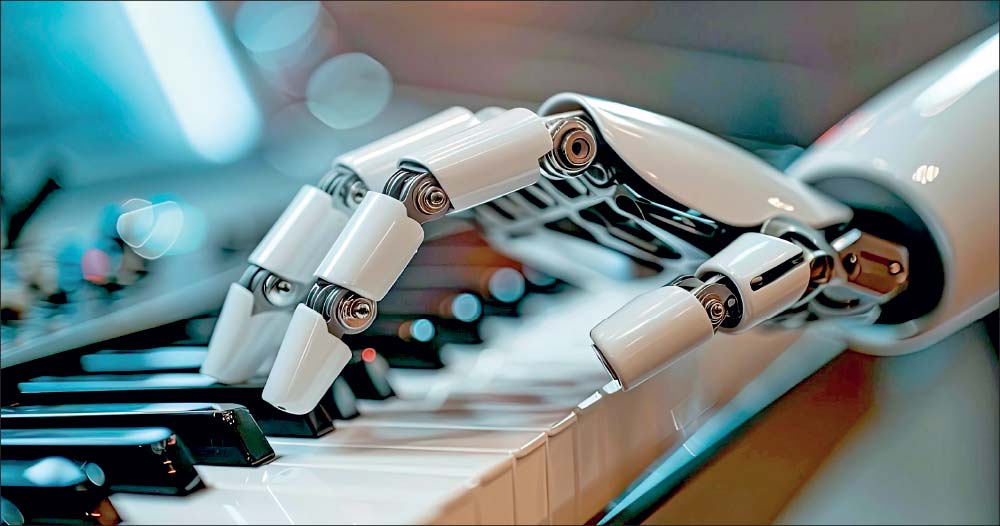
Recently, when asked for his view on AI-generated songs compared with songs performed by human singers, a colleague with close links to music responded as follows: "The difference between AI songs and songs sung by humans is clear. AI does not worry about whether the lyrics can truly be sung. It sings mechanically, whereas a human vocalist sings with feeling, blending the voice with the tone and message of the song. A composer or melody writer may reject certain lines, or even an entire set of lyrics, if they lack melodic beauty; AI never rejects anything. These differences are central to musical emotion, aesthetic value, appreciation, and enjoyment in a song performed by a human artist."
His point is that, although AI can create songs of comparable technical quality, it has no heart and therefore cannot surpass human beings in emotional depth.
Biologically speaking, the heart is only a muscle. Its task is to pump blood continuously through the body so that oxygen and nutrients reach our cells and keep us alive. Yet in everyday language, and across centuries of human culture, the heart has come to mean something far deeper. We see it as the home of human feeling: sympathy and empathy on one side, and powerful emotions such as fear and pleasure on the other.
Artificial intelligence is built on mathematics, data, algorithms, and computer code. For that reason, it cannot possess human feelings. Advanced systems can infer what we may be feeling by analysing our words, tone, facial expressions, or behaviour, but they do not actually experience those emotions. In the realm of genuine feeling, AI remains far behind human beings.
What we mean by sympathy and empathy
To understand what AI lacks, we must look more closely at two vital human qualities: sympathy and empathy. The two are often used interchangeably, but they describe different ways in which human beings connect with one another.
Sympathy is the sorrow or pity we feel when we see someone else in pain, trouble, or facing misfortune. It is the feeling that makes us want to help when we see another person suffering.
Empathy, in its most beautiful and collaborative form, is the genuine happiness and joy we feel when we see someone else succeed, grow, or prosper. It is the ability to celebrate a friend's or neighbor's victory without feeling jealous, sharing their happiness as if it were our own.
These twin aspects of human conscience—sharing sorrow in times of crisis and sharing happiness in moments of triumph—form the foundation of harmonious co-existence. They serve as social glue, reducing conflict, building trust, and helping people solve problems together. By enabling us to understand the feelings of those around us, sympathy and empathy help communities protect the vulnerable while allowing individuals to improve their own positions through honest cooperation.
AI cannot deliver this. A computer may read a sad story and produce a flawless message of comfort, but it feels no sorrow. It may record a company’s high profits or a student’s outstanding marks and send a cheerful notification, but it feels no joy. Because AI lacks an inner life, its apparent empathy is only simulation—numbers on a screen imitating the language of the soul.
Danger of a heartless workplace
When these ideas are brought into the workplace, the need for human feeling becomes even clearer. Many modern offices seek to measure everything through impersonal numbers and performance targets. Yet experience shows that a workplace without sympathy or empathy can quickly become stressful, distrustful, and toxic.
Consider what happens when a manager lacks sympathy and empathy. If employees are treated merely as machines and judged only by hours worked rather than by the human effort behind those hours, teamwork begins to break down. A manager who cannot show sympathy when an employee faces a family tragedy or personal illness creates an atmosphere of fear, resentment, and emotional distance.
It is equally damaging when a manager cannot feel empathy, or genuine happiness, for a team member’s success. When leaders respond to an employee’s progress with jealousy rather than shared joy, they discourage initiative and weaken innovation. For any organisation to grow, individuals must be able to improve their own positions cooperatively. Without sympathy and empathy from leadership, a workplace becomes a heartless machine in which workers burn out and trust disappears.
Taxpayers frequently complain that RAMIS automatically sends harsh demand notices because the central database has not been fully updated with recent manual documents, bank receipts, or local office records. The program sees an empty field in the system and assumes the taxpayer has not paid. It then adds heavy interest penalties to the bill and generates official legal warnings. For an ordinary citizen, a small shop owner, or a company accountant who has paid taxes honestly, a letter threatening court action or asset seizure can cause severe and unnecessary anxiety
Can computers ever feel? What research shows
Can AI soon learn to express or mirror these complex human feelings? To answer this, we must look at modern research in fields such as affective computing—the study of emotional computing—and artificial general intelligence. Scientists are already trying to build systems that can detect, interpret, and simulate human emotions.
In the world of technology, researchers have made significant progress:
Despite these impressive tools, today’s technology remains only a mirror. It reflects our emotions back to us but does not generate emotions of its own. The software does not feel the sadness it describes or the comfort it offers.
However, technology changes rapidly. As computers become more powerful, the path of machine learning suggests that far in the future we may face a world in which AI can outperform human beings at copying and expressing complex emotional outputs.
Big illusion: Copying versus experiencing
This brings us to a major question: what is the difference between a computer copying a feeling and a human being experiencing it in reality? The famous "Chinese Room" argument – attributed to a thought experiment created by American philosopher John Searle in 1980 to show that understanding of the meaning is more important to feel emotions than seeing mere visual shapes – helps illustrate the problem. A system may follow rules so effectively that it appears to understand language, music, or emotion, even though it is only manipulating symbols according to instructions.
The process relies on a cold pipeline of automation: raw data enters the system as input, the machine applies mathematical pattern matching, and a polished simulated output is produced. On the surface, this may look like empathy. Underneath, it remains only a mirror without feeling.
True human feeling, guided by the heart, requires conscious experience that a machine does not possess. When a computer processes the colour blue, it registers a value for a light wave; it does not feel the calm a human may experience when looking at a clear sky. When it writes a song, it calculates likely musical patterns; it does not feel the pain of a broken heart. Because it has no mind of its own, its simulated sympathy is empty. It uses the words of the heart without knowing what they mean.
However, a salutary sign is that AI portals are also improving day by day. Six months ago, I challenged a popular AI model to tell me the meaning of the Sinhala saying, ‘Pandithayata Edande Yanna Bæ’. The answer I got at that time was a direct mechanical translation of the saying. It said it meant that ‘A learned person cannot cross a footbridge’.
However, the same AI model is wiser today; it gave me the metaphoric meaning of the saying that ‘A person overloaded with book learning may fail at a simple practical task that someone with ordinary common sense can do easily’.
The good news is that AI models are not stagnant but are increasingly moving from large language models to large reasoning models that enable them to get into to the cultures embodied in the languages they use. But it still does not add a heart to AI and the heart symbols which they add to their writings are just mechanical symbols.
The lesson from the music composer, the limits of computer research, the needs of the workplace, and the mistakes made by automated tax systems such as RAMIS all point to one conclusion: AI must be used wisely. AI is a remarkable tool that can multiply what human beings are able to achieve, but it has no conscience. It can create a beautiful melody, but it cannot feel the heartbreak behind the music
Should we give machines a soul?
Rapid progress in AI forces us to ask an uncomfortable question: should machines be designed merely to simulate emotion, or should we try to build something resembling an emotional soul into computer code?
From an ethical standpoint, we do not need emotional AI at present. A spreadsheet, a medical tool, or a self-driving car need not feel happiness or sadness; they need to be accurate, safe, and reliable. The contradiction is that, as more daily interactions move online and become impersonal, real empathy and compassion appear to be weakening in businesses and Government offices around the world.
If human beings continue to lose these qualities of the heart, we face an unsettling future. If humanity gives up on sympathy and empathy, then an AI system that can at least imitate such feelings in public hospitals, elder-care homes, or customer service may begin to look attractive. A polite machine that pretends to care might eventually seem better than a cold, indifferent human worker who has forgotten how to be kind.
Cold logic of computers: The case of RAMIS
To understand why the human touch cannot be replaced, we must also consider how standard computer programs operate. At their core, software systems follow rigid rules: if this happens, do that. They cannot think independently, make compassionate exceptions, or exercise conscience. They may perform assigned tasks efficiently, but they cannot recognise the human anxiety or hardship their outputs may create.
A clear real-world example of this is Sri Lanka’s Inland Revenue Department (IRD) and its automated tax system, known as RAMIS (Revenue Administration Management Information System).
In an ideal system, taxpayer compliance data would flow smoothly into the database and keep records accurate. However, when database synchronisation lags or updates are delayed, automated systems may trigger premature penalty assessments. Without human intervention, this rigid sequence can wrongly target citizens, create groundless fear, and damage public trust. This is exactly where mandatory human due diligence must break the automated chain and protect the taxpayer.
RAMIS was built to modernise tax collection, and it performs efficiently in connecting the tax office with taxpayers. It processes vast amounts of financial data faster than any human office could. Yet, RAMIS can do only what its program instructs it to do.
This strict focus on rules causes real problems for ordinary people, especially during Sri Lanka’s current economic recovery. Following major economic challenges, the Government introduced tough tax reforms to increase State revenue. The tax base was widened, tax-free thresholds were lowered to bring more citizens into the tax system, and digital filing became mandatory.
With the country under pressure to meet revenue targets, RAMIS is operated under strict automated settings. At the same time, tax officers are forced to work at a frantic pace. Burdened by heavy workloads and a changing system, human staff may miss vital verification steps.
This high-pressure environment exposes the weakness of relying purely on a machine:
The computer program does not care whether the taxpayer is innocent; it cannot feel the fear it creates. It cannot show sympathy for a business owner trying to survive a difficult economy, nor can it share empathy when an honest business succeeds and tries to pay its fair share. It simply runs its code.
The fault lies not only with RAMIS but also with insufficient human verification in an overworked administration. Those who run the tax office must exercise due diligence. They need to step in, check the data, correct delays, and stop automated letters before they cause unfair distress and panic among the public. This is the human heart that should work behind the heartless robotic system.
As we hand over more of our daily lives to automated systems, the duty of sympathy, empathy, and careful verification returns to us. The people who design, operate, and manage AI systems must serve those values as their moral guides. We must ensure that technology remains a tool governed by human compassion, keeping our collective “heart” at the centre of every computer system we build
Guiding the machine with human kindness
The lesson from the music composer, the limits of computer research, the needs of the workplace, and the mistakes made by automated tax systems such as RAMIS all point to one conclusion: AI must be used wisely.
AI is a remarkable tool that can multiply what human beings are able to achieve, but it has no conscience. It can create a beautiful melody, but it cannot feel the heartbreak behind the music. It can manage a country’s tax collection, but it cannot understand the financial terror caused by an unfair penalty letter. The real danger today is not that AI lacks a heart; it is that human beings may begin to run the world without using theirs.
As we hand over more of our daily lives to automated systems, the duty of sympathy, empathy, and careful verification returns to us. The people who design, operate, and manage AI systems must serve those values as their moral guides. We must ensure that technology remains a tool governed by human compassion, keeping our collective “heart” at the centre of every computer system we build.
(The writer, a former Deputy Governor of the Central Bank of Sri Lanka, can be reached at [email protected] )




