A response to “Friends with all, subservient to none”

Saturday, 28 November 2026 00:10 -     - {{hitsCtrl.values.hits}}

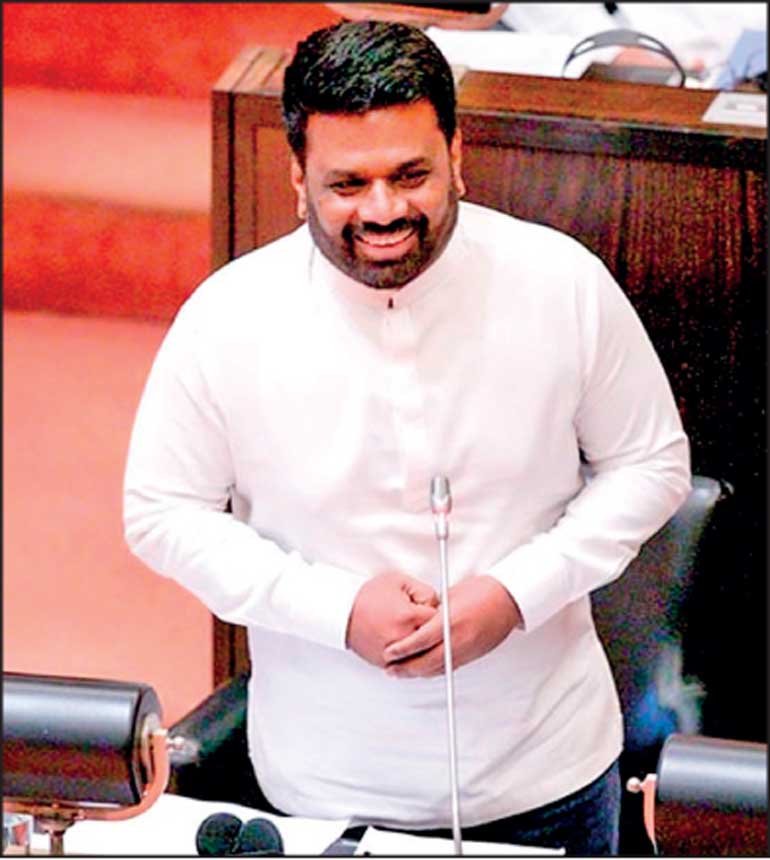
President Anura Kumara Dissanayake told Parliament on 20 March 2026 that under no circumstances, no matter the pressure, Sri Lanka would not undermine neutrality 


The full title authored by Faiszer Mustapha, PC is “Friends with all, subservient to none: Why Sri Lanka must guard its national interests” (Daily FT, 24 November 2026, see: https://www.ft.lk/columns/Friends-with-all-subservient-to-none-Why-Sri-Lanka-must-guard-its-national-interest/4-800477).


The article states: “We must transparently and through established international procedures, so that no one says that Sri Lanka has taken sides in a war that is not ours. Parliament and the public deserve a clear account of the rules we are applying, who may enter our waters, on what terms, for how long, and what becomes of a vessel once it is in our custody. Neutrality is not silence, and it is not indifference. It is a principled position and must be explained clearly and consistently to all our partners East and West alike”.

This is exactly what the President of Sri Lanka did when he addressed Parliament on 20 March 2026 and stated: “Under no circumstances, no matter the pressure we encounter, will we permit this neutrality to be undermined,” he stressed.  

“With regard to the issue concerning Iranian vessels, a request was made to us on 26 February 2026 for three naval ships to visit Sri Lanka on 9 March and 13 as part of a goodwill visit aimed at strengthening cooperation. We were in the process of reviewing this request for approval. On the same evening, the United States also requested permission for two warfare aircraft to land at Mattala International Airport in Hambantota. He said that the Government took a firm decision based on the policy of maintaining neutrality and did not grant approval for either of these requests” (Daily News 21 March 2026).

Foundational principle of neutrality

“The sources of the international law of neutrality are customary international law and, for certain questions, international treaties, in particular the Paris Declaration of 1856, the 1907 Hague Convention No. V respecting the Rights and Duties of Neutral Powers and Persons in Case of War on Land, the 1907 Hague Convention No. XIII concerning the Rights and Duties of Neutral Powers in Naval War, the four 1949 Geneva Conventions and Additional Protocol I of 1977’ (ICRC, June 2022).

According to this publication the foundational principle is The Principle Of Inviolability of the Territory of the Neutral State. “The territory of a neutral State is inviolable. It is prohibited to commit any act of hostility whatsoever on such territory. Neutrality describes the formal position taken by a State which is not participating in an armed conflict or which does not want to become involved. This status entails specific rights and duties. On the one hand, the neutral State has the right to stand apart from and not be adversely affected by the conflict. On the other hand, it has a duty of non-participation and impartiality.

Furthermore, Neutral space comprises the national territory of the neutral State, its territorial waters and its national air space. Neutral persons are nationals of neutral states.

Although the article states that “Neutrality is not silence and it is not indifference,” it admits that it is “principled” without revealing their sources. However, the seriously flawed common notion is that Neutrality does not, by itself offer sufficient security. Such a perception is because they are unaware of the fact that it is Neutrality that offers security through the principle of Territorial inviolability. This foundational principle of Neutrality was recognised by both Iran and the USA when they accepted the response of the Sri Lankan Government to their requests.

Neutrality in the context of national interests            

The article refers to the “proposed $ 3.7 billion Sinopec oil refinery at Hambantota – described when it was signed in January 2025, as the largest foreign direct investment in our history.”  Had this project become a reality, there is a strong possibility that other major powers would have explored opportunities to set up mega projects in Trincomalee. Fortunately, for Sri Lanka negotiations are stalled. This has given Sri Lanka the opportunity to explore options that are in keeping with Sri Lanka’s needs and decided to expand the existing refinery at Sapugaskanda with a capacity of 100,000 Barrels per Day. The lesson to be learnt is that Sri Lanka should first decide on the scope and scale of projects to suit its national interests and then explore arrangements to finance them.

The approach adopted by Sri Lanka in this instance reflects not only mature and wise statecraft but also the opportunity to protect its strategic autonomy in keeping with its policy of Neutrality.   

Exercising domestic law

The article states: “The law is clear – those who come on tourist visas are not permitted to do business here. According to the  Sri Lankan Tourism Development Authority 75 foreign nationals were arrested and 15 deported last year for doing business while on tourist visas.” 

Judging from the experiences of Sri Lankans, the prevailing situation needs serious attention. In this regard, there is no question that the author with his distinguished knowledge and experience in 

politics and the law is most qualified to file a Writ of Mandamus in the Court of Appeal to ensure that all institutions associated with law enforcement relating to those operating businesses are qualified to do so with due diligence. 

Recent columns