A circular can appoint a Data Protection Officer, but it cannot create the skills

Friday, 20 November 2026 00:23 -     - {{hitsCtrl.values.hits}}


A circular can create a title. It cannot, by itself, create the skill needed to use that title well.

That is the challenge now facing Sri Lanka’s public service. In August 2026, the Data Protection Authority issued Personal Data Protection Circular No. 01/2026 on the application of the Personal Data Protection Act in the public sector. Its central message was straightforward: every Ministry or Government department that processes personal data must appoint a Data Protection Officer.

Almost every public institution handles personal data. Divisional Secretariats maintain records relating to welfare payments. Hospitals hold patient files. Ministries manage the personal details of thousands of employees. The circular therefore reaches deep into the machinery of the state.

It is a welcome step. But the real test will be whether the public service has the people, training and leadership to turn a legal instruction into everyday practice.

What the circular asks for

The circular was issued under the Personal Data Protection Act No. 9 of 2022, as amended by Act No. 22 of 2025. It asks public institutions to publish the contact details of their Data Protection Officer and communicate them to the Authority.

There is also a clear legal deadline. Under Extraordinary Gazette No. 2498/16, key provisions of the Act—including Part III, which contains the duty to designate a Data Protection Officer under Section 20—come into operation on 1 January 2027.

The circular sets out practical first steps: educate staff; establish an internal structure, such as a Data Protection Officer, privacy champions or a steering committee; document what personal data is held and why; identify compliance gaps; introduce policies on data subject rights, retention, privacy notices, consent and training; and keep staff awareness up to date.

Look closely at that list. Much of it is not about technology. It is about people: their understanding, their habits, their accountability and their ability to make good decisions when handling citizens’ information.

The capacity gap

Sri Lanka’s own digital-government frameworks recognise this challenge. The ICTA Digital Government Competency Framework emphasises the need to build digital skills across the public workforce, while the Digital Maturity Model includes “leadership and culture” and the “level of skill” among the elements of a digitally mature institution.

In my earlier work in security management and compliance auditing, I learned a simple lesson: policies alone do not protect data. Controls must be understood, followed and monitored. Today, as a governance, risk and compliance professional, I see organisations struggle most with maintaining a proper personal-data inventory, managing third-party data handling, and responding clearly when something goes wrong.

There is also a cultural issue. Data protection is often treated as an IT matter. It is not. It is an organisational responsibility that affects how staff share files, communicate through informal channels such as WhatsApp, store identification documents, grant access to records and dispose of paper files.

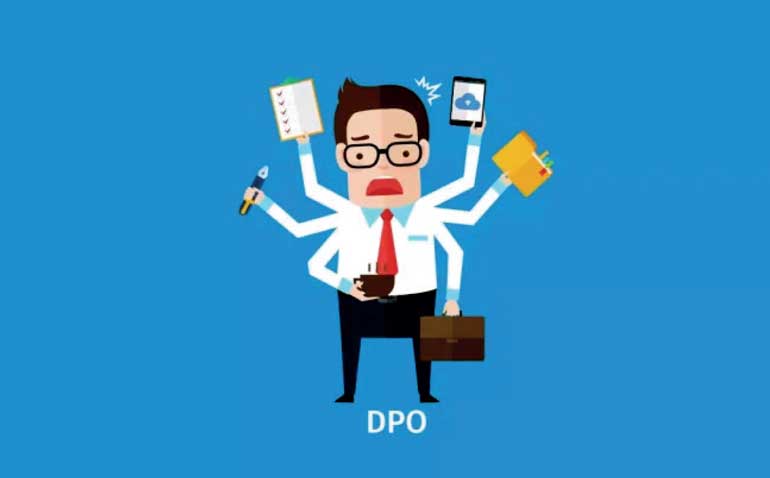
A Data Protection Officer must understand the law, map how personal data moves through an institution, assess risk and advise senior management. Yet in many institutions, the role may simply be added to the workload of an already busy officer. Without training, authority and support from leadership, the result could be compliance on paper rather than protection in practice.

Why this matters now

Sri Lanka is expanding digital public services. Initiatives such as the Sri Lanka Unique Digital Identity and GovPay are intended to make it easier for citizens to access Government services and make payments.

Each of these systems depends on personal data. Citizens will use them only if they believe the state can protect that data. A serious breach in a ministry, department or public agency could damage confidence not only in one service, but in the wider digital-government agenda.

This is why capacity building matters. As digital transformation specialist Asela Waidyalankara noted in comments reported by The Morning in April 2026, structured capacity-building programmes and clearer career pathways in GovTech will be essential. Data protection skills should be a central part of that effort.

Four practical steps

First, make the Data Protection Officer a real role, not an additional title. Institutions should give the officer sufficient time, access to information, a clear reporting line to senior management and a practical job description. Smaller public bodies can share an officer, as Section 20(3) of the Act allows a single Data Protection Officer to serve several public authorities, while larger ministries should support their officer with trained privacy champions in each division.

Second, create a common training pathway. The Data Protection Authority, GovTech and the Sri Lanka Institute of Development Administration could jointly develop a short, certified course for Data Protection Officers and privacy champions. The Act already anticipates prescribed qualifications for Data Protection Officers; a recognised national course could help institutions meet that expectation.

Third, make leaders accountable. Data protection cannot simply be delegated to a junior officer. Ministry Secretaries and heads of departments should own compliance, receive practical training and ensure that data protection is considered when new systems, processes or partnerships are introduced.

Fourth, measure and publish progress. The circular already requires institutions to publish their Data Protection Officer’s contact details. The Authority could build on this by publishing an annual overview of institutional readiness: how many officers have been appointed, how many institutions have completed data mapping, and how many have adopted core policies.

People, not paperwork

The Data Protection Authority’s circular is an important moment for Sri Lanka’s public service. It turns data protection from a legal principle into a daily responsibility for Ministries and Government departments.

But whether it succeeds will depend less on the wording of the circular than on the people asked to implement it. Digital transformation is not only about systems and code. It is about capable public servants, informed leaders and institutions that treat citizens’ personal information with care.

Sri Lanka’s digital government will be built not merely with platforms and policies, but with people who understand why protecting personal data matters.

(The author is a governance, risk and compliance professional and an MBA in E-Governance candidate at General Sir John Kotelawala Defence University. The views expressed are his own. He can be reached at [email protected])

Recent columns

COMMENTS