Thursday Oct 22, 2026
Thursday Oct 22, 2026
Tuesday, 30 December 2025 02:42 - - {{hitsCtrl.values.hits}}
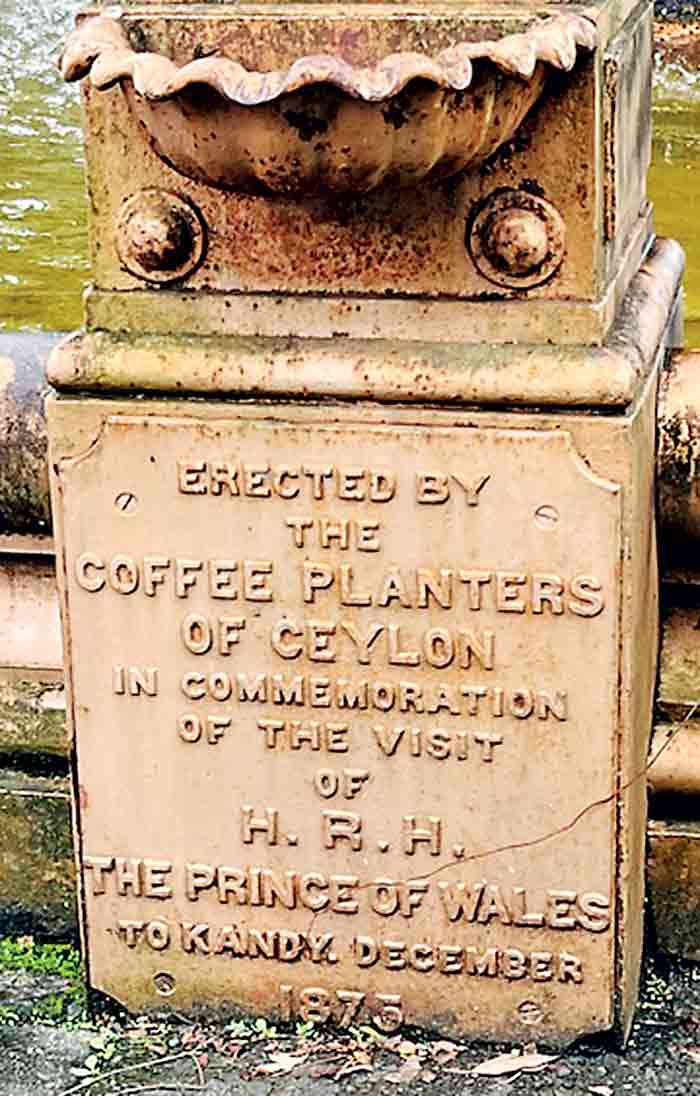
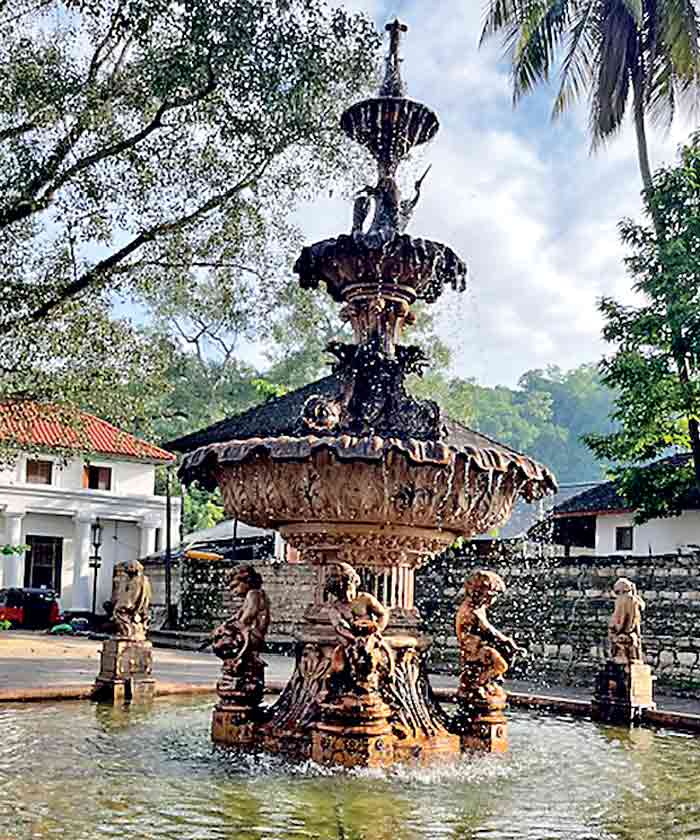
 The Coffee Planters’ Fountain of Kandy, a historic monument commemorating the Prince of Wales’s 1875 visit to Kandy, reaches the milestone 150th anniversary this year. The monument stands in the heart of Kandy, closer to the sacred Temple of the Tooth. A Victorian-era fountain tells a fascinating story of Ceylon’s brief but brilliant coffee boom.
Two years ago, on the 2nd of December, I happened to pass by this monument and noticed that this beautiful masterpiece was marking its 150th anniversary on our soil in another two years. Having noticed the extraordinary circumstances I uploaded a post on my Facebook account tagging the Ministry of Tourism, stating that the authorities should use this opportunity to capitalise on European markets, especially in the UK, to attract more tourists. It remains unclear whether such initiative had been planned by the relevant authorities before the Ditwah cyclone caused widespread flooding and landslides across the country.
The Coffee Planters’ Fountain, an ornate masterpiece of Victorian craftsmanship, was erected in 1875 to commemorate the visit of the Prince of Wales to Ceylon’s ancient hill capital. Yet this monument represents far more than a royal visit. It stands as a memorial to an agricultural revolution that transformed the island’s economy and landscape before vanishing almost as quickly as it had appeared.
From jungle to global coffee power
The story begins shortly after British occupation of the Kandyan Kingdom in 1815 when coffee was introduced as a commercial plantation crop. George Bird pioneered commercial coffee cultivation at Singhapitiya Estate in Gampola, and within decades, Ceylon had become one of the world’s foremost coffee producers. By 1870, coffee production peaked with over 275,000 acres under cultivation. The coffee planters, prosperous and confident, formed their own organisation and wielded considerable economic influence. When news arrived that the Prince of Wales would visit Kandy, they commissioned a fountain befitting their status and the occasion.
Victorian artistry in a tropical setting
The fountain was made by George Smith & Company in their Glasgow factory, crafted from a tin and copper alloy in the distinctive form of a coffee flower, a subtle but proud tribute to source of the planters’ wealth. Shipped in parts across the Indian ocean, it was assembled and erected in Kandy just in time for the royal visit. The fountain’s iconography blends Victorian symbolism with practical function. Two types of cherubs adorn the structure: four around the outer octagonal pool carry urns and paddles, a design unique to Smith and Company that appeared in several British fountains including those at Tobermory Harbor and Kelvin Grove Park. These half-nude figures, described by researchers as representing “the innocence of life,” lean pensively on their paddles while water flows from the leafy mouths of their urns. Four more cherubs at the center column grasp baby crocodiles with open mouths symbolising, according to art historical analysis, masculine strength and the evils of human life.
Heritage observers note that the year 2025 would have been a unique opportunity for cultural tourism to highlight this monument. The fountain’s Scottish manufacture and royal connections could appeal to British and European visitors, while its artistic merit deserves greater recognition among those interested in Victorian-era craftsmanship and colonial history
Monument outlasting its era
The irony of the Coffee Planters’ Fountain is that it was erected at the very peak of Ceylon’s coffee prosperity. However, disaster struck soon after. Within a few years of the Princes’ visit, coffee leaf rust disease devastated the island’s plantations, effectively ending the coffee era and forcing planters to tea cultivation. The fountain remained, however, becoming one of Kandy’s most photographed landmarks despite its relatively low profile in historical discussions. It stands as an artefact of Glasgow’s industrial prowess, Victorian imperial confidence, and Ceylon’s forgotten coffee chapter, all compressed into one ornate structure.
Overlooked opportunity
Heritage observers note that the year 2025 would have been a unique opportunity for cultural tourism to highlight this monument. The fountain’s Scottish manufacture and royal connections could appeal to British and European visitors, while its artistic merit deserves greater recognition among those interested in Victorian-era craftsmanship and colonial history. Whether Sri Lankan tourism authorities will capitalise on this anniversary remains to be seen. For now, the Coffee Planters’ Fountain continues its quiet vigil closer to the sacred Temple of the Tooth (Sri Dalada Maligawa), in front of the DFCC Bank, Kandy, which was partly responsible for the restoration work of this monument some time back. The Coffee Planters Fountain remains accessible to visitors year-round.
(The author is a senior management consultant. He is a former CEO/ General Manager of a non-bank financial institution. He is also a former commission member of the National Science and Technology Commission (NASTEC) under the Ministry of Science & Technology. He is a Fellow of the Institute of Chartered Professional Managers of Sri Lanka and a Member of the Institute of Management of Sri Lanka. He is a visiting lecturer on leadership and strategic management on postgraduate degree programs. He is also a SLITAD certified life and business coach. He holds a masters’ degree in Business Administration from the UK.)
References;
1. Abeyawardhana, H. A. P. (2004) Heritage of Kandurata: Major natural, cultural, and historic sites.
2. Biyanwila, A. (2021) Art of A Heritage: An analysis of the ornamentation and the foreign artistic influences on the Coffee Planters’ Fountain in Kandy.
3. Ancient Ceylon, Journal of the Department of Archaeology, Sri Lanka.