Tuesday Jul 14, 2026
Tuesday Jul 14, 2026
Tuesday, 14 July 2026 00:50 - - {{hitsCtrl.values.hits}}
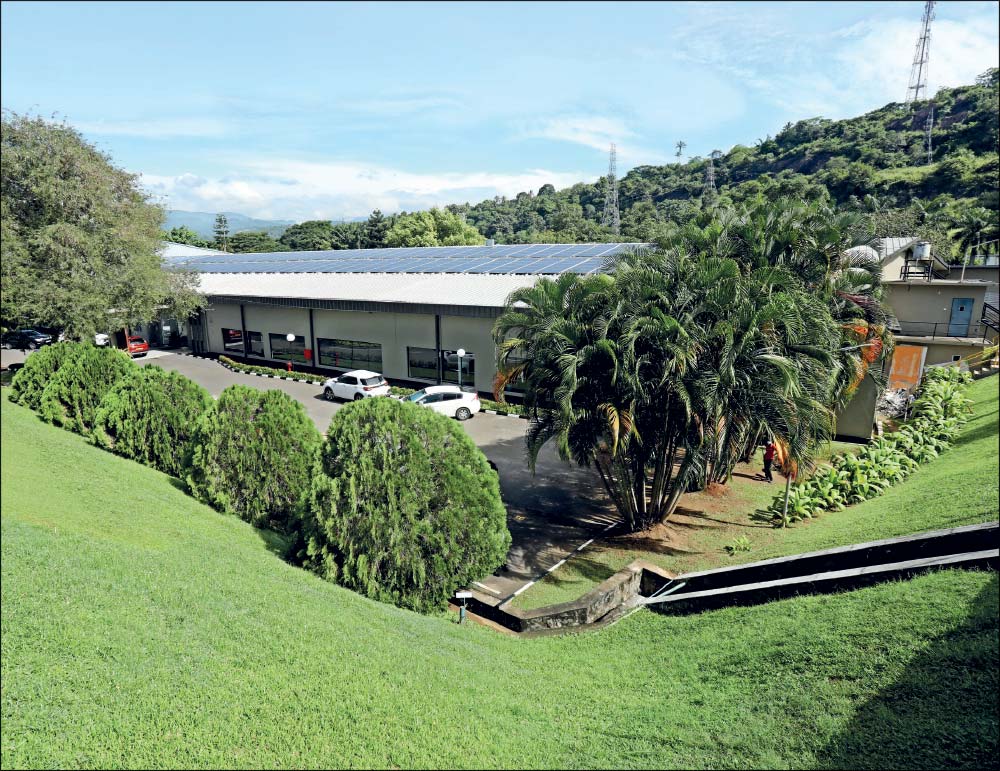
MAS Linea Clothing, Pallekele, situated within a community that was significantly impacted by Cyclone Ditwah
 Outside of those directly engaged in the science, climate change has typically been spoken of in the future tense — as mitigation against risks still appears to be over the horizon. Yet after Cyclone Ditwah became our nation’s deadliest and most economically devastating weather event in living memory, it’s now clear that mitigation can no longer be our first priority.
More than 640 lives were lost, with an estimated 10% of the population impacted across every district. Sri Lanka was not alone. In 2025, the world absorbed $ 55 billion in weather-related disasters in what meteorologists dubbed a ‘year of monsters’. Simultaneously, the planet endured the sixth deadliest heatwave on record. In Asia alone, approximately one billion people live under the constant threat of extreme heat stress.
Sri Lanka’s own projections suggest that days exceeding 35°C could rise from around 20 per year to over 100 by the 2090s. Heat islands are forming across cities and industrial zones. Shifting rainfall is disrupting agriculture, threatening yields and livelihoods that ripple through supply chains and entire communities. This new reality demands a fundamental shift in how governments, enterprises, and communities respond.
Systematic shifts: Moving from reactive to proactive
Sri Lanka’s manufacturing sector has absorbed an estimated $ 2 million per month in additional fuel and energy costs since Ditwah, rather than passing them to global buyers. That approach cannot be sustained indefinitely.
Generic assumptions about climate risk no longer hold. Impacts vary sharply by geography, sector, and supply chain structure — a facility in the Western Province faces different vulnerabilities than one on the Southern coast or in the Hill Country. A formal, location-specific climate risk assessment is now a baseline requirement, not a best practice.
MAS Holdings began conducting location-specific climate risk surveys across its operations before Ditwah arrived, grounded in a straightforward recognition: climate impacts don’t show up the same way at every facility, and planning as though they do leaves gaps that events eventually find. For organisations with existing assessments, the bar has shifted. Climate change is intensifying faster than earlier models projected, and plans calibrated to older baselines will underestimate what is coming.
Adaptation cannot stop at the factory door
If workers cannot safely reach the workplace — because the road is flooded, their home destroyed, or their family in crisis — operations break down regardless of how well-prepared the facility is. The communities workers return to each night are part of the business continuity equation.
Every enterprise should be asking: How flood-prone are the areas where our workforce lives? Are their neighbourhoods resilient enough for operations to resume after an extreme weather event? At MAS, sustainability and climate adaptation are embedded into core business strategy — not as a reporting function, but integrated into how the organisation thinks about people, place, and long-term operational health. Global partners and investors are no longer asking only for emissions figures. They want to understand how organisations are responding to physical climate realities on the ground.
Government has a central role in adaptation, but waiting on public systems alone is itself a business continuity risk. Family-owned and purpose-driven enterprises, particularly those rooted in the Global South, have a structural advantage: they are not primarily governed by quarterly incentive structures, and can justify long-horizon investments through values and necessity — a combination publicly listed companies often struggle to articulate to shareholders. The old framing of profit first, then people, then planet if resources remain, no longer functions in a climate-disrupted economy.
Inclusive climate planning: Women and vulnerable groups at the centre
Climate change is not a great equaliser. It compounds existing inequalities. In Sri Lanka, women bear a disproportionate share of climate impacts while having the least say in the decisions that shape the response (UN Women Country Gender Equality Profile, 2026). The sectors most exposed — agriculture, fisheries, tea plantations, and informal labour — are also those where women make up significant parts of the workforce. Tea production alone is projected to decline 12% by 2050, and it is plantation workers, predominantly women, who will absorb the steepest consequences.
Safety is an adaptation variable. In crisis situations, women face heightened risks of gender-based violence and loss of safety in communal spaces. Infrastructure cannot be designed without accounting for who is actually safe using it. The answer is structural inclusion — women in affected communities understand what is needed, often better than external planners. When organisations in early stages of adaptation share their risk assessments, safety lessons, and community investments, they give communities the knowledge to identify what they actually need rather than receiving what organisations assume they need. That is adaptation work in its own right.
The work that remains
Generic assumptions do not protect businesses or the people working in them. Every enterprise must conduct climate risk assessments specific to their operations and geographies, then move from reactive to proactive — because knee-jerk responses after disasters cost more and deliver less than preparation put in place before the event. The first question any business should sit with is whether the world is better because of what it does, and whether the harm it causes can be reduced. That is the honest first step.
The next extreme weather event is already forming somewhere. What matters is taking the first step — whether that means reviewing your risk exposure, sitting with communities to understand what they need, or revisiting plans built for a climate that no longer exists.
The organisations that will endure are those that treat people, not just profit, as the foundation of their purpose. That is what embeds long-term resilience into strategy — not as a commitment on a slide, but as something felt in the decisions taken at every level of an organisation.
Being prepared is not the same as being safe. But it is where we must begin.
The authors are Amanthi Perera – Head of Sustainable Business, MAS Holdings (Pvt) Ltd and Sanith de Silva Wijeyeratne – Director/CEO, Climate & Conservation Consortium.



