Thursday Oct 22, 2026
Thursday Oct 22, 2026
Friday, 3 July 2026 00:00 - - {{hitsCtrl.values.hits}}
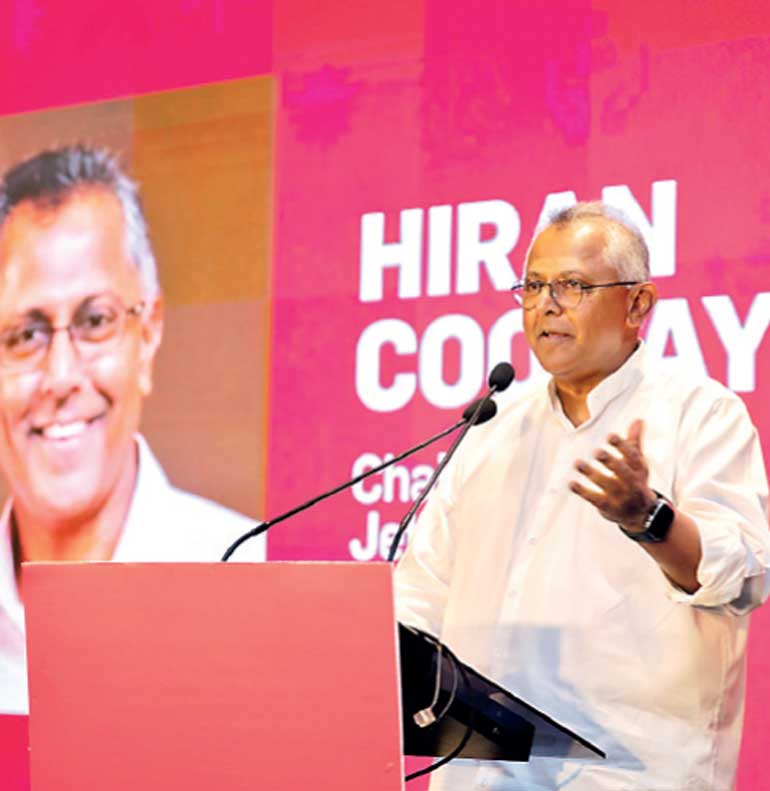
Jetwing Symphony and Lighthouse Hotel Chairman Hiran Cooray
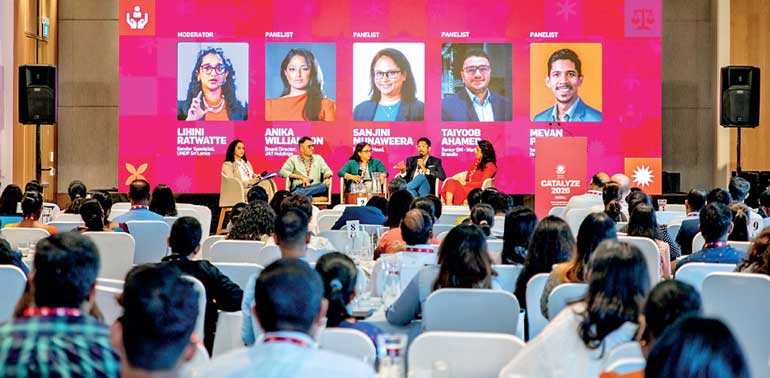
Panel discussion on “Men and Inclusion: Navigating Changing Expectations in the Workplace”
As businesses navigate an increasingly complex operating environment shaped by workforce transformation, evolving stakeholder expectations, technological disruption and shifting market demands, strengthening performance requires more than new strategies. It requires new ways of thinking, leading, and collaborating.
It was against this backdrop that UN Global Compact Network Sri Lanka convened CATALYZE 2026: Social, bringing together business leaders, sustainability practitioners, policymakers, development partners and industry experts to mobilise collective action and equip businesses with the knowledge, partnerships and practical approaches needed to strengthen performance through responsible business.
More than a forum for dialogue, CATALYZE 2026 was designed to help businesses think differently about performance. It reinforced that long-term success is increasingly shaped by how organisations lead, uphold human rights, foster inclusive workplaces, strengthen ethical governance, and build cultures that enable innovation, resilience and trust. Responsible business is no longer separate from business performance — it is fundamental to it.
Aligned with the UN Global Compact’s 2026–2030 Global Strategy, the Forum reflected its three strategic pillars — Equip, Catalyze and Advance — by strengthening business capability, fostering collaboration and mobilising leadership to accelerate progress on social sustainability.
UN Global Compact Network Sri Lanka’s approach to social sustainability centres on driving this change — recognising that meaningful progress comes not only through policies and commitments, but through the everyday decisions, leadership behaviours and organisational cultures that shape how businesses operate. CATALYZE 2026: Social encouraged participants to move beyond intention towards implementation, embedding responsible business practices into strategy, governance and organisational culture. Opening the CATALYZE 2026: Social, UN Global Compact Network Sri Lanka Executive Director Rathika de Silva spoke to the role of responsible business leadership in strengthening Sri Lanka’s global competitiveness:
“Sri Lanka has the workforce, resilience, and opportunity to compete not by being the cheapest producer, but by becoming the most trusted. As global expectations evolve, compliance is no longer simply a cost of doing business — it is the foundation of market access, and the decisions we make today will determine how strongly we compete in the markets of the future.”
The Forum featured keynote addresses, leadership dialogues and technical sessions on the issues shaping the future of business, including business integrity and anti-corruption, human rights, neurodiversity and inclusive workplaces, artificial intelligence and the future of jobs, the Women’s Empowerment Principles (WEPs), responsible sustainability communications, and workforce resilience. Together, these discussions highlighted how responsible leadership, inclusive practices, and strong governance contribute to organisational resilience, innovation, and long-term performance.
In the keynote address, “Just Transition: Communities, Culture and the Human Side of Business Transformation,” Jetwing Symphony/Lighthouse Hotel PLC Chairman Hiran Cooray explored what it means to make business transformation inclusive, equitable and people-centred. This was followed by the leadership dialogue “Creative Cultures: The Future of Innovation and Sustainable Business,” featuring GOOD LIFE X Founder Randhula de Silva on how creativity, culture and futures thinking can strengthen innovation and organisational adaptability.
Beyond the sessions, CATALYZE 2026: Social created space for peer learning, cross-sector collaboration and knowledge exchange — connecting businesses with technical experts, development partners and industry leaders to explore practical approaches for putting responsible business practices into action, and in doing so, strengthening the collective capacity of Sri Lanka’s private sector to address shared sustainability challenges.
CATALYZE 2026 was delivered across two thematic editions. CATALYZE 2026: Social, held on 24 June, focused on the people dimension of sustainable business, while CATALYZE 2026: Environment, held on 25 June, explored climate action, nature, resource stewardship and the environmental priorities shaping the future of business. Together, the interconnected nature of social and environmental sustainability and the need for integrated approaches that create value for business, people and the planet were reflected.
CATALYZE 2026: Social was made possible through the support of UN Global Compact Network Sri Lanka’s growing ecosystem of participants, partners and collaborators committed to advancing responsible business. Brandix Apparel Limited served as Main Partner, with UNFPA Sri Lanka, Aitken Spence PLC and Elpitiya Plantations PLC as Strategic Partners. Session Partners included Hemas Holdings, LIRNEasia and GOOD LIFE X, with additional support from the Women’s Empowerment Principles (WEPs).
The Forum was further strengthened by the continued support of the Patrons of UN Global Compact Network Sri Lanka’s Diversity and Inclusion and Business and Human Rights Working Groups: MAS Holdings, Hirdaramani Apparel, Brandix Apparel Ltd., Commercial Bank of Ceylon PLC, Sampath Bank PLC, Hatton National Bank PLC and A. Baur and Co. Ltd., — reflecting a shared commitment to advancing responsible business leadership in Sri Lanka.
As Sri Lanka continues its journey towards a more sustainable and inclusive economy, CATALYZE 2026 reaffirmed that responsible business is a powerful driver of resilience, competitiveness and long-term value creation. By equipping businesses with practical knowledge, fostering collaboration and mobilising collective action, UN Global Compact Network Sri Lanka continues to support companies in embedding sustainability into business strategy, strengthening organisational performance, and accelerating progress towards the Ten Principles of the UN Global Compact and the Sustainable Development Goals.




