Friday Oct 23, 2026
Friday Oct 23, 2026
Friday, 19 December 2025 00:20 - - {{hitsCtrl.values.hits}}
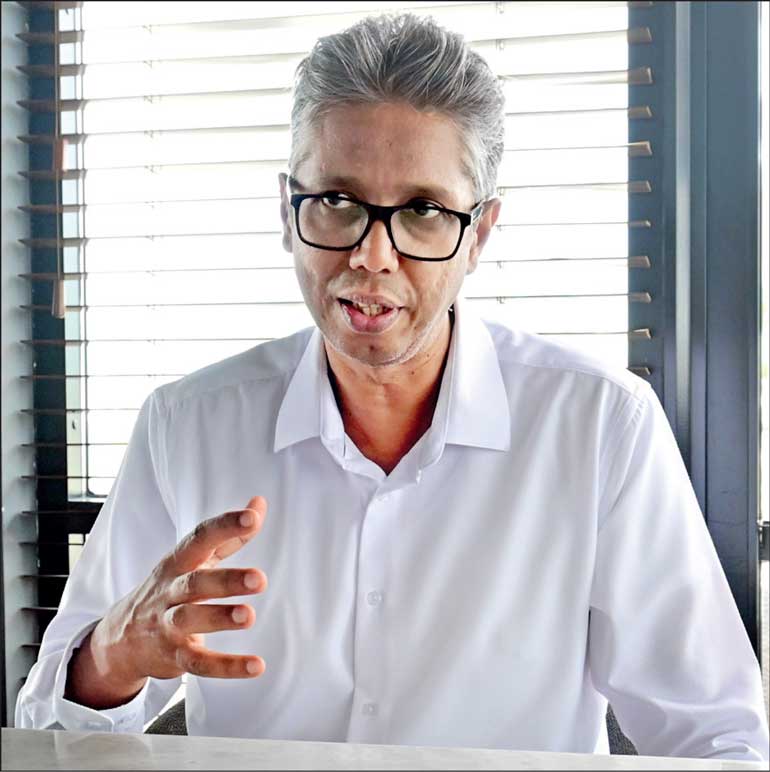
TiE Colombo Founding President Madu Ratnayake
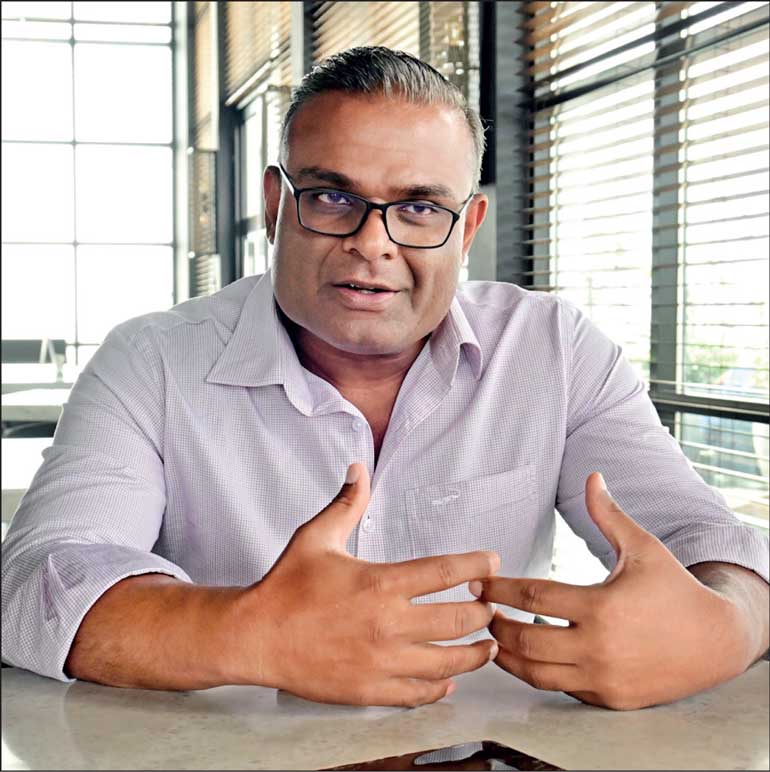
TiE Colombo Founding Charter Member Ruwindhu Peiris
As Sri Lanka positions itself on the brink of a new chapter in entrepreneurial growth, the inaugural TiECon Sri Lanka 2026: Go Global – The Runway to the World marks a critical moment for the country’s businesses and their founders. The Indus Entrepreneurs (TiE) is the world’s largest non-profit network dedicated to fostering entrepreneurship through mentorship, education, funding and global networking, with a community of 500,000+ people including 50,000+ entrepreneurs and mentors, 12,000+ corporate executives and 15,000+ investors across 61 chapters worldwide.
 Launched just over a year ago, TiE Colombo has quickly become a bridge between Sri Lankan entrepreneurs and global markets, nurturing innovation and creating pathways for scaling beyond the island.
Daily FT recently had a conversation with Scybers President and TiE Colombo’s Founding President Madu Ratnayake, and Partner, Stax, a Grant Thornton US Company, and TiE Colombo Founding Charter Member Ruwindhu Peiris, where they revealed how this landmark summit is designed to convert Sri Lanka’s entrepreneurial potential into tangible global growth and impact.
Q: So to begin, in simple terms, what is TiECon and why is Sri Lanka hosting it in 2026?
Ruwindhu: As we were thinking of a theme to tie in with where we are as a world, we felt ‘Go Global’ and ‘being the runway to the world’ was a good theme because we are at a point where, more than ever before, the ability to bring out the best of what Sri Lanka has to offer on the global stage is paramount.
We keep talking about resilience and how much we bounce back. That’s all great, but you can’t always be talking about potential. You have to actually materialise the potential. And we genuinely feel that a conference of this magnitude and stature brings to Sri Lanka some of the most renowned individuals in their areas of speciality, not just as theorists, but as practitioners.
Q: Since this is the first TiECon in Sri Lanka, what standards or expectations does the global TiE network set for a conference like this? What are you bringing from the previous global conferences?
Ruwindhu: Strategically, we positioned the Colombo Summit right after the global summit in Jaipur. TiE has 16 countries and 61 different chapters. Each one of these chapters hosts its own conference. The culmination of all of this happens once a year, towards the end of the year, called the TiE Global Summit. So we were actually fortunate to be able to position and structure the Colombo Conference right after that. Most of the people who are already travelling from across the world to India are going to just hop across and then experience Sri Lanka and what we have to offer as a country.
Madu: TiE globally has these key conferences around the world and we are looking to build this platform for entrepreneurs and businesses. TiE Global has high expectations around the quality of speakers that you bring, the kind of platform you create, and engagement with the ecosystem. We are not doing this alone; we are bringing the full ecosystem in Sri Lanka to do the TiECon Sri Lanka 2026. We are partnering with entrepreneur organisations, policy makers, investors and other industry chambers. So it’s really a platform that we are creating for everybody to benefit from this.
Q: Who is the primary audience for this conference?
Madu: The primary audience is businesses at any stage. It could be a single entrepreneur trying to do something global versus a full-scale company that wants to go to the next level. It could be the entrepreneur, or it could also be the intrapreneur; the people who are actually driving the businesses. Companies that are trying to go global, their strategy teams, marketing teams, HR teams, IT teams and executive teams.
We are looking at policy makers, some think tanks, academia, and people like that who want to understand where the world is going so they can align things.
Investors are another big part. So we have foreign investors coming in and local investor groups like Lankan Angels and a few other investor groups coming in. Individual private equity parties are also coming in.
 Ruwindhu: There are three segments, I guess, from the first segment that you mentioned about people who will gain the most from it. We want us to have big audacious goals. And it’s easier said than done.
For people to be able to expand their horizons and to be able to dream bigger dreams, we feel you need to kind of bring these people and tell these massive stories. That’s one segment of people.
Then the next is people who are able to make it pragmatic and actionable. There’s a big emphasis on making sure that the conference and the architecture of it are curated very carefully. Even now, we’re just talking about how we fine-tune and bring the right people to the forum.
Q: The theme is ‘Go Global’. What does that actually mean for someone who is attending?
Ruwindhu: Go global, at some level, could be the more obvious one of literally going global. You’re providing a service or you have products that you’re catering today to the local market. How do you now go from that to a global stage?
What we found is that we honestly have not taken advantage of India and its growth, the country right next to us that is tremendously blessed with opportunities. They are going to be one of the largest economies, and we want to demystify some of that stuff. How do you enter India? How do you size the opportunity? How do you make inroads and then understand how you bite this elephant piece by piece? So that’s one area that we want to focus on when you say go global. Think of the world, but also make it very practical. Or it could be in the region. So being able to help people discern what going global really means.
If you’re already global, you should still be there because you’re going to be able to see if you are still relevant, get ready for change and de-risk yourself, while also taking advantage of some of the emerging opportunities. If you think you’re not ready to go global or if you never want to go global, you should still come because this provides a global view in terms of what your local services should be and what you should be aspiring to provide.
Q: Will attendees get access to real international investors and decision-makers or is it mainly learning and networking?
Madu: We are not only curating speakers, we are also curating the attendees. We are bringing these global TiE charter members. Members are already signing up from different chapters from India, the US, Europe, Dubai and Singapore. When you come to the event, it’s not only listening to somebody but it’s also finding a mentor, maybe finding an investor, finding a partnership.
Unlike other conferences, we have also created this whole thing called the network lounge. There’s a curated lounge area that we set up in parallel to the conference area, so people can meet and build relationships and connections.
Ruwindhu: To that end, one thing I would urge everyone who is attending is to come prepped. Come, engage, take the opportunity, and really put yourself out there. But have a compelling story ready. Have your elevator pitch ready.
Q: How were speakers selected for Sri Lanka?
 Ruwindhu: If you go into the structuring of the conference itself, we had five key themes that we felt were relevant and very pertinent to where we are today, not only from a Sri Lanka perspective but also in terms of global shifts.
For each of these, we figured out the people who are most relevant and who have an interesting story, not the common story itself, but sometimes even contradicting views, to bring a balanced perspective into this.
Madu: We’re bringing people who are actually building global businesses, people who have the experience and are willing to lend a hand. It’s a really good mix of participants: speakers, thought leaders, investors and people who are just willing to help.
Q: So, Sri Lanka has hosted many conferences that didn’t translate into long-term impact. How are you going to make sure TiECon is not just another one-day event? And what happens after?
Ruwindhu: We feel very confident, and we know we’ve invested a lot to bring to the table the right people with the right experience, right intent and the right content to be of value. But it’s not going to end with a conference; it’s actually just the start.
 There’s a whole host of networking events and connections that will then really become the runway for starting out or scaling up. There’s a multitude of things planned, and it’s a three-year journey. We’ve got the next year planned out in detail.
Madu: Immediately after the conference, we’ll organise outward missions, especially in the south of India. We’ll also go to Singapore, Dubai, the US and several other countries. We have several trips planned so that people who are interested in becoming part of TiE can join us. So whatever seeds you see at the conference can now go into the next-year plan. TiE is a platform, and the conference is one part of that platform.
Pix by Sameera Wijesinghe




