Thursday Oct 22, 2026
Thursday Oct 22, 2026
Tuesday, 30 June 2026 04:57 - - {{hitsCtrl.values.hits}}
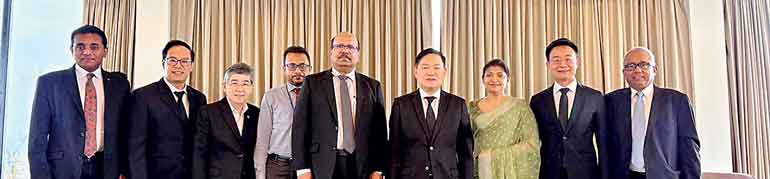
Thai Ambassador Paitoon Mahapannaporn (fourth from right) along with Trade, Commerce, Food Security and Co-operative Development Ministry Secretary K.A. Vimalenthirarajah, BOI Director General Renuka Weerakone, and Sri Lanka-Thailand Business Council President Rizan Nazeer and other officials
The newly enacted Sri Lanka–Thailand Free Trade Agreement (SLTFTA) took centre stage at the Thailand–Sri Lanka Business Forum: Trade, Investment and Beyond, organised by the Royal Thai Embassy in collaboration with the Sri Lanka–Thailand Business Council and the Sri Lanka–Greater Mekong Business Council in Colombo on 18 June 2026.
Bringing together senior government officials, diplomats, business leaders and industry experts from both nations, the forum focused on translating the opportunities of the Free Trade Agreement into tangible business outcomes. Discussions highlighted trade expansion, investment facilitation, supply-chain integration, and strategies to strengthen economic cooperation between Thailand and Sri Lanka. Strengthening growing economic partnership
Opening the forum, Thai Ambassador Paitoon Mahapannaporn noted the remarkable growth in bilateral trade, which reached $ 649 m in 2025, representing a 48% increase over 2024.
He emphasised the strong investment ties already established between the two countries. Thailand’s leading investments in Sri Lanka include INSEE Cement, CP Group’s aquaculture ventures, and manufacturing operations, while Sri Lankan investments in Thailand are concentrated in jewellery, manufacturing, and logistics, led by the Hayleys Group.
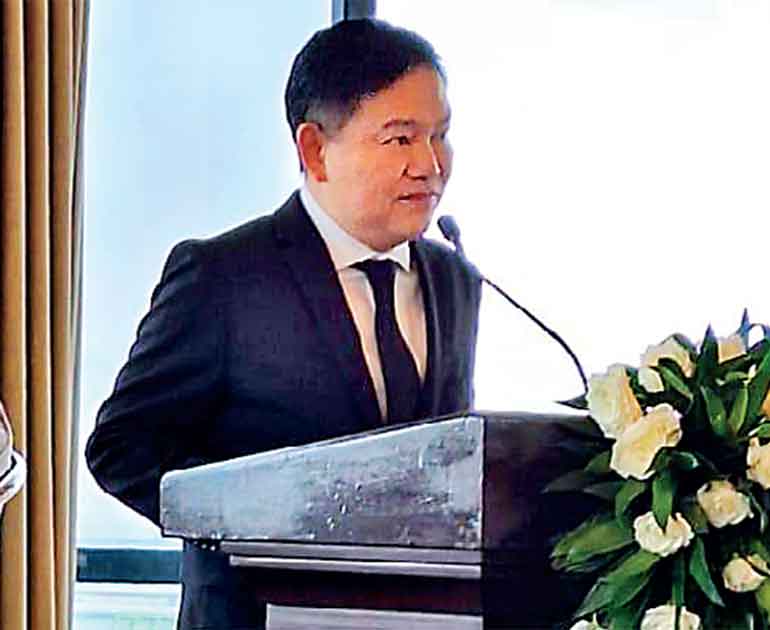
Thai Ambassador Paitoon Mahapannaporn
“The Forum aims to explore ways to enhance our mutually beneficial trade and investment cooperation,” he stated.
Building resilient cross-border value chains
Sri Lanka–Thailand Business Council President Rizan Nazeer highlighted the need for resilient cross-border partnerships amid shifting global supply chains and evolving economic conditions.
He proposed leveraging Thailand’s advanced infrastructure, capital strength, and industrial capabilities alongside Sri Lanka’s skilled and cost-effective workforce to create competitive production networks and improve regional manufacturing efficiency.
Similarly, Sri Lanka–Greater Mekong Business Council President Nimal Ratnayake, stressed that the forum represented more than a discussion on trade opportunities.
“This forum is about building relationships, creating trust, exchanging knowledge, and developing meaningful partnerships that contribute to sustainable growth and prosperity for both nations,” he said, noting the significance of the strong public and private sector representation from both countries.
Unlocking benefits of Sri Lanka–Thailand FTA
Delivering a presentation on Sri Lanka–Thailand Trade and FTA Benefits: Needs, Challenges and Opportunities, Trade, Commerce, Food Security and Co-operative Development Ministry Secretary K. A. Vimalenthirarajah emphasised the importance of predictable and effective implementation of the SLTFTA.
He noted that the agreement would expand market access, strengthen economic partnerships, and encourage the exchange of high-quality products and services. Key sectors expected to benefit include logistics, packaging, research and development, food processing, information technology, minerals, and technology-driven investments.
The agreement is also expected to create new avenues for technological collaboration and enhance competitiveness in regional and global markets.
Facilitating trade through efficient border controls
Addressing customs procedures and regulatory requirements, Sri Lanka Customs Senior Deputy Director - Customs, Compliance and Facilitation Directorate Chamila Prasantha Bopage highlighted the importance of balancing effective regulatory oversight with trade facilitation.
He explained that products requiring import licenses must obtain approvals from the Department of Imports and Exports Control under the Ministry of Finance. Food products and electronic goods must comply with standards established by the Sri Lanka Standards Institution, while healthcare products, pharmaceuticals, medical devices, and cosmetics must meet the requirements of the National Medicines Regulatory Authority.
He also stressed the importance of accurate Harmonised System (HS) Code classification and close collaboration between importers, customs authorities, and logistics providers to ensure smooth trade flows.

Sri Lanka as a strategic gateway
Providing a Thai business perspective, Thai Future Food Trade Association President and of the Thai Chamber of Commerce and Board of Trade of Thailand Vice Chairman Dr. Visit Limlurcha, identified Sri Lanka as a strategic gateway to South Asia and the Middle East.
He highlighted emerging opportunities arising from new construction networks, maritime routes, and logistics infrastructure developments. Thailand, which currently benefits from 17 Free Trade Agreements, views Sri Lanka as a valuable partner for expanding business cooperation and accessing broader regional markets.
Dr. Limlurcha identified several high-potential sectors for bilateral collaboration, including food and agriculture, healthcare, information technology, electronics, machinery, construction, tourism, hospitality, logistics, textiles, furniture, and household products.
He also pointed to opportunities for Thailand to source agricultural ingredients from Sri Lanka to support future food innovations focused on health and wellness.
Driving competitiveness through innovation
In his presentation on “Enhancing Thailand–Sri Lanka Business Marketing and Competitiveness”, University of the Thai Chamber of Commerce Graduate School Deputy Dean Dr. Phusit Wonglorsaichon, outlined five key drivers of competitiveness in today’s global economy: Digital platforms; Effective utilisation of FTAs; Research and Development (R&D); Technology adoption and Innovation.
He emphasised that these elements enable businesses to move beyond traditional buyer-seller relationships toward deeper integration within regional value chains.
According to Dr. Wonglorsaichon, promising areas for bilateral cooperation include food and agricultural innovation, health and wellness industries, tourism and hospitality, logistics and connectivity, digital and creative economies, and education and talent development.
Expanding investment opportunities in Sri Lanka
Highlighting Sri Lanka’s evolving investment landscape, the Board of Investment (BOI) of Sri Lanka Director General Renuka Weerakone, presented the country as an increasingly attractive destination for foreign direct investment.

She noted Sri Lanka’s emergence as a regional hub for advanced manufacturing and maritime logistics, supported by strategic geographic positioning and investor-friendly policies.
The BOI serves as the primary investment facilitation agency, providing support and regulatory guidance to investors. Foreign investors are permitted 100% ownership in most major sectors, while long-term land leases of up to 99 years are available under existing legal frameworks.
Investment thresholds under BOI projects currently stand at US$ 500,000 for manufacturing ventures and $ 150,000 for AgriTech, food processing, and IT projects.
Weerakone also highlighted the potential for bilateral agreements to eliminate double taxation and further strengthen investor confidence. To date, Sri Lanka has welcomed 15 pioneering Thai investors operating across diverse sectors of the economy.
Looking ahead
The Thailand–Sri Lanka Business Forum underscored the strong momentum in bilateral relations and the transformative potential of the Sri Lanka–Thailand Free Trade Agreement. With trade volumes rising rapidly and investment opportunities expanding, both countries are positioning themselves to deepen economic integration, strengthen regional value chains, and unlock new avenues for sustainable growth.
As governments and businesses work together to implement the FTA effectively, the partnership between Thailand and Sri Lanka is poised to evolve from traditional trade engagement into a broader strategic economic alliance built on innovation, connectivity, and shared prosperity.




