Wednesday Oct 28, 2026
Wednesday Oct 28, 2026
Thursday, 23 July 2026 15:03 - - {{hitsCtrl.values.hits}}
|
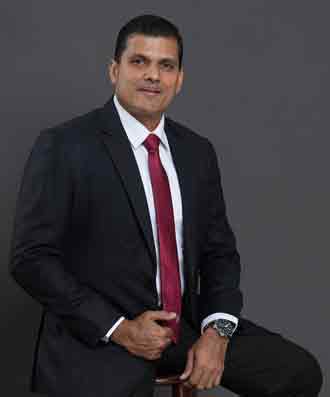
CA Sri Lanka President |
Q: For readers who may not be familiar with terms like ESG or SLFRS, what exactly is sustainability reporting, and why should the average person care?
At its heart, sustainability reporting is about transparency and accountability. Traditionally, companies have reported primarily on their financial performance. Today, stakeholders also need to understand how environmental, social and governance (ESG) factors may affect a company’s ability to create value and remain resilient over the long term.
Why should the average person care? Because the decisions businesses make affect all of us, be it the air we breathe, the water we depend on, the communities in which we live and the jobs and livelihoods that support us.
Sustainability reporting helps provide greater visibility into how companies manage their environmental and social impacts, as well as the risks and opportunities that could affect their future. This enables investors, consumers, regulators and other stakeholders to make more informed decisions and encourages businesses to take greater responsibility for their long-term impact.
Ultimately, it is about ensuring that businesses create value responsibly and contribute positively to the communities and economy in which they operate.
Q: Why is CA Sri Lanka leading this conversation? Many people may think sustainability is simply about “going green” and has little to do with finance.
That is a common misconception, and it is precisely why the accountancy profession has an important role to play.
A company’s financial performance cannot be separated from the broader risks and opportunities that affect its ability to create value. For example, a business may be financially successful today, but its long-term performance could be seriously affected by climate-related risks, disruptions to its supply chain, changing regulations or shifts in consumer expectations.
Accountants have traditionally played a critical role in ensuring that financial information is reliable, accurate and useful for decision-making. As sustainability-related risks and opportunities become increasingly relevant to business performance, the quality and credibility of sustainability information are becoming equally important.
This places the accountancy profession in a unique position to help bridge the gap between financial performance, sustainability and long-term business strategy. Our responsibility is to ensure that stakeholders have access to information they can trust when making important economic and investment decisions.
Q: How can better corporate reporting actually contribute to addressing climate change and other sustainability challenges?
The principle is quite simple: you cannot effectively manage what you do not measure.
When organisations understand their environmental impact, including their greenhouse gas emissions, they are better placed to identify opportunities to reduce that impact and improve efficiency.
Reliable reporting also creates greater transparency. Investors, lenders, regulators and other stakeholders can make better-informed decisions when they have access to credible information about an organisation’s sustainability-related risks and opportunities.
For businesses, this can also lead to practical benefits. Measuring energy consumption, resource use and emissions can help identify inefficiencies, reduce costs and strengthen resilience.
Sustainability reporting, therefore, is not an end in itself. It is a tool that can support better decision-making, encourage greater accountability and help direct investment and business activity towards more resilient and sustainable outcomes.
Q: Why has CA Sri Lanka designed the CSRSA qualification, and why is developing this expertise so important for Sri Lanka’s future?
This is fundamentally about national competitiveness and resilience.
The global business environment is changing rapidly. International investors, customers and supply chains are increasingly paying attention to how businesses manage sustainability-related risks and opportunities. As global reporting requirements evolve, Sri Lankan companies will need the expertise to understand and respond to these developments.
If our businesses do not have access to the necessary knowledge and skills, they may find it increasingly difficult to meet the expectations of international markets and global value chains.
The CSRSA qualification is part of our proactive response to this challenge. By developing a pool of professionals with expertise in sustainability reporting and strategy, we are helping Sri Lankan businesses navigate this transition with greater confidence.
This is not simply about professional development. It is about strengthening the capabilities that our businesses and our economy will need to remain competitive and resilient in the future.
Q: What would you say to small and medium-sized enterprises (SMEs) that may feel sustainability reporting is something only large corporations need to worry about?
Sustainability is not just a reporting requirement, it is a business opportunity.
Formal reporting obligations may currently apply more directly to larger organisations, but sustainability considerations are becoming relevant across entire business value chains, SMEs included.
For an SME, the journey can start with practical steps: understanding how much energy and water the business uses, identifying areas of waste, improving resource efficiency, and considering how environmental and social factors affect its operations. These steps often bring cost savings and greater efficiency in their own right.
At the same time, larger companies are paying closer attention to the sustainability performance of their suppliers and partners. SMEs that start this journey early strengthen their resilience, sharpen their competitiveness, and position themselves to be part of the supply chains of the future.
Q: Finally, what is your message to the people of Sri Lanka as the country works towards a more sustainable future?
My message is one of confidence and action.
Sri Lanka has the talent, resilience and potential to play a meaningful role in this new era of responsible business. The challenges we face, whether from climate change to economic uncertainty, are significant, but they are not insurmountable.
The initiatives undertaken by CA Sri Lanka, including the Preparers’ Guide to SLFRS S1 & S2, the CSRSA qualification and the Sustainability Summit, are part of a broader effort to strengthen the capabilities, knowledge and dialogue needed to support Sri Lanka’s sustainable transformation.
I encourage business leaders, professionals, policymakers and citizens to embrace this change and recognise that sustainability is not simply about compliance. It is about resilience, competitiveness, responsible decision-making and the future we are building.
The decisions we make today will shape the world we leave for future generations. If we work together, we can build a future where economic progress, environmental responsibility and social well-being reinforce one another.
That is the future Sri Lanka must strive towards.