Friday Nov 13, 2026
Friday Nov 13, 2026
Friday, 13 November 2026 04:32 - - {{hitsCtrl.values.hits}}
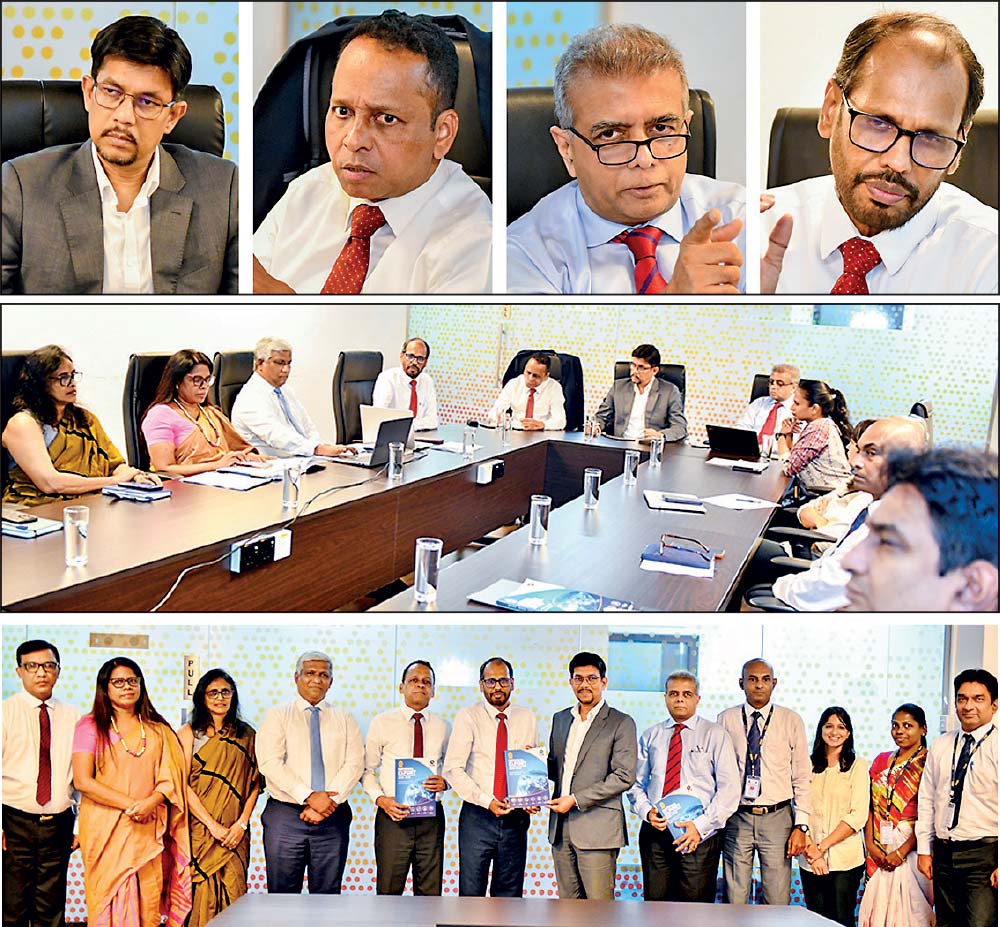
Sri Lanka’s aim to achieve its $ 5 billion ICT/BPM exports in terms of the National Export Development Plan (NEDP) 2026–2030 came under spotlight recently, at a high-level review involving the Export Development Board (EDB) and the Digital Economy Ministry officials.
The progress and challenges of Sri Lanka thus far on implementing the NEDP was discussed focusing on strengthening the contribution of the ICT/BPM sector towards achieving the country’s export growth ambitions.
The meeting was chaired by Digital Economy Deputy Minister Eng. Eranga Weeraratne, Digital Economy Ministry Secretary G. G. S. C. Roshan, Chief Adviser to the President on Digital Economy and Information and Communication Technology Agency (ICTA) Chairman Dr. Hans Wijayasuriya, EDB Chairman Mangala Wijesinghe, Director General Erandika Dissanayake, EDB Additional Director General-Development Kumudinie Mudalige, and senior officials of GovTech and the EDB.
The NEDP 2026–2030, formulated by the EDB under the guidance of the Industry and Entrepreneurship Development Ministry with technical assistance from the Asian Development Bank (ADB), serves as Sri Lanka’s national framework for advancing export development. The Plan sets an ambitious target of increasing total exports to $ 36 billion by 2030, including a dedicated target of $ 5 billion from digital products and services.
The discussion focused on identifying strategic interventions and strengthening the role of the Digital Economy Ministry and its affiliated institutions, including GovTech, as lead implementing agencies responsible for delivering key actions under the NEDP.
Among the key proposals discussed were identifying targeted interventions to achieve the $ 5 billion ICT export target through the Digital Products and Services Advisory Committee, establishing an effective mechanism to capture and monitor service sector export earnings, as well as addressing the foreign exchange conversion gap affecting the accurate measurement of service exports.
The discussion also highlighted the importance of introducing mandatory registration for exporters, and strengthening the inclusion of services in bilateral and regional trade agreements to improve international market access.
The meeting underscored the importance of strong institutional leadership, high-level policy intervention and coordinated action among relevant government institutions to accelerate the implementation of these strategic initiatives. The collaboration between the EDB, Digital Economy Ministry, GovTech and other relevant stakeholders is expected to play a pivotal role in strengthening Sri Lanka’s digital economy and expanding its footprint in international markets.
The EDB continues to engage with key Ministries and State agencies to facilitate the implementation of the NEDP 2026–2030, ensuring stronger inter-agency coordination, effective implementation of sectoral priorities and collective progress towards achieving national export target of $ 36 billion by 2030.




