Tuesday Oct 13, 2026
Tuesday Oct 13, 2026
Tuesday, 13 October 2026 00:34 - - {{hitsCtrl.values.hits}}
Sri Lanka can no longer rely on debt-financed spending, tax concessions or import-intensive consumption to drive growth, and must instead lean on higher productivity, private investment and more competitive exports to turn its post-crisis recovery into durable expansion, the Institute of Policy Studies of Sri Lanka (IPS) said.
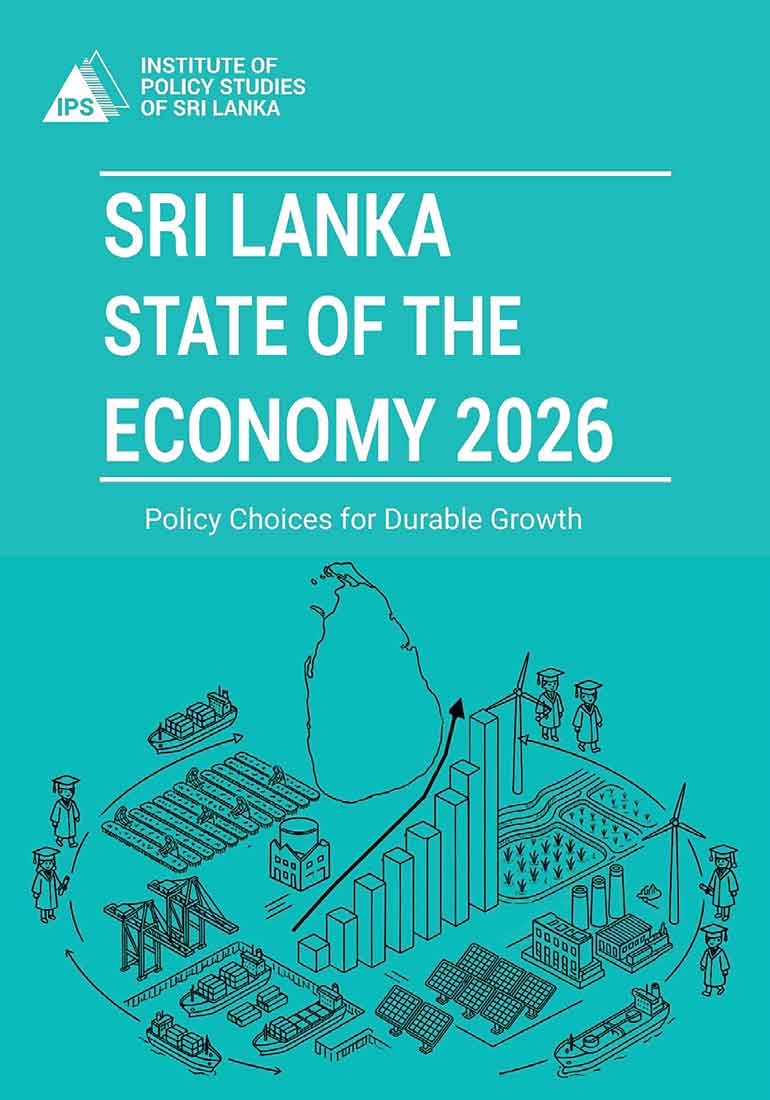
In its flagship annual report, ‘Sri Lanka: State of the Economy 2026: Policy Choices for Durable Growth’, the think tank said the central challenge was to accelerate growth without reopening the fiscal and external vulnerabilities that contributed to the 2022 crisis. With limited fiscal and external space, it said, growth must come from private investment, a more diversified export sector, better-quality jobs and more effective use of scarce public resources rather than consumption.
The report acknowledges that the recovery has restored a measure of stability. Real GDP expanded by 5% in both 2024 and 2025 and by 4.7% in the first half of 2026. Inflation has eased substantially from its 2022 peak, external debt restructuring has advanced and foreign reserves have been rebuilt to more comfortable levels.
However, the IPS said converting this into lasting growth would require stronger productivity, greater resilience to shocks and broad-based improvements in household living standards.
Labour market reform is a key theme. With two-thirds of workers employed informally, without formal contracts or social security coverage, the report calls for reforms to create better-quality jobs, close skills gaps and protect vulnerable groups, alongside stronger human capital and social protection.
The IPS also argues that resilience must be central to Sri Lanka’s development strategy, citing recent climate-related disruptions including Cyclone Ditwah and global energy shocks. It identifies investment in renewable energy, food systems, infrastructure and disaster preparedness as ways to safeguard growth and reduce vulnerability. The report further examines how infrastructure investment, regional development and responses to changing population dynamics can support more inclusive growth.
It sets out policy recommendations across trade, fiscal management, labour markets, urbanisation, energy, agriculture, social protection and human capital development. The IPS concluded that Sri Lanka can achieve its long-term development ambitions, but only through reforms that build competitiveness, strengthen resilience and ensure the benefits of growth are broadly shared.




