Thursday Oct 22, 2026
Thursday Oct 22, 2026
Thursday, 7 May 2026 05:17 - - {{hitsCtrl.values.hits}}
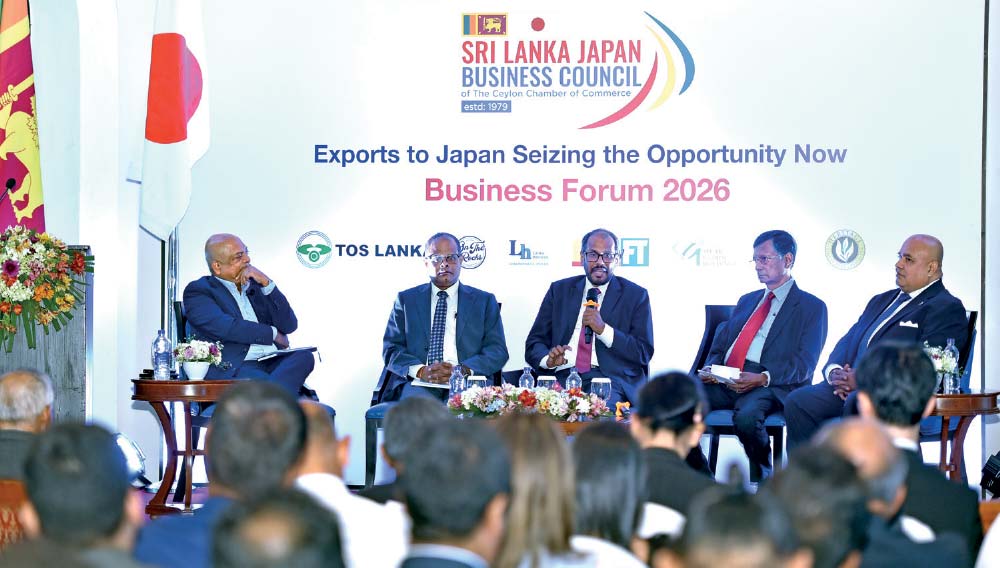
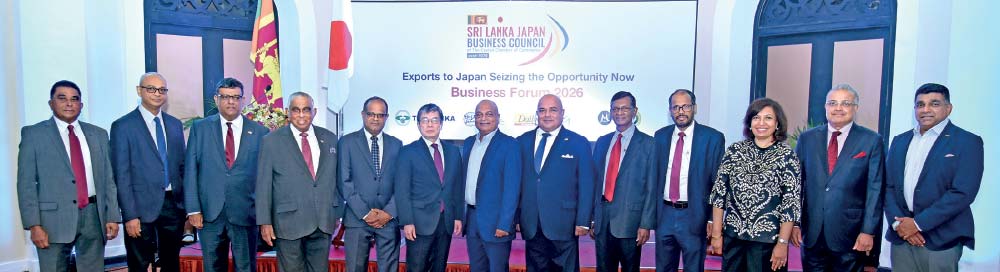
EDB Chairman Mangala Wijesinghe (third from left) addresses the Sri Lanka Japan Business Council's forum. Others from left Moderator Daily FT Editor and CEO Nisthar Cassim, Department of Commerce of Sri Lanka Commerce Director Charitha Yattogoda, BizEx Consulting Managing Director Sunil Wijesinha and Lanka Harness Co-Executive Chairman Dr. Rohan Pallewatte
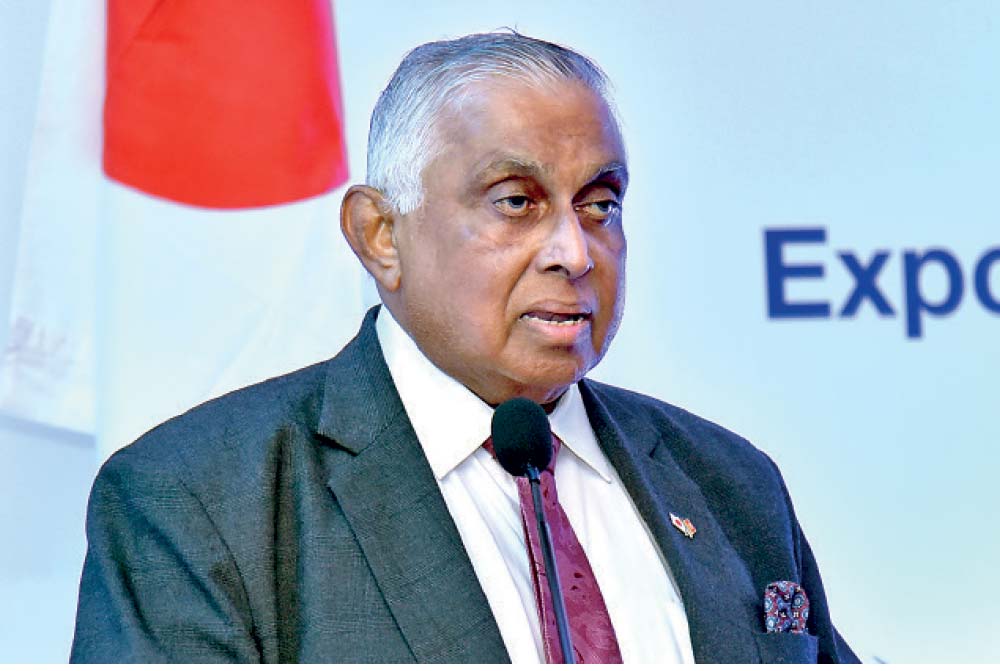
Sri Lanka–Japan Business Council President Athulla Edirisinghe
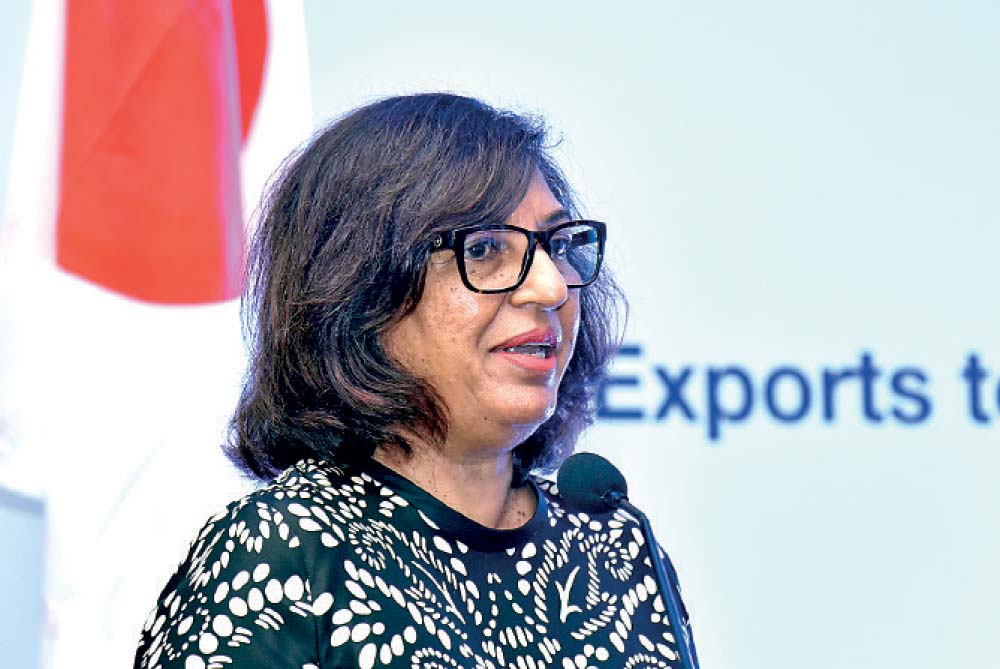
Sri Lanka – Japan Business Council Committee member Neela Marikkar
By Divya Thotawatte
 Sri Lanka is underperforming in exports to Japan despite access to an estimated $60 billion potential market, policymakers and industry leaders said recently, warning that deep-rooted structural and quality gaps are holding the country back.
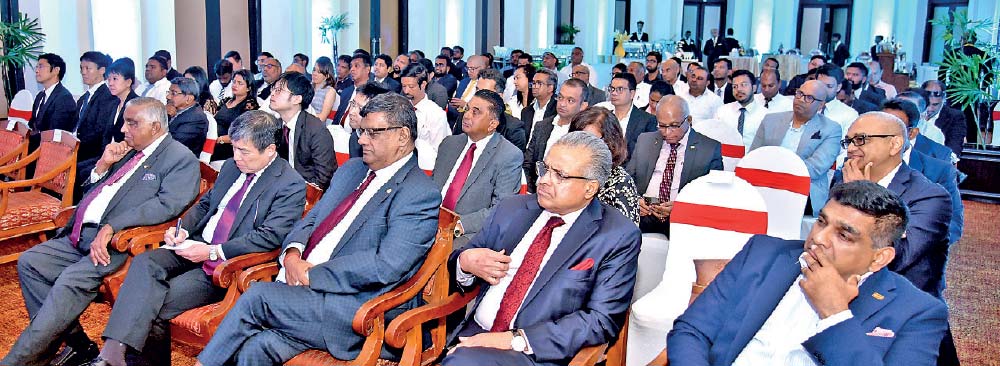
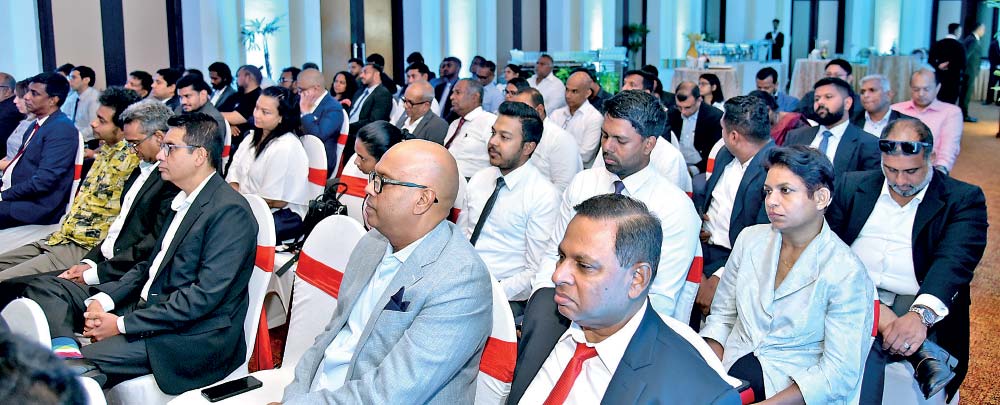
This was a key takeaway at a business forum titled ‘Exports to Japan: Seizing the Opportunity Now,’ by the Sri Lanka Japan Business Council (SLJBC). During the event, officials and exporters outlined both the scale of opportunity and the constraints limiting export growth and bilateral trade with Japan.
The forum kicked off with a keynote speech delivered by the Japanese Ambassador to Sri Lanka Akio Isomata. He warned that rising global instability could have long-term consequences on energy security, urging Sri Lanka to reorient its economic strategy towards Asia.
“I don't think it's a black swan… I think it's a grey rhino. There is going to be an increasing volatility… and greater instability regarding energy security,” said Ambassador Isomata, warning that these risks could persist for 20-30 years from today.
He stressed the need to accelerate progress on the proposed Sri Lanka-Japan-India industrial corridor, noting that while governments would set the framework, it is “business circles” that must drive implementation.
The ambassador's speech was followed by a panel discussion featuring Department of Commerce Head of Trade Charitha Yattogoda, EDB Chairman Mangala Wijesinghe, Lanka Harness Co Executive Chairman Dr. Rohan Pallewatte, and BizEx Consulting Managing Director Sunil Wijesinha, and moderated by Daily FT CEO Nisthar Cassim.
Export performance and barriers to market entry
Yattogoda said that Sri Lanka's export performance was significantly underdeveloped relative to its capacity, even though overall trade volumes had improved. “Well, in fact, you can see how bilateral trade has increased… but when it comes to exports… it is about $187 million. That is very much less than the potential that we have seen.”
He noted that while imports had seen a sharper rise, export growth had lagged behind, signalling a widening imbalance that needed to be corrected. “So I reckon that the potential continues to increase in exports… but it will all have to be hardened in the next couple of years.”
Wijesinghe also underlined this imbalance, pointing out that despite Japan being one of the world's largest economies, Sri Lanka's presence in the country was still marginal, remaining between $2.9 billion and $2.7 billion.
He said this gap was due to a narrow export base and structural inefficiencies, including limited product diversification, low SME readiness for Japanese market standards, and logistical disadvantages compared to regional competitors like Vietnam and Thailand. “When we discuss the existing exports, it is mainly limited industrial and agricultural products, with limited capital… and limited SMEs ready to meet the standard level of the Japanese market.”
Quality expectations and standards
Wijesinha also highlighted quality standards as another major hurdle, emphasising that Japan's expectations went far beyond what many Sri Lankan exporters were accustomed to. However, consistency, not just occasional quality, was a defining requirement in the Japanese market, he added.
“In the case of Japan, you can't compromise on quality, and quality is not just quality occasionally, but it is constant quality.”
He highlighted the stark difference in how quality was measured, noting that Japanese firms operated on defect levels measured in “parts per million,” as opposed to percentage-based tolerances commonly used in other countries.
Wijesinha further added that even minor operational details could influence perceptions, especially during factory visits by Japanese buyers. “I believe this is what is called the moment of truth… when I visit the factory… the first impression comes. So those little things are important.”
He urged exporters to adopt structured quality management systems and workplace practices to improve efficiency and credibility. “I would urge you to go through the motions…which will make even your factory function more efficiently… and it will impress when they come to visit your factory.”
However, beyond the supply-side issues, the speakers stressed that Sri Lanka also needed to better understand the cultural and regional dynamics that were necessary in doing business with Japan.
Business culture and market entry challenges
According to Pallewatte, one of the biggest misconceptions among Sri Lankan exporters is the expectation of quick results. This shortcoming cost them meaningful connections that actually led to opportunities.
“They think meeting once or twice will secure you a business deal… It takes a long time. It took me almost more than one decade and 46 visits to Japan to secure my first order.”
He discussed similar experiences with Sri Lankan apparel exporters, noting that it took seven years to secure an order from a major Japanese retailer. When cultivating business relationships, patience and perseverance were key, with priority given to the relationship instead of the transaction, he advised.
Even after establishing market access, maintaining relationships required continuous effort, added Pallewatte, noting that he still travelled to Japan several times a year after decades of doing business there. “Even now, after 25 years, I still travel to Japan at least six times a year. That is just to keep the relationship.”
Yet, despite these challenges, there was significant opportunity in Japan, especially in higher-value and niche segments where Sri Lanka could differentiate itself, stressed the industry experts.
Emerging opportunities and policy direction
Wijesinghe highlighted a strong potential in value-added agricultural exports, including Ceylon cinnamon-based products, as well as processed food and beverages aligned with Japanese consumer preferences. He also discussed emerging opportunities in services sectors such as ICT, business process management (BPM), and fintech, alongside mineral-based exports.
“When you look into our market data in Japan, we can see there is much potential for the value-added products… those market segments’ potential is a 60 billion market potential.”
Sri Lanka’s export strategy is now increasingly centred around diversification, both in terms of products and markets, as part of a push to scale up export earnings. With a target of 30 billion in exports every year by 2030, Sri Lanka should aim to achieve at least 10% annual export growth, explained Wijesinghe.
He said that efforts were underway in collaboration with Japanese partners such as JICA and JETRO to support exporters through development programmes, capacity-building initiatives, and market access activities.
A key element of the strategy was also to leverage regional trade dynamics, including positioning Sri Lanka within the proposed Sri Lanka-Japan-India economic corridor, which could enhance market access and integration. “This economic corridor, based on Sri Lanka, we can export to India… we want to utilise this mechanism, this corridor.”
Sri Lanka was also simultaneously seeking to maximise the benefits available under Japan's Generalised System of Preferences (GSP), which provides tariff concessions across thousands of product categories, Yattogoda said, noting that a “substantial amount of export” already took place under this scheme, which covered both industrial and selected agricultural products.
“In fact, GSP… offering somewhere around a 4.5% point reduction… we have been enjoying that benefit.” He added that authorities were conducting awareness programmes and facilitating certification processes to help exporters take advantage of these concessions.
At the same time, trade agreements like the Comprehensive Economic Partnership Agreement (CEPA), which had been under consideration for several years, remained under review. “It's been spoken for about 10 years… after this review process, we expect it to be completed within three months.”
- Pix by Ruwan Walpola