Monday Nov 16, 2026
Monday Nov 16, 2026
Monday, 16 November 2026 04:57 - - {{hitsCtrl.values.hits}}
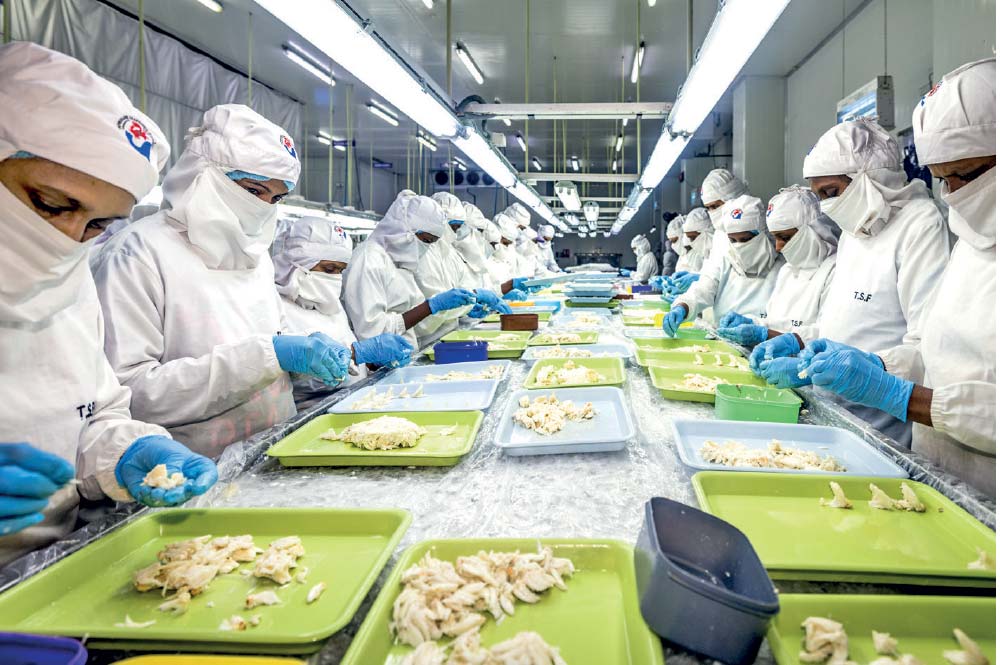
The Seafood Exporters’ Association of Sri Lanka (SEASL) yesterday said it “strongly supports” the Government’s 2027 Budget proposals, recognising their potential to accelerate investment, expand value-added seafood processing, strengthen sustainable fisheries and improve Sri Lanka’s international competitiveness.
The Association extends its appreciation to President and Finance, Planning and Economic Development Minister Anura Kumara Dissanayake for recognising the strategic importance of the fisheries and seafood export industry. SEASL also thanks Fisheries, Aquatic and Ocean Resources Minister Ramalingam Chandrasekar and Deputy Minister Rathna Gamage for their commitment to developing the sector and supporting fishing communities.
SEASL believes Sri Lanka has the potential to achieve $ 680 million in annual seafood export earnings by 2030, provided the industry is supported by sustained investment, greater value addition, modern infrastructure and efficient trade policies.
The proposed concessionary financing scheme offering loans of up to Rs. 500 million at 5% annual interest to qualifying large-scale fisheries enterprises represents an important opportunity to accelerate investment in processing capacity, modern technology and cold-chain infrastructure.
The 200% enhanced capital allowance for qualifying BOI-approved export-oriented manufacturing investments of at least $ 3 million could further encourage expansion, new processing facilities and the development of higher-value seafood products.
These measures can help attract investment, strengthen Sri Lanka’s processing capabilities and create additional employment across the industry.
Sri Lanka’s seafood industry has demonstrated the considerable potential of value-added processing, particularly through the importation of raw materials for processing and re-export.
From January to September 2026, seafood exports generated $ 246.12 million, including $ 64 million from value-added products, representing 26% of total export earnings compared with just 4% in 2022.
This transformation highlights the importance of maintaining policies that enable Sri Lankan processors to source raw materials internationally, add value locally and supply global markets.
SEASL emphasises that continued access to imported raw materials for value addition is essential to sustaining factory utilisation, expanding employment and increasing foreign exchange earnings.
The proposed modernisation of the Temporary Importation for Export Processing (TIEP) scheme, customs digitalisation and the National Single Window for Trade should help simplify procedures, reduce costs and improve export competitiveness.
The Association supports the proposed Rs. 5 billion investment in Northern fisheries infrastructure, including Pesalai Harbour and fishery anchorages, which should improve landing facilities, product handling and livelihoods in coastal communities.
SEASL is particularly encouraged by the opportunities for Sri Lanka’s aquaculture farmers, who have the potential to play an increasingly important role in the development of the seafood export industry.
“We are excited about the opportunities ahead for our aquaculture farmers, particularly those engaged in shrimp farming. They have an important contribution to make towards expanding production, creating rural employment and strengthening Sri Lanka’s seafood exports. As an industry, we are committed to supporting their growth, encouraging investment and helping connect farmers with international markets,” SEASL’s Dilan Fernando said.
The Association believes that closer collaboration between aquaculture farmers, processors and exporters will be essential to developing a competitive and sustainable aquaculture industry.
Equally significant is the Rs. 1 billion allocation for sustainable fisheries resource management, including scientific stock assessments, habitat mapping and monitoring.
The recent Marine Stewardship Council (MSC) certification of Sri Lanka’s North-Western Blue Swimming Crab Fishery demonstrates the value of responsible fisheries management and internationally recognised sustainability standards in accessing premium export markets.
SEASL encourages continued collaboration between Government institutions, research organisations, fishing communities, aquaculture farmers and exporters to strengthen scientific management, traceability and international certification.
The proposed customs reforms, improvements to the TIEP scheme and reduction of CESS rates across selected tariff lines could enhance the competitiveness of Sri Lankan seafood exports.
The Association also supports efforts to strengthen international trade relationships and expand market access, particularly in Europe, North America, Asia and the Middle East.
SEASL believes these measures, combined with continued investment in food safety, sustainability and product innovation, can position Sri Lanka as a leading regional hub for value-added seafood processing.
While the Budget provides an encouraging policy direction, SEASL stresses that timely implementation and close cooperation between Government and industry will be essential to achieving the country’s export ambitions.
“We thank President Anura Kumara Dissanayake for recognising the seafood industry’s potential to contribute significantly to Sri Lanka’s economic growth, and Minister Ramalingam Chandrasekar and Deputy Minister Rathna Gamage for their commitment to strengthening the fisheries sector,” Fernando said.
“The proposed financing, investment incentives and fisheries development programs provide a strong foundation for growth. Our industry has already demonstrated what can be achieved through value addition, with its contribution to seafood exports increasing from 4% in 2022 to 26% in the first nine months of 2026.”
“The priority now is implementation. We must ensure that exporters can access these incentives, that raw-material imports for value-added processing continue without unnecessary restrictions, and that sustainable fisheries management remains a national priority. With the right policies, Sri Lanka can achieve $ 680 million in seafood export earnings by 2030,” he added.
SEASL reaffirmed its commitment to working with the Government, fishing communities, aquaculture farmers and international partners to expand seafood exports, attract investment, create employment and strengthen Sri Lanka’s position in global seafood markets.




