Saturday Oct 17, 2026
Saturday Oct 17, 2026
Monday, 17 August 2026 03:52 - - {{hitsCtrl.values.hits}}
The Sri Lankan Business Council UAE (SLBC) has launched SLBC NextGen, a new initiative designed to connect, mentor and empower the next generation of Sri Lankan professionals, entrepreneurs and future business leaders in the UAE.
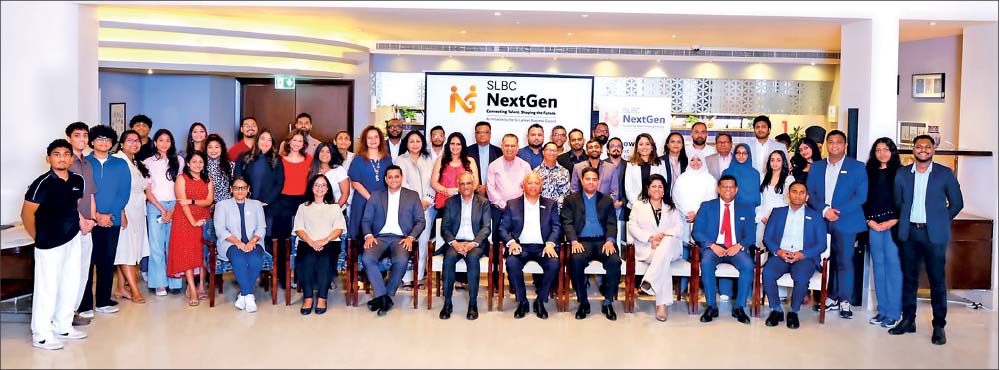
Launched on 12 July at Novotel Deira Creekside Dubai, the initiative attracted more than 80 young participants at its inaugural gathering, exceeding expectations and generating an enthusiastic response, with several participants immediately volunteering to contribute to future programs.
SLBC NextGen is the brainchild of SLBC Chairman Suren Swaminathan, who believes that an organisation celebrating 35 years must not only serve today’s membership, but consciously prepare those who will lead it tomorrow.
Two years ago, Swaminathan initiated the SLBC Ladies’ Wing, which has since developed into a vibrant and active platform within the Council. NextGen represents the next stage of that journey, creating a space for younger members and the next generation of SLBC families to interact, exchange ideas, build relationships and learn from experienced entrepreneurs and professionals.
NextGen is not a separate business council. It operates under the umbrella and guidance of the SLBC, with a young core team being developed to increasingly take responsibility for its programs and activities.
A transition already underway
For Swaminathan, the initiative also reflects a generational transition already taking place within the SLBC itself.
Today, more than half of the Council’s Board is below the age of 50 and therefore belongs to the very generation NextGen seeks to engage and empower.
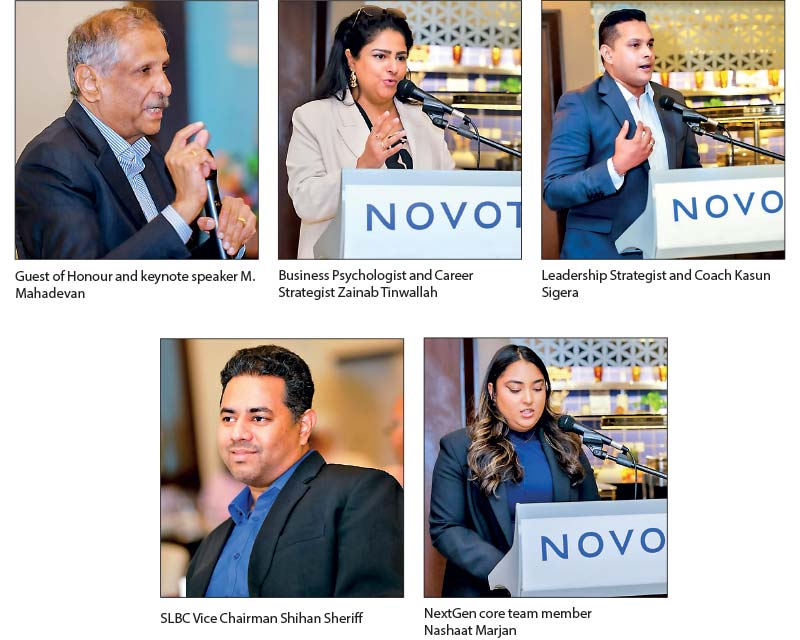
SLBC Vice Chairman Shihan Sheriff played a central role in bringing the inaugural program together, coordinating the team and overseeing the event. His leadership, together with the contribution of the young core team, was singled out by Swaminathan as evidence that the future leadership of the Council is already emerging from within.
Swaminathan has increasingly sought to delegate responsibility and create space for younger members to lead. He told the gathering that, sooner rather than later, Sri Lankan Business Council Chairman himself could come from the NextGen generation.
The philosophy is simple: strong leadership is not about remaining indispensable. It is about developing others who can take an institution forward.
People still do business with people
Addressing an audience spanning their late teens, twenties, thirties and forties, Swaminathan reflected on the enormous technological changes between generations.
While today’s young professionals have access to information, technology and artificial intelligence unimaginable to earlier generations, he argued that one fundamental principle remains unchanged: “People still do business with people.”
NextGen will therefore place particular emphasis on human relationships, mentorship and meaningful networking alongside entrepreneurship, professional development, communication and leadership.
Swaminathan also addressed the pressures young people often face, from careers, society and even well-intentioned family expectations, encouraging them to find their own definition of achievement.
“Don’t spend your life trying to become someone else’s version of success. Become the very best version of yourself,” he told them.
From professor to global entrepreneur
Guest of Honour and keynote speaker M. Mahadevan, internationally known as “Hot Breads Mahadevan”, brought that philosophy to life through his own remarkable entrepreneurial journey.
A former professor who moved from teaching business to building businesses himself, Mahadevan founded Hot Breads in 1989 and subsequently built an international network of bakeries, restaurants and entrepreneurial partnerships.
Swaminathan, a longstanding friend of Mahadevan and himself a former Hot Breads franchisee in the UAE, humourously described him as “the professor who went on to sell bread to the French.”
Yet Mahadevan’s keynote was less about the size of his business interests and more about the lives created around them.
He challenged conventional measures of entrepreneurial success, emphasising that what ultimately matters are not simply how much money an entrepreneur accumulates, but how many livelihoods are created and how many people are given an opportunity to build a better life.
That philosophy is reflected in Mahadevan’s social-enterprise initiatives in India, which have created employment and skills-development opportunities for people who often struggle to enter mainstream employment, including burn survivors, differently abled people and those from disadvantaged backgrounds.
His approach is not merely to provide charity, but to create dignity through skills and sustainable employment, the principle of not simply giving someone a fish, but teaching them how to fish.
Mahadevan has also maintained close ties with Sri Lanka and spoke of his interest in establishing a bakery venture in the country.
More significantly for the aspiring entrepreneurs in the room, he issued them a direct challenge: anyone with a serious idea and a credible business plan should approach him, and he would be willing to explore how he could help take it forward.
It transformed the keynote from inspiration into a tangible opportunity.
His message closely echoed a thought Swaminathan had expressed earlier in the evening:
“Success is not measured by the salary you earn, the car you drive or the title on your business card. Success is measured by the lives you touch and the difference you make.”
The two messages converged around a powerful philosophy for the young entrepreneurs present: build businesses, create wealth and succeed, but take people with you.
Leadership, careers and purpose
The program also featured Business Psychologist and Career Strategist Zeinab Shabbir Tinwala, who addressed real-world corporate and business challenges, and Leadership Strategist and Coach Kasun Sigera, who focused on building future-ready careers through leadership, growth and purpose.
The program itself reflected the philosophy of NextGen, with younger members being given visible responsibility from its very first event. SLBC Vice Chairman Shihan Sheriff coordinated and steered the program together with the core team, while NextGen core team member Nashaat Marjan delivered the vote of thanks.
Together, the speakers and young organising team reflected the broader intention behind NextGen: not simply to hold networking events, but to expose younger Sri Lankans in the UAE to entrepreneurs, professionals and mentors who can share practical lessons from their own journeys, while simultaneously giving the younger generation opportunities to take responsibility themselves.
The formal program concluded with an interactive question and answer session, giving participants the opportunity to engage directly with the speakers and explore some of the issues raised during the evening.
This was followed by networking and a sumptuous buffet dinner, providing exactly the kind of informal environment NextGen hopes to encourage, where young professionals and entrepreneurs across different generations can meet, exchange ideas, build friendships and develop meaningful connections.
The young core team will now be encouraged to take increasing ownership, developing programs, identifying speakers and mentors, creating opportunities and building a community in which members across different age groups can learn from one another.
Ten little words
Swaminathan concluded his message with a philosophy he has used for decades when mentoring and developing young professionals.
He calls them “The Ten Little Words” ten words, each consisting of only two letters: “If it is to be, it is up to me.”
The message encapsulates the philosophy behind NextGen.
The SLBC can provide the platform. Experienced business leaders can mentor. Relationships can open doors. The Council can create opportunities.
But ultimately, the next generation must take responsibility for what it does with them.
As the SLBC celebrates 35 years, NextGen therefore represents more than another program on its calendar.
It is an investment in continuity, creating opportunities for today’s young professionals and entrepreneurs while deliberately preparing the people who will lead the Council tomorrow.
And if the enthusiasm demonstrated at its inaugural gathering is any indication, that transition has already begun.