Monday Oct 12, 2026
Monday Oct 12, 2026
Wednesday, 26 August 2026 00:04 - - {{hitsCtrl.values.hits}}
By Shanika Sriyananda
Sri Lanka is seeking to position Colombo as a preferred cruise tourism hub in the Indian Ocean, with the Government and private sector exploring ways to attract more international cruise liners and extend passenger stays to generate wider economic benefits.
Ocean Cruise Global Accounts Director Thushaan Kunabalasingam, who works closely with leading global cruise operators, said the current environment was conducive to new investment and greater collaboration between the Government and private sector.
“Sri Lanka has the potential to be a key hotspot for cruise tourism in the Indian Ocean. With proper coordination between ports, travel agencies and hotels, Colombo can emerge as a preferred destination,” Kunabalasingam told the Daily FT.
During his recent visit to Sri Lanka, Kunabalasingam held discussions with Government Ministers and senior officials on developing the cruise tourism industry and attracting more international cruise calls.
His discussions with the Sri Lanka Ports Authority (SLPA) focused on the potential to accommodate larger vessels carrying 5,000-7,000 passengers. He said major cruise operators, including those frequently calling at Indian ports, currently bypass Colombo despite Sri Lanka’s strategic location in the Indian Ocean.
Kunabalasingam is also facilitating links between Cinnamon Hotels Group and international cruise lines to develop an integrated tourism offering aimed at high-spending cruise passengers.
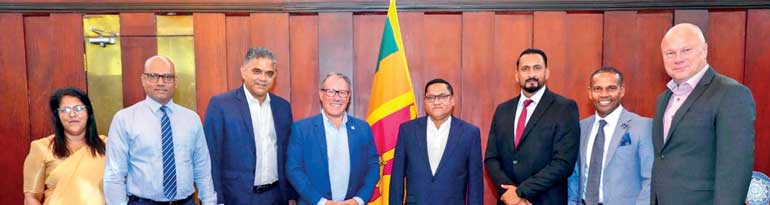
He met Foreign Minister Vijitha Herath together with representatives of the German Industry and Commerce Agency (AHK) Sri Lanka and Livecookintable/MEC2 GmbH to discuss opportunities to develop Sri Lanka as a leading cruise tourism destination.
A key focus of the discussions was strengthening cooperation between public authorities and the private sector to increase the number of cruise ships calling at Sri Lankan ports, while developing strategies to extend the stays of passengers who currently make relatively short visits.
Kunabalasingam said longer stays would spread the economic benefits of cruise tourism beyond ports and hotels to transport operators, tour guides, travel agencies, local businesses and communities.
The initiative also seeks to bring together hotels, travel agencies and other tourism stakeholders to create packages encouraging cruise passengers to leave their ships, explore Sri Lanka and spend more time in the country.
“The aim is to keep the people here, not just make a stop and go,” Kunabalasingam said.
He said Sri Lanka could also seek to capture cruise traffic currently heading to destinations such as the Maldives.
“When cruises are going to Maldives, why not Sri Lanka?” he said, pointing to the country’s proximity and existing tourism infrastructure.
Kunabalasingam said discussions with the Government and port authorities had created a positive environment for moving the initiative forward, while international cruise industry networks could be leveraged to promote Sri Lanka among global operators.
The Government has also highlighted tourism as an area offering significant investment opportunities and reaffirmed its commitment to developing cruise tourism as a key driver of the sector.
Kunabalasingam said the focus should ultimately be on creating a coordinated ecosystem in which cruise operators, ports, hotels, travel agencies and local businesses all benefit from increased cruise activity.
“Everyone is going to benefit if we really push each other,” he said.




