Saturday Oct 24, 2026
Saturday Oct 24, 2026
Saturday, 24 October 2026 00:00 - - {{hitsCtrl.values.hits}}
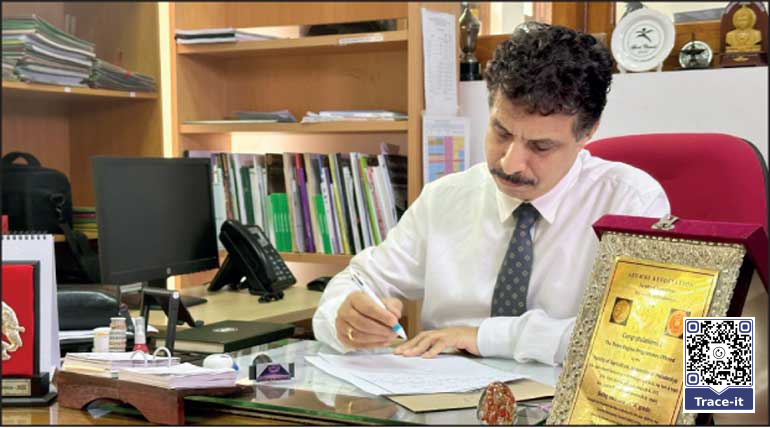
Prof. Sarath S. Kodithuwakku
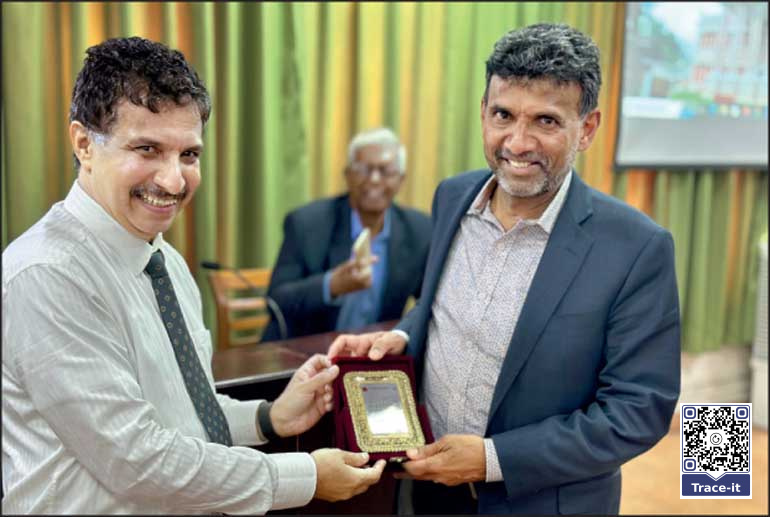
A memento being presented to Prof. Sivananthan of Sivananthan Laboratories Inc., USA in appreciation of its generous sponsorship to forge and sustain collaborations with the University of Illinois Urbana-Champaign (UIUC)
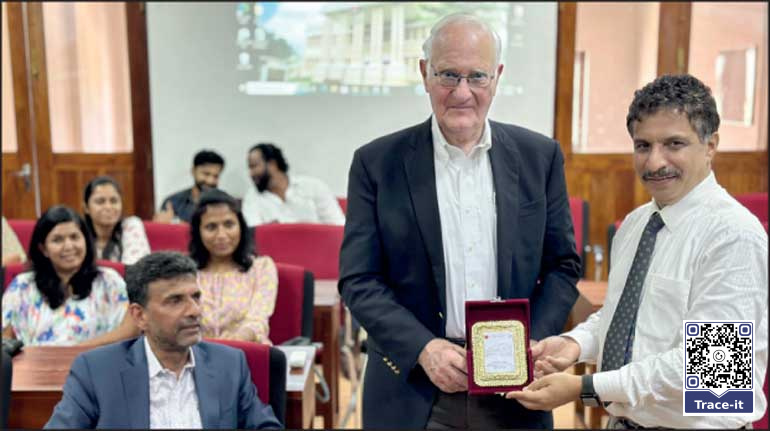
A memento being presented to former University of Illinois System Vice-Chancellor and President Prof. Robert Easter for the same purpose
As Prof. Sarath S. Kodithuwakku retires from the University of Peradeniya on 24 October, 2026, his distinguished career reflects a lasting contribution to academic innovation, institution building and the transformation of management and agricultural education in Sri Lanka.
The contribution of an academic is often measured through research publications, qualifications, administrative positions and years of service. Yet the true significance of an academic career is sometimes better reflected in the institutions established, the opportunities created and the generations of students whose lives have been influenced along the way.
Prof. Kodithuwakku represents this broader dimension of academic achievement.
Over more than three decades, his contributions have extended across agricultural education, business management, entrepreneurship, postgraduate studies, research and university administration. A defining characteristic of his career has been his willingness to challenge conventional academic boundaries and introduce initiatives that connect university education with the evolving needs of industry and society.
Redefining agricultural higher education
One of Prof. Kodithuwakku’s most significant contributions has been his role in broadening the traditional scope of agricultural education.
At a time when agricultural studies were predominantly associated with production and the sciences, he recognised the growing importance of integrating business management, marketing and entrepreneurship into agricultural education.
This thinking contributed to the evolution of the Department of Agricultural Economics into the Department of Agricultural Economics and Business Management at the University of Peradeniya, reflecting a more commercially oriented and multidisciplinary approach.
His contribution to curriculum development was equally important. As Chairman of the Curriculum Committee and subsequently as Dean of the Faculty of Agriculture, he played a leading role in initiating the revision of the BSc Honours in Agricultural Technology and Management degree program, which included the introduction of a major-minor structure that offered students greater academic flexibility.
He also pioneered an innovative approach to promoting agricultural higher education, introducing structured branding and marketing communication to reposition the degree and broaden public understanding of its professional opportunities.
These initiatives reflected his conviction that universities must continuously evolve to remain relevant to changing economic and professional realities.
Bringing management education beyond Colombo
Among his most enduring institutional achievements was the establishment of the Master of Business Administration (MBA) program at the Postgraduate Institute of Agriculture (PGIA), University of Peradeniya, in 1998.
It was the first MBA program offered outside Colombo and the third established by a Sri Lankan state university.
At a time when postgraduate management education was largely concentrated in the capital, this initiative marked an important step towards widening access to advanced management education.
As Founder Coordinator, Prof. Kodithuwakku played a central role in establishing and developing the program. He subsequently contributed to establishing the Board of Study in Business Administration and introduced the Doctor of Business Administration (DBA) program at PGIA in 2005, further extending the Institute’s contribution to postgraduate management education.
The MBA program has since provided opportunities for professionals, managers and entrepreneurs to advance their knowledge, while strengthening the connection between academic learning and organisational practice.
Its continuing relevance is an example of institution building whose influence extends far beyond the tenure of its founder.
Turning entrepreneurship into experience
Prof. Kodithuwakku’s approach to teaching was shaped by a fundamental belief: entrepreneurship cannot be adequately understood through theory alone.
This philosophy led to the introduction of Business Creation and Management, an undergraduate course that encouraged students to establish and operate real business ventures.
The initiative went beyond conventional classroom instruction, allowing students to experience the practical challenges of entrepreneurship, financial management and commercial decision-making.
Profits generated through these ventures were reinvested in student development, supporting participation in international academic conferences and sporting events. The student fund also enabled the establishment of four gold medals recognising excellence in Business Management and Agricultural Economics.
A similar philosophy underpinned The Kiosk, a student-managed restaurant developed with the support of the Faculty and its alumni. Beyond generating income for students, it served as a practical learning environment for developing entrepreneurial, business and managerial capabilities.
Together, these initiatives demonstrated how academic innovation could simultaneously strengthen education, entrepreneurship and student welfare.
A commitment to students that began early
An equally meaningful contribution began in 1990 when Prof. Kodithuwakku, then an undergraduate, joined his batchmates in establishing the Needy Students Scholarship Fund at the Faculty of Agriculture.
Conceived as a collective effort to assist financially disadvantaged students, the initiative gradually developed into an enduring tradition of student-supported fundraising.
Successive undergraduate batches sustained the
program, which eventually became associated with the annual Indeewaree Musical Show.
The fund has since grown to approximately Rs. 15 million and continues to support students facing financial difficulties.
What makes this initiative particularly noteworthy is that it originated long before Prof. Kodithuwakku assumed any formal academic leadership position. It reflected an early understanding that higher education carries responsibilities extending beyond individual academic advancement.
Connecting universities with the wider economy
Prof. Kodithuwakku also played an important role in strengthening the relationship between university research and practical economic development.
His involvement with the Agribusiness Centre of the University of Peradeniya, dating back to its establishment in 1997, contributed to the development of an institutional platform connecting academic expertise with agricultural enterprises, industry and rural communities.
His research and consultancy work encompassed agricultural marketing, entrepreneurship, food security, value-chain development and smallholder livelihoods, involving collaborations with national and international development and research organisations.
His international academic experience included serving as an Assistant Professor at Sultan Qaboos University in Oman from 2011 to 2016, further enriching his contribution to teaching, research and institutional development.
More recently, he provided strategic leadership in initiating an international research collaboration involving Prof. Sivananthan of Sivananthan Laboratories Inc., USA, the University of Illinois Urbana-Champaign (UIUC), the Faculty of Agriculture of the University of Peradeniya and Sri Lanka’s Department of Agriculture. The collaboration focuses on soybean varietal trials to strengthen domestic soybean production, while also fostering academic collaboration between the two universities to enhance agricultural education and research.
These engagements demonstrated his consistent interest in ensuring that universities contribute meaningfully to national development.
Leadership through challenging times
Prof. Kodithuwakku served as Dean of the Faculty of Agriculture from November 2021 to November 2024, during one of the most difficult periods experienced by Sri Lankan universities.
The aftermath of the COVID-19 pandemic and the country’s economic crisis created unprecedented institutional and operational challenges.
Despite these pressures, his tenure saw continued attention to curriculum reform, academic development, institutional partnerships and student welfare.
His leadership experience also included four terms as Head of the Department of Agricultural Economics and Business Management and several appointments as Acting Vice-Chancellor of the University of Peradeniya.
Beyond academia, he contributed extensively to professional management education, including leadership of the Institute of Management of Sri Lanka and longstanding involvement with the Sri Lanka Institute of Marketing.
His role in advancing professional management education and recognition initiatives further strengthened the relationship between academia and Sri Lanka’s business community.
A legacy that will endure
Across his academic career, Prof. Kodithuwakku has supervised approximately 200 undergraduate dissertations and 100 MBA dissertations, alongside doctoral research mentorship, scholarly publications and numerous institutional responsibilities.
Yet perhaps his most significant contribution cannot be adequately expressed through these conventional measures.
The MBA program he established continues to educate professionals. The curriculum reforms he championed have broadened the possibilities available to agricultural graduates. His entrepreneurship initiatives have helped translate academic knowledge into practical experience, while the scholarship fund he helped establish as an undergraduate continues to support new generations of students.
These contributions share an important characteristic: their value extends beyond the individual who initiated them.
As Prof. Kodithuwakku concludes his distinguished service at the University of Peradeniya, his career offers a compelling reminder that academic leadership is ultimately about more than personal accomplishment. It is about building institutions, challenging established thinking and creating opportunities that endure.
While his formal academic career comes to a close, the programs, institutions and generations of students shaped by his contribution ensure that his influence will continue well beyond the lecture halls of Peradeniya.




