Monday Sep 14, 2026
Monday Sep 14, 2026
Monday, 14 September 2026 02:35 - - {{hitsCtrl.values.hits}}
By Dr. Nirmal De Silva
|
Dr. Nirmal De Silva
|
I have lost count of how many meetings end in much the same way. The formal business is concluded, the laptops are closed, and then comes the question that often says more than the agenda ever did: where should we eat tonight, is it safe to walk back, would this be a place to bring family next time?
For years, I regarded such moments as polite afterthoughts. I no longer do. They tell us whether a city is merely being visited, or beginning to be experienced as a place worth returning to.
That distinction matters in Sri Lanka today. In 2025, the country recorded about 2.36 million international arrivals, roughly 15% higher than the previous year. Tourism earnings, however, rose more slowly, to about $ 3.2 billion – a sign that volume alone does not guarantee value. The task ahead is to give visitors reasons to stay longer and spend more widely, and that is the opportunity Port City Colombo has been built to capture.
A new kind of tourism chapter
One of the key tasks for Port City Colombo, which seems deceivingly simple, is to give Sri Lanka a new tourism chapter – one that keeps travellers longer, helps them spend better, and makes Colombo a place people don’t just pass through.
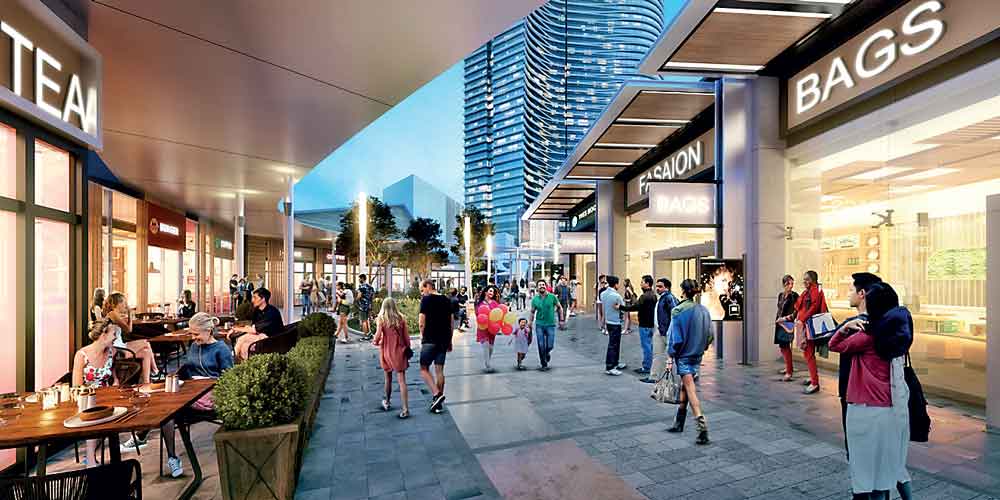
This is not an argument for replacing leisure tourism – the beaches, the hill country, the Cultural Triangle – remain Sri Lanka’s core draw. It is an argument for adding a high-spend, high-retention layer on top of that base, one designed to support services exports and the movement of global talent alongside conventional holidaymaking. What strikes me, moving as I do between policy rooms and boardrooms, is that this was clearly conceived as a full urban district rather than a hotel strip with a marina attached – retention seems to have been part of the original design brief, not an afterthought.
South Asia’s first entertainment and lifestyle hub
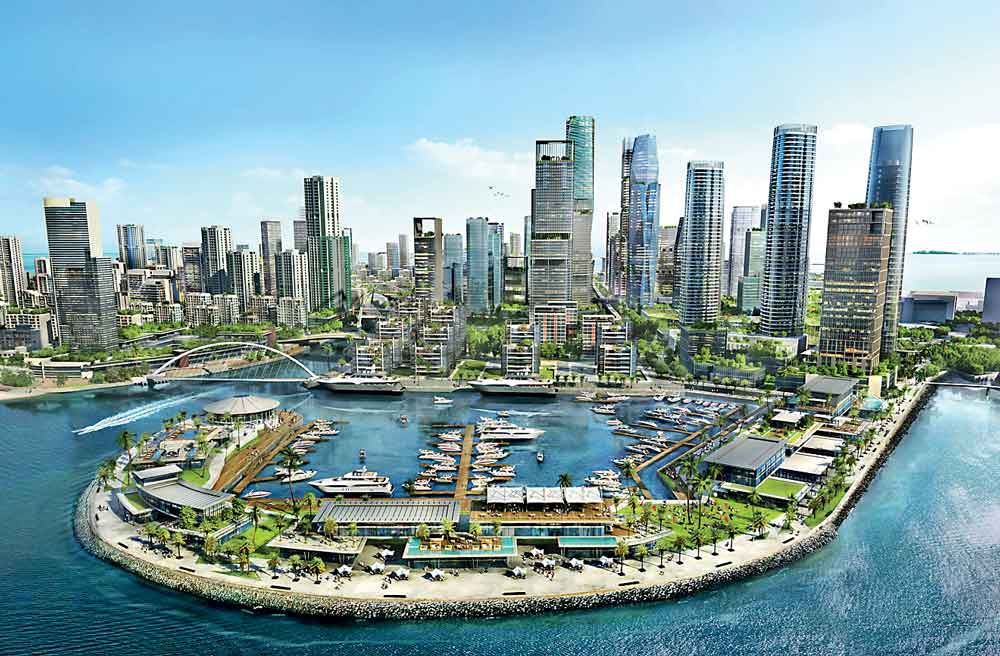
Several of the offerings under construction are genuinely new to the region rather than a repeat of what exists elsewhere in South Asia. The Marina district’s yacht marina, with capacity for 200 to 250 vessels, and the Downtown Duty Free precinct – the first of its kind in a South Asian city centre – are not incremental additions to Colombo’s tourism offer. They are categories the region has not had before.
Layered onto this is 1.7 kilometres of public beach and a natural coral reef within the footprint of a financial district – a combination few comparable regional hubs, from Singapore to Dubai, can offer within their central business zones. It is a rare thing for a Central Business District (CBD) to also be a coastline. None of this competes with a beach holiday in the south; it competes with the evening a business traveller would otherwise spend in a hotel room.
Where tourism meets talent
The tourism case cannot be separated from the talent case, because both rest on the same logic: people choose places that feel complete. In my own experience sitting across the table from investors weighing a regional footprint, tax treatment rarely closes the deal – the deciding question is almost always whether an executive’s family will settle. Port City appears to have understood this. It is building the human infrastructure – an international school, a university geared toward IT and business education – alongside the commercial towers, answering the question every relocating executive along with the one about incentives.
This is the soft power dimension of the project. A country builds regional influence not only through diplomacy or trade agreements, but through the everyday experience of the people who pass through – and the impression they carry home.
Business travel meets lifestyle
The clearest evidence of this convergence, to my eye, is not any single building but the traction already visible on the ground. Over 200 companies have applied to set up at Port City, with more than 175 already approved and operating, drawn from markets as varied as the United Arab Emirates (UAE), Singapore, China, the UK, the US, and Australia – a spread suggesting this is being read internationally as a genuine regional option, not a domestic curiosity. A planned convention centre and hotel, and an operational business park a short walk from the marina and duty-free precinct, point to something I have long argued for in policy circles: that business travel and leisure spend should not be sequential, but designed to overlap.
Beyond the skyline
Port City Colombo’s success should not be measured by its skyline. It should be judged by the kind of traveller it produces – not the passer-through, but the new-age traveller who blends business with leisure, who extends a two-day meeting into a long weekend, who brings a laptop and a swimsuit in the same bag. It is that hybrid visitor – increasingly the norm rather than the exception across Asia’s competing hubs – who tests whether a city can hold attention past the point where the conference badge comes off.
That is what makes Port City a business case, not merely a tourism project. And in a region competing hard for investment, talent, and the attention of the world’s travellers, that is precisely the case Sri Lanka needs to make.
(The author is an Associate Professor in Strategy, Policy Contributor and Corporate Adviser)