Thursday Oct 22, 2026
Thursday Oct 22, 2026
Friday, 22 May 2026 00:00 - - {{hitsCtrl.values.hits}}
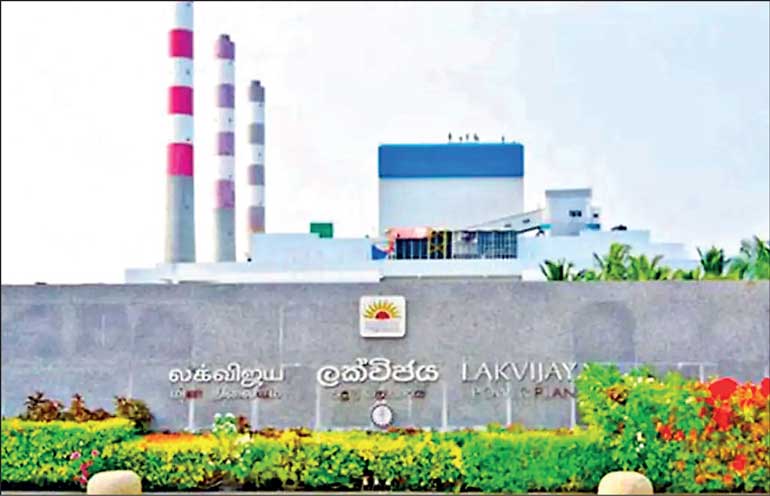
Lakvijaya Power Station
A report prepared by the Public Utilities Commission of Sri Lanka (PUCSL) has identified operational, environmental, and financial concerns linked to coal supplied to the Lakvijaya Power Plant by current supplier Trident Chemphar Ltd., estimating a total financial impact of around Rs. 8.5 billion.
The report, dated 27 February, was prepared on the directive of Parliament’s Sectoral Oversight Committee on Infrastructure and Strategic Development following concerns regarding the quality of coal supplied to the Norochcholai plant between December 2025 and February 2026.
According to the report, the Lakvijaya Power Plant was unable to operate at its full generation capacity using the nine coal shipments supplied by Trident Chemphar during the period under review.
While the Plant had previously generated 300 MW from each unit under the previous coal supplier, output under the current supplier fell in several instances to between 253 MW and 292 MW, depending on the shipment and unit in operation.
The PUCSL also found that coal consumption rates had increased across all shipments supplied by the current supplier, while specific coal consumption rose sharply compared with the previous supplier.
According to the report, average specific coal consumption under the previous supplier stood at 364 g/kWh compared with between 391 g/kWh and 452 g/kWh under the current supplier, depending on the shipment used.
The report further stated that calorific values calculated from Plant performance data were significantly lower than values recorded in load port and discharge port reports submitted for the shipments.
The PUCSL said the calorific values derived from actual plant performance were instead much closer to values recorded by the Lakvijaya Plant’s own laboratory testing.
The report also identified operational concerns relating to steam temperature limits and boiler system performance.
According to the PUCSL, prescribed steam temperature limits were exceeded several times while operating with coal supplied by the current supplier, while desuperheating valves designed to regulate steam temperature were observed operating at 100% opening on multiple occasions.
The report warned that continued operation under such conditions could result in overheating, erosive wear, efficiency losses, and further reductions in generation capacity.
Environmental indicators also deteriorated during the period under review.
According to the report, average fly ash discharge increased to around 0.093 kg/kWh under the current supplier’s coal compared with 0.046 kg/kWh under the previous supplier, representing an increase of approximately 102%.
The PUCSL also recorded increases in emissions including carbon monoxide, nitrogen oxides, particulate matter, and sulphur dioxide during operations using the current coal shipments, although the report noted that emissions remained within Environmental Protection Licence limits.
The regulator nevertheless warned that rising stack emissions could increase ambient air quality concentrations, depending on changing monsoon conditions.
The report estimated shipment-related financial losses totalling around Rs. 8.497 billion after accounting for additional coal consumption and higher-cost replacement power generation required to compensate for reduced output from the coal plant.
Individual shipment-related losses ranged from Rs. 362 million to Rs. 1.588 billion.
The PUCSL also highlighted risks to uninterrupted electricity supply if shipment delays continue or if generation capacity reductions worsen during periods of high demand.
According to the report, the 10th shipment from the current supplier had already been delayed by around three weeks compared with the original unloading schedule.
The regulator warned that if multiple future shipments are delayed or if one major power plant becomes unavailable during planned maintenance periods between April and July, there would be a “high risk” of generation capacity shortages during night peak demand periods.




