Monday Sep 28, 2026
Monday Sep 28, 2026
Monday, 28 September 2026 04:49 - - {{hitsCtrl.values.hits}}
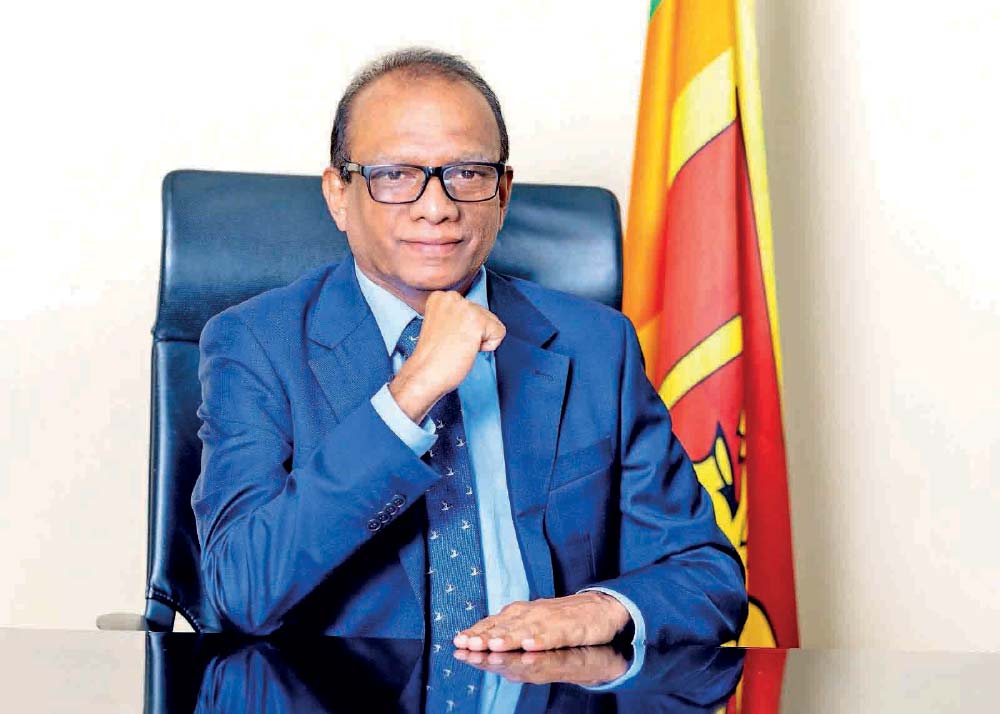
Energy Minister Anura Karunathilaka
The Government cannot yet give electricity users a specific timeline for electricity tariff reductions despite its plans to expand solar power, renewable energy and battery storage, Energy Minister Anura Karunathilaka said.
Responding to queries during a media briefing Saturday, on when households and businesses could expect lower electricity bills as renewable energy projects are added to the national grid, Karunathilaka said tariff reductions would depend on how generation costs evolve over successive years.
“As we have explained, our plan is to bring in more solar power and renewable energy sources and reduce the cost of generation,” he said.
The Minister said the Ceylon Electricity Board and other relevant institutions make the assumptions underpinning electricity costs on an annual basis, meaning the impact of new renewable capacity would be incorporated progressively rather than through a predetermined tariff-cut schedule.
“As these things are gradually added and our costs come down, the assumptions made for each year will also decrease,” Karunathilaka said.
Electricity tariffs are calculated based on these underlying costs, he explained, with any reduction in generation costs reflected in the tariff calculation.
“Therefore, we cannot say percentage-wise that it will decrease by this much after this period,” he said.
The comments come as Sri Lanka accelerates the integration of solar power into the national grid. Solar capacity has already surpassed 3,070 MW, with the Government planning a further major expansion of renewable generation and battery storage over the next several years.
Karunathilaka said the Government’s strategy was to progressively increase the contribution of lower-cost renewable sources while reducing the overall cost of electricity generation.
He stressed, however, that the timing and scale of any tariff reductions would depend on actual costs and the annual assumptions used in the tariff-setting process.
“The benefits from the gradual addition of renewable energy sources would be passed on to electricity users through the tariff-setting process,” he said.
The Minister’s comments effectively leave the timing of future electricity price reductions open, with electricity users expected to benefit only as lower generation costs are reflected in successive tariff calculations.
The Government is simultaneously pursuing large-scale investments in solar generation and battery storage, with the National System Operator (NSO) planning to facilitate an additional 1,392 MW of solar capacity and approximately 1,240 MW/4,660 MWh of battery storage during 2027–2029.
The policy challenge will therefore be to translate the rapid expansion of renewable generation into sustained reductions in system costs, while ensuring the grid has sufficient capacity and flexibility to absorb the growing volume of variable solar power.




