Tuesday Oct 13, 2026
Tuesday Oct 13, 2026
Thursday, 21 May 2026 05:31 - - {{hitsCtrl.values.hits}}
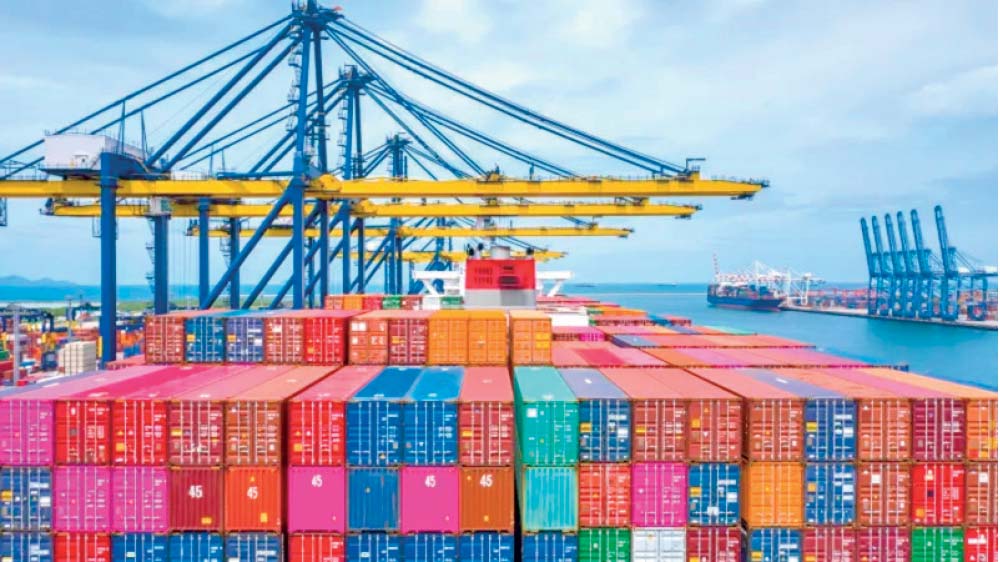
The Sri Lankan Rupee has rapidly weakened against the US Dollar, and the effect is visible across the board, as major foreign currencies, specifically the US Dollar, the British Pound, and the Euro, continue to strengthen against the Rupee. The National Chamber of Exporters (NCE) notes that regardless of the short-term gains likely for the industry, continued depreciation could lead to a significant long-term negative impact.
The Rupee has been facing rapid and consistent downward pressure, currently reaching Rs. 333 from Rs. 315 a month ago, with the US Dollar spot indicative rate hovering around Rs. 321 to Rs. 325. The LKR has depreciated by about 3.6% to 4.5% against the US Dollar compared to the end of the previous year. The buying and selling rates of the US Dollar at many banks, including NDB Bank, People’s Bank, Commercial Bank, and Sampath Bank, have increased, reflecting this trend, as the buying rate has reached Rs. 325-327 and the selling rate has reached Rs. 334, marking the highest level since December 2023.
According to the Central Bank Governor, this is mainly driven by increased imports, especially petroleum, and slowing tourism revenue. As a heavily import-dependent country, one direct consequence is cost-push inflation, impacting prices of essential items including fuel, which can disrupt manufacturing activity across the country and potentially lead to a further increase in electricity and water tariffs. In fact, Sri Lanka’s Colombo Consumer Price Index-based headline inflation increased to 5.4% in April 2026, up from 2.2% recorded in March 2026, with significant upward adjustments in domestic energy prices. Moreover, according to CBSL data, expenditure on fuel imports increased by a massive 74.7% on a year-on-year basis to $630 million in March 2026, mainly due to the increase in fuel prices and volumes caused by the ongoing war in the Middle East. However, certain industries, such as exports and tourism, or those receiving foreign remittances, might see short-term gains as foreign income now converts to more rupees, though the larger issues outweigh these benefits.
Sri Lanka’s export earnings recorded a historically high level in 2025, with total merchandise exports reaching $13.5 billion during the year. Moreover, Sri Lanka’s merchandise exports for the period January-March 2026 reached $3.4 billion, a 3.4% increase from the same period in 2025, reflecting strong momentum in key sectors such as apparel, tea, and rubber products. In Q4 2025, merchandise exports stood at $1,158 million in December, $1,058 million in November, and $1,149 million in October. In Q1 2026, they reached $1,148 million in January, $1,057 million in February, and $1,254 million in March.
While the export sector is currently performing well, the potential impacts of Rupee depreciation carry long-term consequences, especially for exporters reliant on raw material and fuel imports.
The NCE notes that the most immediate consequence is that imports and foreign payments have become more expensive, and businesses that depend on imported raw materials are feeling that pressure directly, which is not expected to ease in the near term either.
Sri Lanka spent $11.8 billion on intermediate goods imports in 2025. In March 2026, expenditure reached $1,261.2 million, the highest monthly level since December 2021. Fuel accounted for exactly half at $630.1 million, up from $398 million in February.
Textiles and textile articles were the second-largest category at $236.1 million, followed by chemical products ($100.4 million), plastics and articles thereof ($48.3 million), base metals ($33.2 million), and paper and paperboards ($33.1 million). Other imports included vehicle and machinery parts ($31.8 million), agricultural inputs ($27.5 million), food preparations ($24.1 million), rubber articles ($23.5 million), wheat and maize ($20.7 million), diamonds and precious stones ($17.3 million), mineral products ($13.1 million), unmanufactured tobacco ($4.9 million), fertiliser ($3.8 million), gold ($0.4 million), and miscellaneous intermediate goods ($13.3 million).
Except fertiliser and mineral products, all categories recorded a sharp increase in March. Overall, alongside taxes and tariffs, these trends indicate mounting manufacturing input costs, which have significant implications for export sectors heavily dependent on imported inputs.
Moreover, while the current movement in the currency appears gradual, how the Rupee will fluctuate from here will be shaped significantly by global oil prices and international economic conditions. One potential solution proposed by the NCE is to rationalise energy costs, which members across sectors have identified as a measure that would help businesses manage the pressure.
The Industrial Mineral Sector has described the situation as a double-edged sword. Exporters who invoice in US Dollars do see their rupee-denominated revenue increase when converted back to local currency, which improves liquidity and helps cover domestic operational costs including labour, local utilities, and land leases. However, mineral processing is a capital-intensive industry, especially high-value segments such as engineered quartz, and depreciation raises the cost of imported machinery, spare parts, and specialised consumables such as industrial sieves, resins, packaging, and chemicals.
Energy costs add further pressure. Mining and processing operations are energy-heavy, and as the Rupee weakens, the cost of imported fuel and electricity, tied to global oil prices and currency-adjusted tariffs, rises accordingly, narrowing the very margins that the depreciation was supposed to improve. Logistics face a similar problem, as freight and shipping costs are almost always dollar-denominated, which makes the transition from ex-factory to CIF more expensive and offsets the pricing advantage created by currency depreciation.
On market positioning, a lower Rupee does help Sri Lanka compete against low-cost producers in India, China, and Vietnam when it comes to raw or semi-processed minerals such as vein quartz or graphite. For value-added products like engineered quartz surfaces, however, international buyers prioritise quality and consistency over minor price differences, so the currency benefit is limited in that segment. Investment is also affected, as long-term growth in the mineral sector requires upgrading to advanced processing technologies, and a volatile or depreciating currency creates uncertainty for foreign direct investment while making the financing of high-tech equipment from Europe or China prohibitively expensive in local terms.
Overall, the NCE highlights that there is no real term benefit of Rupee depreciation for exporters due to dependency on imported inputs. For those in high-value manufacturing, the immediate priority is stabilising the cost of production against currency volatility.
Hence, while exporters across sectors may receive short-term gains from exchange rate depreciation depending on the proportion of local value addition in the business and the degree of import dependency, the sector highlights that the long-term negative impact outweighs the benefits.




