Saturday Sep 26, 2026
Saturday Sep 26, 2026
Saturday, 26 September 2026 00:00 - - {{hitsCtrl.values.hits}}
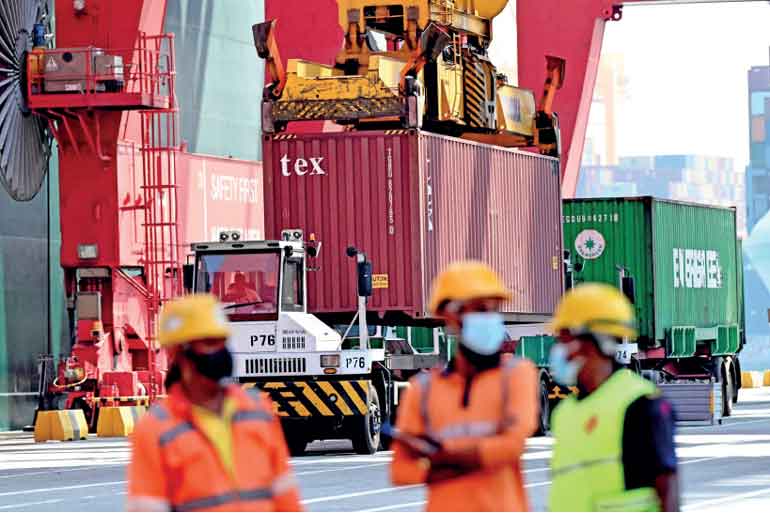
Sector representatives raised several concerns affecting export businesses, including certification requirements for food shipments, the cost of locally sourced rubber, logistics expenses and delays in obtaining approvals, at the National Chamber of Exporters of Sri Lanka (NCE) Council meeting held on 17 September at the NCE secretariat.
A major concern raised during the meeting was the certification process for processed food exports, especially the health/phytosanitary certifications required for shipments to Australia, which had resulted in considerable difficulties in clearing shipments. It was noted that certain country-specific wording needs to be included in the certificate, while differences in the documentation issued in Sri Lanka had created problems for exporters.
The meeting was also informed that some shipments had been held for several months due to documentation issues, and that the issue had also been brought to the attention of Sri Lankan officials during discussions in Australia. The concern was raised in relation to the processed food export sector and the need for certification procedures to meet the requirements of destination markets.
In July 2026, Sri Lanka’s rubber export earnings grew 3.17% YoY to $ 87.24 million, reflecting sustained international demand. Industrial and Surgical Rubber Gloves increased 19.01%, while Gaskets, Washers, Seals, and other Hard Rubber Products increased 47.56% compared to July 2025.
Yet, despite these gains, the rubber sector also raised concerns over pricing and the cost of raw material. Members noted that Sri Lankan rubber was currently more expensive than imported rubber, despite high shipping costs. As a result, a large number of exporters were importing rubber rather than purchasing from the local market, which was affecting local value addition.
Exporters also reported that market prices had not increased in line with their costs and that profit margins had fallen. The meeting noted that discussions on improving rubber plantation productivity had been taking place for several years, while improvements in supply would take time to produce results.
Meanwhile, Tea export earnings fell 17.22% YoY to $ 116.73 million in July 2026, mainly due to declines in Tea Packets and Bulk Tea. This was largely due to a 47.93% drop in Middle East exports, including steep declines in Iraq (-78.54%), Iran (-73.09%), the UAE (-57.49%), and Saudi Arabia (-3.44%).
In this context, the tea sector highlighted the continued impact of high logistics costs, especially in the Middle East, and freight rates to European markets were also described as a concern. While exporters had been seeking alternative logistics routes, the cost of these alternatives remained a problem.
Concerns were also raised about the capacity of the coconut sector to meet future export targets.
Sri Lanka’s coconut shell-derived Activated Carbon exports grew 26.72% YoY to $ 24.28 million in July 2026, highlighting the increasing earnings and global growth potential of value-added coconut products.
The meeting referred to efforts to expand cultivation in the Northern region and the distribution of coconut seedlings, while noting that the Coconut Cultivation Board’s capacity to undertake further planting was limited and that greater private sector participation would be required.
The Council also discussed the use of preferential trade agreements and the need for improved awareness among exporters on how these arrangements can be used when entering overseas markets. The NCE plans to work with relevant authorities to increase awareness and examine barriers that may be limiting the use of such agreements.
Sri Lanka’s overall export performance has been steady, with total exports surpassing $ 10 billion in the first seven months of 2026 (a 5.5% YoY increase), and merchandise exports leading performance at nearly $ 8.2 billion, growing 5.05% YoY.
In addition to sectoral matters, the NCE briefed members on its upcoming international delegations and market access activities. Delegations to India, Dubai, Bahrain and Italy are being planned. The Chamber has also signed and is pursuing several MoUs with overseas business organisations.
The Chamber is also preparing an AI-driven digital marketing program with NIBM for export-oriented businesses, aimed at marketing, business development and customer engagement staff. A new national youth awareness program on the export sector is also scheduled to be soft launched in October. The program will target school leavers and young people through physical and online interactive sessions featuring exporters and other industry representatives.
With these events, the NCE remains committed to supporting exporters through market access and business development programs.




