Saturday Oct 31, 2026
Saturday Oct 31, 2026
Saturday, 31 October 2026 00:00 - - {{hitsCtrl.values.hits}}
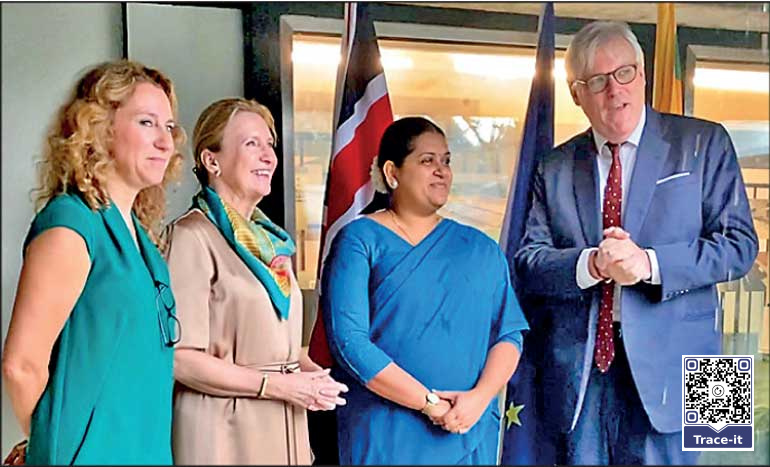
Mayor of Colombo Vraie Cally Balthazaar today joined the British High Commission Colombo and the Delegation of the European Union to Sri Lanka to launch their joint solar energy initiative, marking a practical partnership for more sustainable operations.
The Mayor joined British High Commissioner Andrew Patrick and EU Ambassador-designate Sylvia Hartleif and Deputy High Commissioner Theresa O’Mahony for a ceremonial switch on and a showcase of the High Commission’s wider greening initiatives.
Approximately 240 kWp of installed solar capacity across the High Commission’s office estate is projected to generate 365,000 kWh of electricity annually, avoiding an estimated 193 tonnes of carbon dioxide emissions each year.
British High Commissioner Andrew Patrick, subject to approval: “The UK and the European Union share a commitment to a cleaner future and a belief that we achieve more together. This joint solar initiative puts that commitment into practice here in Colombo, generating renewable energy and reducing our environmental footprint. It is a practical partnership we can build on.”
The solar partnership forms part of a wider effort to reduce the High Commission’s environmental footprint. More efficient cooling, lighting and building systems, alongside solar water heating, offer estimated energy savings of 79,200 kWh a year.
Other measures include 10,000 litres of rainwater storage capacity and a vehicle fleet that is 25% plug-in hybrid. Waste segregation and safe disposal, including recycling and composting, account for approximately 1.13 tonnes on an annualised basis.
EU Ambassador-designate Sylvia Hartleif noted: “Transitioning to cleaner energy requires ambition, partnership and practical action. This joint solar initiative demonstrates how we can turn our shared climate commitments into tangible results, reducing emissions while making our operations more sustainable. It also reflects the European Union’s broader support for Sri Lanka’s Green Recovery, advancing renewable energy, fostering an inclusive and climate-resilient energy transition, and contributing to greater access to affordable, sustainable energy.”
The solar partnership forms part of a wider effort to reduce the High Commission’s environmental footprint. More efficient cooling, lighting and building systems, alongside solar water heating, offer estimated energy savings of 79,200 kWh a year.
Other measures include 10,000 litres of rainwater storage capacity and a vehicle fleet that is 25% plug-in hybrid. Waste segregation and safe disposal, including recycling and composting, account for approximately 1.13 tonnes on an annualised basis.
Deputy High Commissioner Theresa O’Mahony said: “Greening our operations goes beyond installing solar panels. It is also about how we use water, manage waste, travel and care for our surroundings. Bringing these efforts together helps us make sustainability part of everyday life at the High Commission.”




