Saturday Oct 17, 2026
Saturday Oct 17, 2026
Thursday, 23 July 2026 13:22 - - {{hitsCtrl.values.hits}}
 The Seylan ‘Pahasara’ Library Project has grown into one of Sri Lanka’s most enduring corporate education initiatives, reflecting Seylan Bank’s long-term commitment to creating equitable access to learning while nurturing financially literate, socially-responsible future citizens. Launched in 2013 to commemorate the Bank’s 25th anniversary, the programme has evolved into a flagship Environmental, Social, and Governance (ESG) initiative, strengthening library infrastructure in schools across the island while expanding educational opportunities through technology, financial literacy, and community engagement.
At a time when equitable access to quality education continues to shape social mobility and national development, Seylan ‘Pahasara’ demonstrates how meaningful private sector partnerships can complement Sri Lanka’s education system by creating opportunities that extend well beyond the classroom. By investing in libraries as centres of learning, creativity, and community engagement, the programme is helping cultivate the necessary knowledge, values, and life skills that empower future generations.
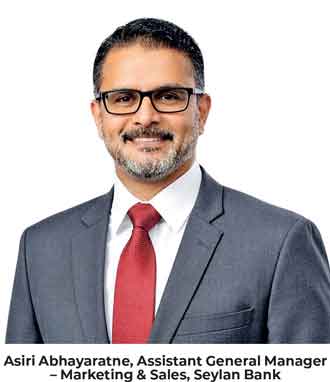
As the programme approaches the landmark of its 300th library, Assistant General Manager – Marketing & Sales, Asiri Abhayaratne, reflects on the journey and the vision that continues to shape Seylan ‘Pahasara’.
Q: As Seylan ‘Pahasara’ approaches its 300th library, what does this milestone represent for the Bank?
A: Reaching the 300-library milestone represents far more than a numerical achievement. It reflects over a decade of consistent investment in Sri Lanka’s future through education. Since opening the very first ‘Pahasara’ library on 1 March 2013, our objective has remained unchanged, to empower children by improving access to quality learning environments and creating opportunities that extend well beyond the classroom.
Education has always been one of the strongest drivers of social mobility. Through ‘Pahasara’, we wanted to create a programme that delivers enduring value by strengthening the foundations of learning while encouraging lifelong habits such as reading, saving, critical thinking, and responsible, optimistic decision-making. Over the years, that vision has expanded into a comprehensive sustainability initiative that connects education, financial literacy, environmental responsibility, and community participation.
Today, as we move steadily towards establishing our 300th library, we are proud to see how the initiative has become an integral part of Seylan Bank’s broader commitment to creating meaningful and lasting social impact across Sri Lanka.
Q: What inspired the creation of the ‘Pahasara’ initiative in the first place?
A: Our inspiration came from a simple belief that every child deserves access to quality educational resources regardless of where they live. We recognised that where a child is born should never determine the opportunities available to learn, grow, and realise their potential. Through Seylan Tikiri, we had already spent many years encouraging children to develop healthy financial habits. Naturally, we began exploring how we could further support children’s overall development in a way that would generate lasting benefits for both individuals and communities.
Libraries became the ideal platform because they are gateways to opportunity, imagination, and lifelong learning, not simply places that house books. They are spaces where curiosity is nurtured, confidence grows, and young minds begin to discover their potential. We wanted to combine the habit of reading with the habit of saving and creating a meaningful connection between knowledge and responsibility.
As the programme developed, we deliberately incorporated environmental and economic dimensions into the initiative, transforming ‘Pahasara’ into one of Seylan Bank’s flagship ESG programmes. Today, every library opening represents not only an investment in education, but also in building stronger, more resilient communities and a fortified environment.
Q: How has the programme evolved over the years?
A: While our core purpose has remained unchanged, the programme itself has grown significantly. Initially, our focus was on establishing or refurbishing school libraries and providing quality books. Today, each ‘Pahasara’ library is supported by a much broader ecosystem of learning that combines physical infrastructure with experiential education and digital learning opportunities.
One of the most valuable additions has been ‘Pahasara Week’, which has become an integral component of every library opening. Rather than limiting our contribution to infrastructure, we dedicate an entire week to engaging students through activities that support their academic, personal, and social development.
These activities even further the development of soft skills through the inclusion of financial literacy programmes, mathematics camps, arts, sports, leadership development, culinary experiences, and other interactive learning opportunities. Students are introduced to practical financial concepts from an early age while also developing creativity, teamwork, communication, and problem-solving skills. The objective is to expose children to experiences that many schools may have limited access to while encouraging confidence and holistic development.
Complementing these programmes are initiatives such as Tikiri Pola, where children experience financial concepts through enjoyable practical activities, and tree-planting ceremonies that reinforce the importance of environmental stewardship and sustainability. Together, these experiences transform each library opening into a broader educational journey that leaves a lasting impression on students.
Q: How does Seylan Bank identify the schools that would benefit most from the programme?
A: Selecting schools is a collaborative and carefully considered process. We work closely with our extensive branch network together with the Ministry and Department of Education to identify schools where our intervention can create the greatest long-term impact.
Every school has different needs. Some require complete library refurbishment, while others need access to books, digital learning tools, or educational technology. Our assessments help us understand the existing resources and determine how we can best strengthen the school’s learning environment. We also prioritise schools where improved educational infrastructure can help bridge resource gaps and create more equitable learning opportunities for students.
Beyond infrastructure, we provide carefully selected books and digital equipment that broaden educational opportunities while supporting modern teaching methods. Our objective is always to ensure that every investment delivers sustainable value for both students and teachers.
Q: How has ‘Pahasara’ influenced communities beyond the school itself?
A: One of the programme’s greatest strengths is that it naturally brings communities together. Preparing for a ‘Pahasara’ library involves teachers, parents, students, school development societies, education officials, local businesses, and our own branch teams working towards a common goal.
Where possible, we engage local suppliers and businesses during refurbishment work, ensuring that the economic benefits remain within the community. Parents also participate in dedicated financial literacy sessions designed to strengthen their understanding of money management while enabling them to reinforce positive financial habits at home. When families become more financially aware, the benefits often extend beyond the classroom and contribute to stronger household financial decision-making.
The programme has also expanded beyond libraries. Scholarships have been awarded to outstanding Advanced Level students, while internships and continued educational engagements provide further opportunities for young people as they progress through their academic journey.
Ultimately, the success of ‘Pahasara’ lies in creating an ecosystem where education becomes a shared responsibility and a catalyst for broader community development.
Q: How do you ensure these libraries continue to thrive long after they are opened?
A: Sustainability has always been central to ‘Pahasara’. Our responsibility does not end with the opening ceremony. Our Board Marketing, Product Development and Sustainability Committees are appointed to lead Steering and Working Committees in aligning ESG mandates across all Seylan Bank’s initiatives. Our branch network maintains continuous engagement with each school, providing ongoing support whenever needed. In addition, we conduct structured follow-up visits on a rotational basis, typically every three years, to assess the condition of the library, understand evolving requirements, and identify opportunities for further support.
This continuous relationship enables us not only to maintain each library as an active learning space, but also to better understand how educational needs evolve over time. It allows us to ensure that every ‘Pahasara’ library continues to serve future generations while creating meaningful, long-term impact within the communities we support.
Q: Looking ahead, what legacy do you hope ‘Pahasara’ will leave behind?
A: At its heart, ‘Pahasara’ is about building habits that shape futures. Libraries provide knowledge, but equally important are the values that children develop through reading, learning, saving, and caring for their communities.
We hope every child who benefits from ‘Pahasara’ grows into an individual who is curious, financially responsible, environmentally conscious, and committed to lifelong learning. Those qualities will ultimately contribute not only to their personal success but also to Sri Lanka’s long-term economic and social progress.
Every library we establish represents an investment in possibility. While we may be opening shelves filled with books today, what we are ultimately helping create are future teachers, entrepreneurs, professionals, innovators, and community leaders.
As we approach the 300th ‘Pahasara’ library, we see this not as the conclusion of a journey, but as another important milestone in our continuing commitment to empowering future generations through education. For Seylan Bank, investing in children today is an investment in the future of our nation.




