Thursday Oct 22, 2026
Thursday Oct 22, 2026
Tuesday, 23 June 2026 00:24 - - {{hitsCtrl.values.hits}}
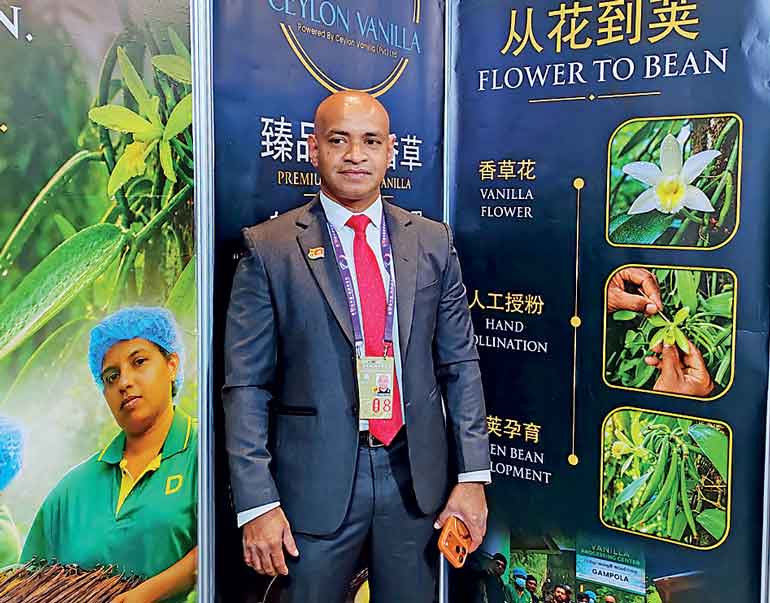
Ceylon Vanilla Founder/Managing Director Kelum Priyadarshana
Text and Pix By Shanika Sriyananda in Kunming, China
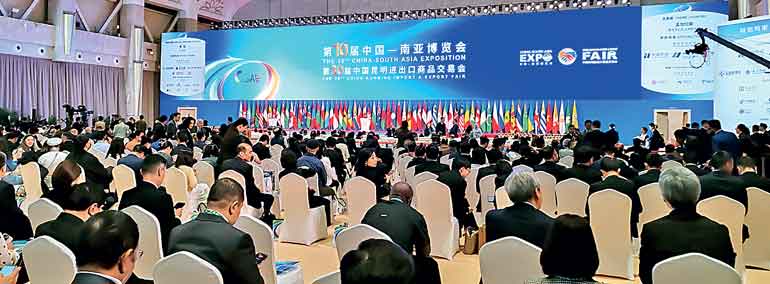
Against the backdrop of colourful South Asian handicrafts, the aroma of Ceylon tea and spices, and growing business negotiations, the 10th China-South Asia Exposition in Kunming, in the Yunnan Province, China, once again demonstrated why it has become one of the most important trade platforms connecting China with South Asia.
For Sri Lanka, the six-day exposition held from 11 to 16 June at the Kunming Dianchi International Convention and Exhibition Centre was more than just another trade fair. It represented a strategic gateway to one of the world’s largest consumer markets and highlighted the growing economic partnership between Sri Lanka and China’s Yunnan Province.
Organised under the theme ‘Solidarity and Coordination for Common Development,’ the exposition brought together participants from 68 countries, regions and international organisations. More than 560 South Asian companies and over 1,500 professional buyers participated, with international buyers accounting for over 60 percent of registrations.
The scale of the event reflected China’s growing engagement with South Asia at a time when regional trade, investment and connectivity are gaining momentum.
According to Chinese Vice Commerce Minister Yan Dong, trade between China and South Asian countries exceeded US$ 200 b in 2025, recording a year-on-year growth of 10.7 percent. During the first four months of 2026 alone, trade expanded by a further 15.8 percent.
The Sri Lankan pavilion, organised by the Department of Commerce in collaboration with the Sri Lankan Embassy in China, featured a diverse range of products including Ceylon tea, gems and jewellery, spices, coconut-based products, processed foods, handicrafts, wellness products, tourism services and innovative consumer products.
The Sri Lankan exporters participation, which has increased yearly, has reflected growing confidence among their businesses in the Chinese market.
Deputy Foreign Affairs, Foreign Employment and Tourism Minister Arun Hemachandra, who was at the Expo, said the increasing number of Sri Lankan exhibitors attending the Expo every year demonstrated the value businesses place on the platform.
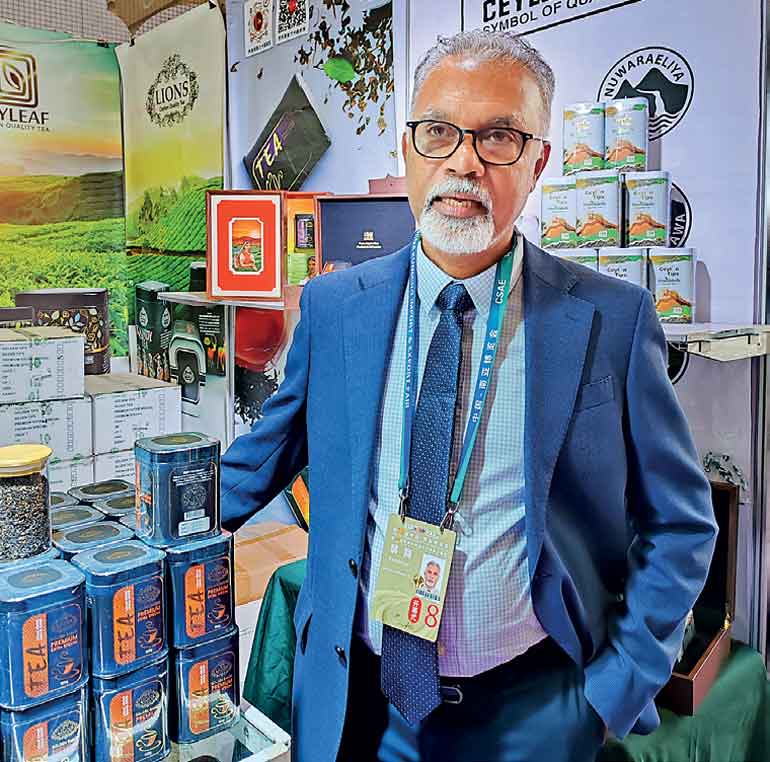
Lion's Ceylon Tea Managing Director Shiran Gunawardana
“When compared with last year, we have seen an increase in the number of Sri Lankan booths and exhibitors. This trend is likely to continue because businesses see real opportunities here,” he said.
He believes Yunnan Province has a unique importance in Sri Lanka’s engagement with China. “Yunnan is one of the closest provinces of China to Sri Lanka and connectivity is easy through direct flights. We see Yunnan as a gateway through which Sri Lankan products can enter the Chinese market,” Hemachandra told Chinese and Sri Lankan media, when he was visiting Sri Lankan booths and meeting exporters at the Expo.
While Governments have laid the foundation for cooperation, he said people-to-people engagement has become an equally important pillar.
“Both Chinese and Sri Lankan Governments have done their part, but what I see most clearly is that the connections between people have strengthened. Since the Expo began ten years ago, more people have come, more relationships have been built and confidence has grown.”
Meanwhile, Trade, Commerce, Food Security and Cooperative Development Minister Wasantha Samarasinghe revealed that discussions with Yunnan provincial authorities had resulted in a major logistical breakthrough for Sri Lankan exporters.
“We discussed establishing storage facilities in Kunming for Sri Lankan exporters and producers. The Governor of Yunnan Province agreed to provide a 2,000-square-metre warehouse facility free-of-charge,” Samarasinghe said.
The facility could prove transformative for Sri Lankan companies that have long struggled with distribution and storage challenges when exporting to China.
According to Minister Samarsinghe, exporters will be able to store products in Kunming and distribute them directly through China’s rapidly growing e-commerce platforms.
“This connection was developed through the Expo. Our exporters can bring products to Kunming and market them through Chinese online platforms. It will reduce costs, improve market access and allow producers to sell their goods more competitively,” he said.
The initiative is expected to benefit a wide variety of exporters ranging from tea producers and spice exporters to coconut-based product manufacturers and wellness brands.
It was found that logistics and market access have traditionally been among the biggest barriers preventing Sri Lankan SMEs from expanding their presence in China.
The proposal of a warehouse in Yunnan provides a practical solution to strengthen bilateral trade between two countries.
“We cannot compete with China in volume,” Hemachandra said. “But we can offer something different — products with quality, authenticity and a distinct Sri Lankan flavour.”
Sri Lanka’s globally recognised tea industry remains as the best example to fetch good prices as it is with a different quality and a flavour.
Nineteen journalists representing several mainstream media institutions in Sri Lanka including the Daily FT were facilitated by the Yunnan International Communications Centre (YICC) for South and Southeast Asia and the Association for Sri Lanka-China Social and Cultural Cooperation to cover the Expo in Kunming.
0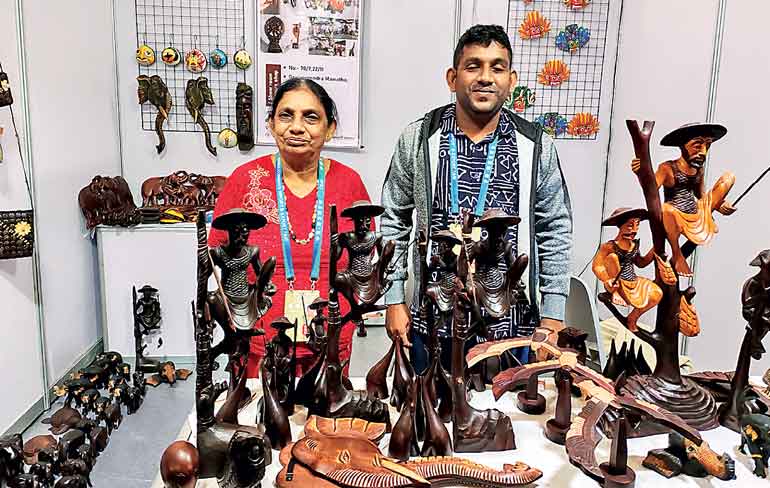
Sriyani and Iresh Handicrafts
Lion’s Ceylon Tea Managing Director Shiran Gunawardena, representing Sri Lanka’s tea sector for the last 10-years at this Expo in Kunming, said the exposition continues to offer significant opportunities for small and medium-scale tea exporters.
“This Expo is particularly valuable for SMEs seeking entry into international markets. China has a growing appreciation for Sri Lankan tea because of its unique taste and quality,” he said.
Gunawardena believes more Sri Lankan tea exporters should explore opportunities in China.
“They should not only participate in the Kunming Expo but also in other trade exhibitions across China. There is substantial demand and growing awareness of premium Ceylon tea.”
However, tea is only a part of the story. Officials say Sri Lanka is increasingly promoting value-added coconut products, spices, herbal wellness products, processed foods and specialised consumer goods to diversify its export basket.
At the Kunming Expo, an opportunity has been given to showcase Sri Lanka›s rich cultural heritage.
Among the exhibitors was Lanka Masks, represented by artisan and entrepreneur Palitha Ranasinghe. Sriyani and Iresh handicraft, a traditional wood carving business run by mother and son also had a booth showcasing Sri Lanka’s traditional masks and wood carvings at the Expo.
Traditional Sri Lankan masks, deeply rooted in the country›s folklore and healing rituals, attracted considerable interest among visitors.
“We have been participating in this exposition for many years,” he said.
“Traditional masks have symbolic meanings and are believed to bring happiness and protection. We are now also producing decorative masks and home décor items that appeal to modern consumers.”
His ambition is to make Sri Lankan masks better known in Yunnan and across China.
“There is demand, but awareness is still limited. We want more people to understand the cultural value behind Sri Lankan masks.”
“Masks are made from Kaduru wood, and finding suitable raw materials is becoming increasingly difficult,» Ranasinghe explained.
He said that masks – which depict gods, humans, demons, animals and mythical- are now used for interior decorations in hotels, offices and homes.
For these small-scale artisans, the Expo provides a rare opportunity to access international customers while preserving traditional craftsmanship.
Among the emerging products attracting attention at the Sri Lankan pavilion was natural vanilla.
Entrepreneurs promoting vanilla described it as the ‘Green Gold’ and the ‘Queen of Spices’ due to its exceptionally high market value.
Ceylon Vanilla Chief Executive Officer Kaushan Manawadu said while most consumers were familiar with synthetic vanilla flavouring, natural vanilla production was highly labour intensive, requiring hand pollination and careful processing.
As demand grows for natural and sustainable ingredients, vanilla producers see significant export potential.
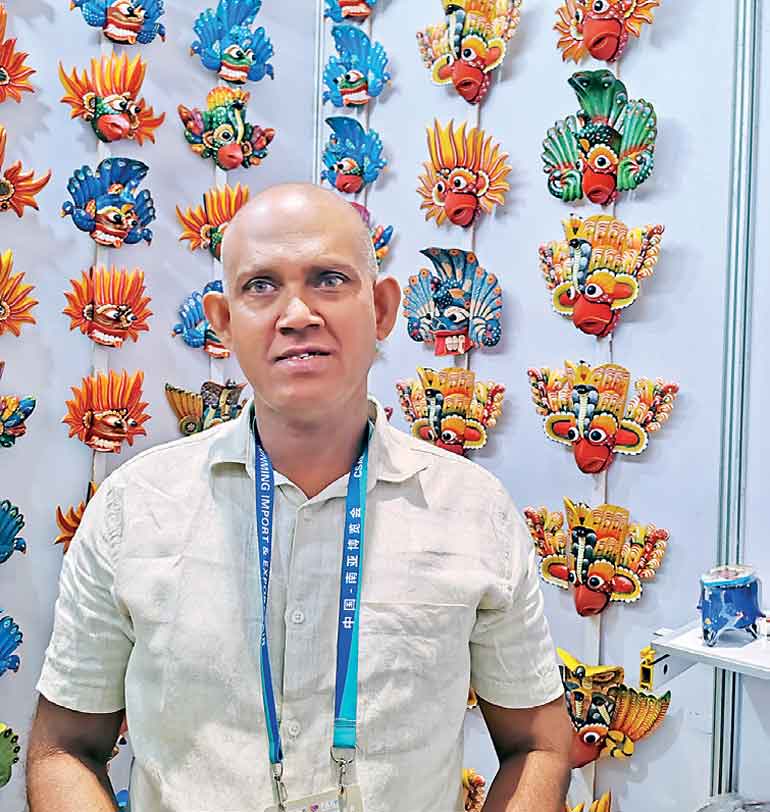
Lanka Masks Palitha Ranasinghe
However, he said cultivation risks, production costs and market uncertainties remain major challenges.
“Participation in international trade fairs like Kunming Expo is important for us to find buyers, build partnerships and ensure long-term sustainability”, he said.
With support from the Department of Commerce, Manawadu said that producers hope to establish good market links in overseas markets as natural ingredients like vanilla gain higher prices.
Tourism is also another segment that aimed to promote at this Expo as it emerged as a key area of future cooperation.
Chinese tourist arrivals to Sri Lanka have shown a significant increase in recent years.
According to Sri Lanka Tourism Development Authority (SLTDA), China has re-emerged as one of Sri Lanka’s leading tourism source markets, with Chinese visitor arrivals showing a steady and robust recovery in recent months.
The SLTDA announced that Sri Lanka was targeting 300,000 Chinese arrivals in 2025 through enhanced promotional campaigns, travel trade partnerships and improved connectivity.
The Authority has stated in its monthly report that it believed stronger Chinese tourist inflows would help sustain tourism sector growth to boost foreign exchange earnings and strengthen people-to-people ties between Sri Lanka and China.
“Tourists from China are increasing. Last year we recorded one of the highest numbers of Chinese arrivals. That demonstrates the confidence Chinese travellers have in Sri Lanka,” Deputy Minister Hemachandra said.
Sri Lanka is actively promoting tourism, Ayurveda, wellness experiences and cultural attractions to Chinese visitors.
He said that the Government believe Yunnan›s strategic location and strong transport connectivity make it an important source
According to China›s Ministry of Commerce Department of Asian Affairs Director-General Wang Liping, China and South Asian countries represent a combined market of nearly three billion people and account for approximately 20 percent of global GDP.
“The Expo provides a platform to unleash the great potential for cooperation between China and South Asia,” he said.
For Sri Lanka, the Expo offered a unique opportunity to strengthen trade, attract investment, boost tourism and expand cultural exchanges.
The relationship between Sri Lanka and Yunnan is evolving from a traditional trading partnership into a broader economic and cultural connection.
Kunming Expo




