Sunday Sep 13, 2026
Sunday Sep 13, 2026
Wednesday, 3 December 2025 05:09 - - {{hitsCtrl.values.hits}}
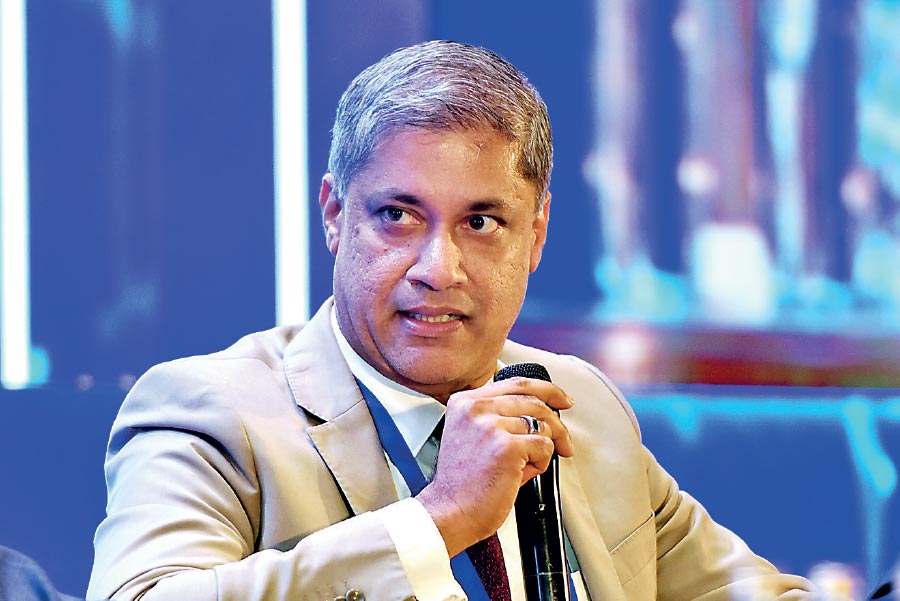
By Charumini de Silva
First Capital Holdings PLC Managing Director and CEO Dilshan Wirasekara yesterday said the initial estimates for the economic cost of the disaster range from $ 200 million to $ 2.9 billion, whilst warning that the final tally is likely to reach 1–3% of GDP.
“This is a massive undertaking. What we did during the tsunami or the 2016 floods will not move the needle here. We must think out of the box,” he stressed, speaking during a panel discussion on corporate financing needs in the aftermath of Cyclone Ditwah.
Wirasekara outlined three major categories of impact requiring attention which include; infrastructure damage, agricultural output losses and supply-side disruptions and the human toll, including loss of life and community-level hardship.
He urged the public and private sector to move decisively towards new capital-raising instruments, particularly a large-scale, Government-backed Infrastructure Bond, to finance post-disaster reconstruction and support distressed enterprises emerging from the economic crisis.
Wirasekara said Sri Lanka must now look beyond traditional fundraising tools and embrace innovative capital-market products to meet urgent reconstruction needs and revive underperforming companies requiring restructuring or fresh capital infusion.
“The Colombo Stock Exchange (CSE), together with the Securities and Exchange Commission (SEC), had introduced more new financial products over the past 24 months than ever before, particularly on the debt side. However, the ongoing disaster presents a compelling case to deploy these mechanisms at scale, starting with an Infrastructure Bond targeted at both domestic and international investors,” he added.
Wirasekara stressed that the Government’s ‘Rebuild Sri Lanka Fund’, already approved by the Cabinet of Ministers, provides the ideal platform for such a Bond issue.
With the State still locked out of international capital markets, he said Sri Lanka is currently funding its entire Budget deficit through domestic rupee-denominated debt, leaving limited room to finance major reconstruction needs.
“Given the scale of the damage, this cannot be addressed through the usual corporate-level debt issuances of $ 5-10 million. We need a minimum $ 30-40 million, even up to $ 500 million, as a starting point,” he said, adding that investment banks should collaborate on the effort at zero fee, placing national interest above commercial returns.
Wirasekara proposed issuing the Bond at a negative premium compared to prevailing Government securities yields, currently between 8% and 11% to attract patriotic domestic investors, whilst also appealing to foreign institutions seeking to support Sri Lanka’s recovery.
He pointed out that significant donations and humanitarian assistance already arriving from foreign governments could complement such an offering.
“While the CSE last year announced plans for an Infrastructure Bond framework, no issuance has yet taken place. Thus, the current crisis is the strongest justification to activate the mechanism immediately to fill the country’s funding gap and accelerate rebuilding efforts,” he said.
- Pic by Ruwan Walpola




