Tuesday Oct 13, 2026
Tuesday Oct 13, 2026
Friday, 27 March 2026 05:17 - - {{hitsCtrl.values.hits}}
By Safna Malik
Healthguard Distribution has significantly strengthened the pharmaceutical logistics landscape in Sri Lanka following a major upgrade to its Western Regional Distribution Centre (WRDC).
The facility, located in Colombo 15, now serves as the primary hub for an integrated ‘port to pharmacy’ network designed to enhance the availability and safety of essential medicines across the island.
While widely recognised as a premier pharmacy retail chain, Healthguard operating under the Sunshine Group has evolved into a sophisticated distribution entity. The brand distinguishes itself by centralising importation, storage, and regulatory compliance within a single in-house framework, that does not require the need for third - party providers.
The WRDC originally functioned as a warehouse for Swiss Biogenic Ltd. in 2008 before being designated as a central hub in 2015. Following an extensive refurbishment that commenced in July 2024, the facility resumed full operations in July 2025.
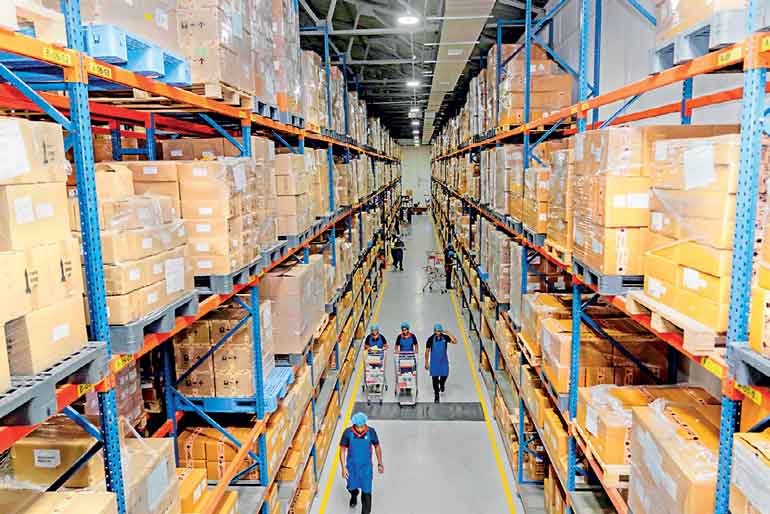
The upgraded facility features an 18,000 square feet layout with a total capacity of 2,295 CBM.
Speaking on the expansion, Sunshine Healthcare Lanka Ltd., CEO Shantha Bandara, noted that the upgrade was a direct response to gaps in the safe handling of medicines within the broader logistics sector. “The industry challenge is not just demand creation, but efficient distribution”, noting that the Rs. 300 million invested not only to expand capacity and improve infrastructure it also ensures strict compliance with National Medicines Regulatory Authority (NMRA) standards.
He also noted their significant focus on temperature control as a healthcare distribution partner. Medicines are stored in designated zones, with ambient areas maintained below 25°C and specialised cold rooms operating within 2°C to 8°C for products like vaccines and insulin. The cold storage capacity itself has been expanded from 15 CBM to 30 CBM to meet increasing demand.
He also shared that they are prepared for external disruptions to their operations, supported by high-capacity backup generators and on-site fuel storage to maintain the cold chain during power outages.
As the main logistics hub for the Western Province, it handles receiving, controlled storage, regulatory checks and dispatch, supplying more than 4,500 customer points, including private and government hospitals, pharmacies, modern trade outlets and State Pharmaceutical Corporation (SPC) Osusala outlets across the country.
Healthguard Pharmacy Ltd., Deputy General Manager - Operations, Pathma Kumara Warnakula, explained that the company operates a Distribution-as-a-Service (DaaS) model. “These are life-impacting medicines,” he remarked, emphasising that the company’s responsibility extends until the product safely reaches the patient. To ensure this, the delivery fleet is equipped with GPS tracking and real-time temperature monitoring using data loggers.
The company evaluates its customer base to ensure that medicines are delivered only to partners capable of maintaining appropriate storage standards. In his view, responsibility did not end at delivery but extended to ensuring that products remained safe until they reached patients.
Warnakula added that operations are aligned with ISO 9001:2015 and Good Distribution Practice (GDP) standards, supported by systems that allow full traceability of products. This enables the company to identify and recall products quickly if required, ensuring patient safety.
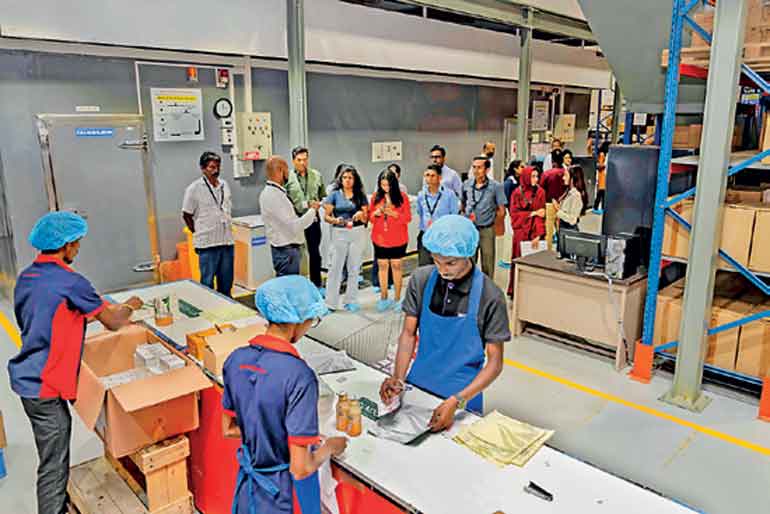
Explaining about new technologies across operations, he pointed out the Robotic Process Automation utilised for invoicing and credit verification, Sales Force Automation supporting order processing, and an ERP platform providing visibility across inventory and financials. Data dashboards are used for decision-making, while an automated conveyor system and specialised equipment support the movement of goods within the warehouse.
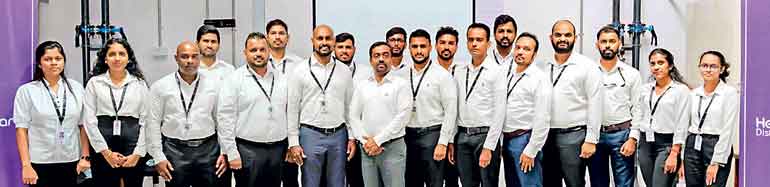
The workforce, comprising over 100 trained employees including a dedicated value-added services team, operates under continuous training programs covering compliance, cold-chain handling, safety and emergency response, supported by structured workplace practices.
Further he detailed overall performance targets, including a 98% order fulfilment rate and 97% delivery within 24 hours, reflecting a system designed to ensure that orders placed on a given day are delivered the following day. The company’s distribution network extends across the country through seven regional centres and a fleet of 55 vehicles, reaching over 4,500 customer points across 467 towns.
Beyond distribution, the company has established strict protocols for expired goods and products with damaged seals, compromised packaging or quality concerns will be immediately placed under quarantine and cannot re-enter circulation without regulatory approval.
Speaking on the disposal of expired drugs, he explained that products are sent to government-supervised facilities for approval before being incinerated at temperatures up to 1000°C within cement kilns. This ensures complete molecular destruction with zero residue. This is known as the preferred method for safely disposing of pharmaceutical waste. He noted that medicines, particularly coated tablets, capsules and injection-related materials, can be harmful if improperly discarded into the environment.
Warnakula noted that public awareness regarding the disposal of expired medicines remains low and indicated that the company is exploring future initiatives to prevent environmental contamination.
Reflecting on the broader role of the company, Healthguard Distribution combines infrastructure, compliance and operational control within a single framework to distinguish the company within Sri Lanka’s pharmaceutical distribution sector.
By managing the entire supply chain internally, Healthguard Distribution continues to set a benchmark for pharmaceutical logistics in Sri Lanka, ensuring that patient safety remains the central priority of its operations.
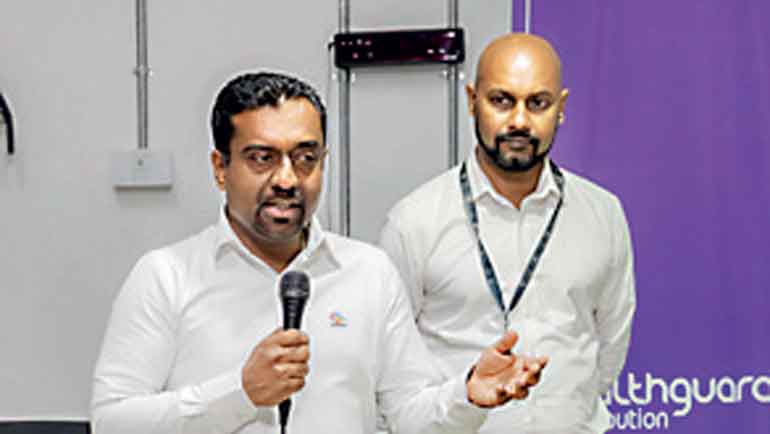
Sunshine Healthcare Lanka CEO Shantha Bandara with Healthguard Pharmacy Deputy General Manager Operations, Pathma Kumara Warnakula



