Wednesday Oct 28, 2026
Wednesday Oct 28, 2026
Thursday, 16 July 2026 03:44 - - {{hitsCtrl.values.hits}}
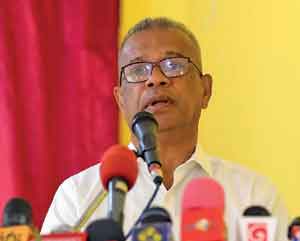 |
| Agriculture, Livestock, Land and Irrigation Minister K.D. Lalkantha |
The Government yesterday launched the countrywide “Ceylon Tea Village” program, a flagship initiative aimed at transforming Sri Lanka’s smallholder tea sector through higher productivity, value addition and rural development, as it seeks to lift annual tea production to 400 million kilograms and increase export earnings to $ 2.5 billion by 2030.
The first phase of the program commenced simultaneously across the country with the establishment of 144 tea villages, one in each of the country’s 144 tea inspection divisions. The Plantations and Community Infrastructure Ministry plans to expand the initiative to 500 tea villages countrywide over the coming years.
The program signals a strategic shift from traditional production support towards a more integrated rural development model, combining agricultural modernisation with social protection, access to finance, mechanisation, tourism and climate-smart farming practices to improve the livelihoods of tea smallholders.
Each tea village will receive a comprehensive package of interventions, including high-density tea cultivation demonstration plots, tea nurseries, insurance schemes for small tea estates, pension benefits for tea smallholders, concessional financing, mechanisation support, training and equipment for handmade tea production, and assistance to link tea cultivation with tourism.
The program will also promote regenerative agriculture, strengthen producer cooperatives, encourage supplementary income-generating activities and improve rural infrastructure.
The Government expects to complete the rollout of the initial 144 villages during 2026 before expanding the initiative to reach the target of 500 tea villages across the country.
Speaking at the national launch in Kandy, Agriculture, Livestock, Lands and Irrigation Minister K.D. Lalkantha said the initiative was designed to tackle rural poverty by strengthening the economic foundation of tea-growing communities.
“The main objective of this program is to bring rural poverty to prosperity,” the Minister said. “In areas where smallholder tea cultivation is the primary economic activity, this initiative is intended to address the economic challenges faced by farming communities and improve their livelihoods.”
He said the program’s success would depend not only on Government investment, but also on close cooperation between political leaders, public institutions and local communities.
Lalkantha stressed that elected representatives at both local and national levels should remain actively engaged in monitoring implementation, while the public service must work closely with policymakers to ensure continuity and effective delivery.
He also urged tea growers to take greater responsibility for improving the productivity of their own lands through better soil management and estate maintenance, noting that sustainable gains in output would depend on long-term investment in plantations.
Reflecting on previous rural development initiatives, the Minister observed that many programs had fallen short due to weak coordination among stakeholders.
“The country’s economic progress depends on collective effort. If we work together with a shared commitment to development, this program can make a lasting contribution to strengthening Sri Lanka’s tea industry and improving the lives of rural communities,” he said.
The initiative comes as Sri Lanka seeks to revitalise one of its most important export industries by increasing productivity, promoting value addition and strengthening the resilience of smallholder tea farmers, who account for the majority of the country’s tea production.
By integrating agriculture with tourism, sustainable farming and rural enterprise development, the Government aims to position the Ceylon Tea Village program as a key pillar of the country’s long-term tea sector transformation.




