Friday Oct 16, 2026
Friday Oct 16, 2026
Tuesday, 14 July 2026 07:09 - - {{hitsCtrl.values.hits}}
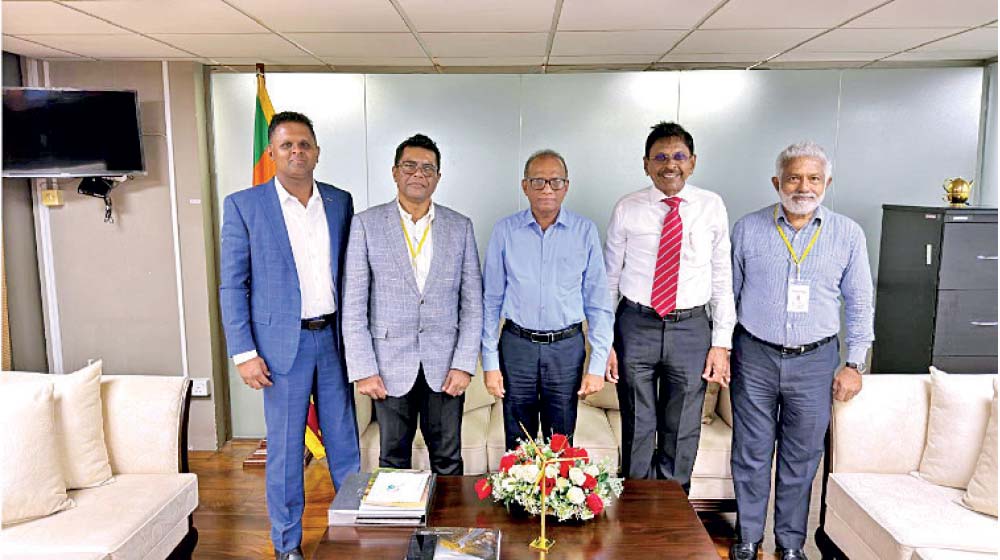
The Free Trade Zone Manufacturers’ Association (FTZMA) has called for urgent reforms to Sri Lanka’s energy policy, urging the Government to lower industrial energy costs, operationalise power wheeling and improve fuel access for export manufacturers, warning that high energy costs continue to undermine the country’s competitiveness in global export markets.
The concerns were raised during a meeting with Energy Minister Aruna Karunathilake, where the Association presented a series of proposals aimed at strengthening the operating environment for export-oriented manufacturers and enhancing Sri Lanka’s attractiveness as an investment destination.
A key issue raised by the FTZMA was the delayed implementation of power wheeling, which would allow manufacturers to procure renewable electricity directly from independent power producers using the national grid. While the policy direction has been announced, the Association noted that the necessary regulatory and operational framework is yet to be fully implemented, preventing manufacturers from benefiting from reliable and competitively priced renewable energy.
The FTZMA stressed that a stable, predictable and internationally competitive energy policy is critical to supporting manufacturing, attracting fresh investment and sustaining export growth amid intensifying regional competition.
The Association also urged the Government to review the pricing of industrial diesel, arguing that the current structure places an unnecessary cost burden on exporters.
It pointed out that industrial diesel is priced above auto diesel despite being a heavier and less-refined fuel primarily used to operate industrial machinery and power generation equipment. In contrast, auto diesel undergoes more extensive refining to meet stringent emission and low-sulphur standards for road vehicles.
The FTZMA said industrial fuels should be priced below conventional auto diesel, arguing that the present pricing disparity unnecessarily inflates production costs for manufacturers competing in international markets.
The Association also called for the early establishment of two dedicated fuel stations within the Katunayake and Biyagama Export Processing Zones.
According to the FTZMA, the proposed fuel stations would ensure uninterrupted fuel access for export manufacturers during periods of supply constraints, helping factories avoid production interruptions and logistics delays by providing priority access outside the normal public distribution network.
The Association said the facilities would strengthen operational resilience within the country’s key export processing zones while reducing the risk of disruptions to export manufacturing during future energy shortages.
The Minister and FTZMA representatives also exchanged views on broader energy policy issues affecting industry and reaffirmed the importance of maintaining regular dialogue between the Government and the private sector, including trade chambers, to address challenges facing Sri Lanka’s export manufacturing sector.




