Wednesday Oct 28, 2026
Wednesday Oct 28, 2026
Thursday, 23 July 2026 13:23 - - {{hitsCtrl.values.hits}}
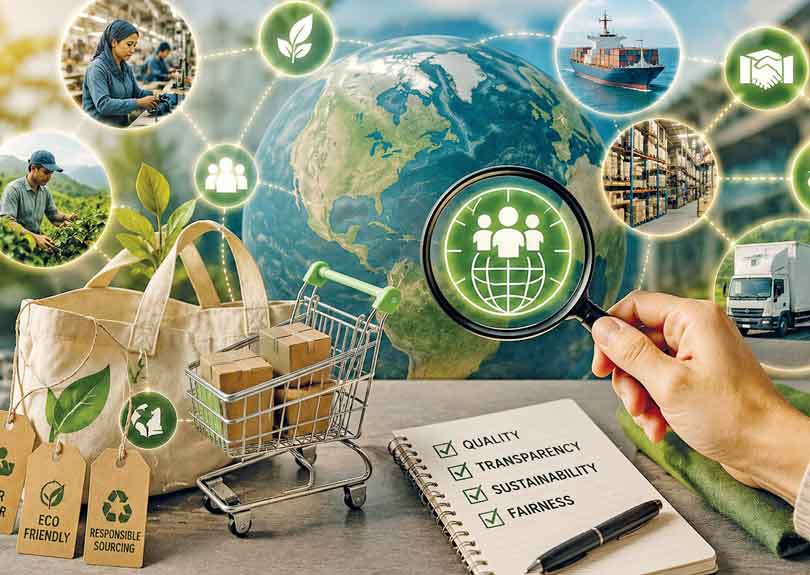
Not long ago, a company’s supply chain was something almost nobody outside the business ever thought about. Customers cared about price, quality, and maybe the brand’s reputation, but rarely asked where the raw materials came from or who assembled the final product. That has changed, and it’s changed faster than many businesses were prepared for. A string of factory disasters, investigative reports on forced labour, and simple access to information through social media have made supply chains a subject customers actually pay attention to, and increasingly, a subject they judge companies on.
Clothing Set the Pattern Early
Clothing has been at the centre of this shift for years, partly because of how visible the industry’s problems have been. Reports of unsafe factory conditions and workers paid far below a living wage aren’t new, but the willingness of customers to act on that information is. A growing share of shoppers, especially younger ones, say they check where a garment was made before buying it, and some brands have built their entire identity around transparency, publishing the names and locations of every factory they use. Whether every customer actually reads that information is debatable, but the fact that brands feel compelled to publish it at all shows how much the pressure has grown.
Food and Agriculture Face Their Own Questions
Food and agriculture face a similar reckoning, though the specific concerns differ. Consumers ask about pesticide use, fair pay for farm workers, and whether ingredients like palm oil or cocoa are linked to deforestation or child labour. Coffee and chocolate brands have responded with certification labels, fair trade, rainforest-friendly, and similar marks that promise a certain standard was met somewhere along the chain. These labels aren’t perfect, and critics have pointed out gaps in how strictly some of them are enforced, but their popularity shows that customers want some signal, even an imperfect one, that a product wasn’t produced at someone else’s expense.
Electronics Hide the Hardest Problems
Electronics carry perhaps the least visible but most serious concerns. Minerals like cobalt and tin, used in phones and laptops, often come from regions where mining conditions are dangerous and, in some documented cases, involve child labour. Because these materials pass through several layers of suppliers before reaching the final manufacturer, tracing their origin is genuinely difficult, even for companies that want to. Some electronics makers now require suppliers to prove their minerals come from certified conflict-free sources, though enforcing that across a global supply chain with thousands of small suppliers remains one of the hardest problems in the entire industry.
Honesty Over Perfection
What do consumers actually expect from a company facing all this? Not perfection, generally. Most people understand that global supply chains are complicated and that eliminating every problem overnight isn’t realistic. What they expect instead is honesty about where problems exist and evidence of real effort to fix them. A company that admits a supplier failed an audit and explains what it’s doing about it tends to earn more trust than one that claims everything is already flawless. Overpromising and getting caught out later does far more damage than admitting a difficult truth up front.
The Risk of Getting Caught Out
This expectation has created real risk for companies that get caught making false claims, a problem now commonly called greenwashing when it involves environmental promises, though the same pattern applies to labour and sourcing claims too. Regulators in several countries have started fining companies for sustainability claims that don’t hold up to scrutiny, and investigative journalists and social media users have become quite effective at exposing gaps between a company’s marketing and its actual practices. A single viral post showing a mismatch between a brand’s ethical claims and a supplier’s real conditions can undo years of carefully built reputation within days.
What It Actually Takes to Meet These Expectations
Meeting these expectations requires more than a page on a company website. It means actually auditing suppliers, rather than accepting their word, and returning to check on them regularly, rather than treating one audit as a permanent stamp of approval. It means building relationships with fewer, better-vetted suppliers rather than constantly switching to whoever offers the lowest price, since price pressure is often exactly what pushes suppliers toward cutting corners on wages and safety. And it means being willing to walk away from a supplier that won’t meet basic standards, even when that supplier is cheaper or more convenient.
Consumers won’t remain satisfied with vague promises for much longer, if they ever were. The direction of travel is toward more scrutiny, not less, helped along by regulation, journalism, and the simple fact that information about a company’s practices is harder to hide than it used to be. Businesses that treat ethical sourcing as a genuine operating standard, rather than a marketing exercise, are likely to face fewer surprises and less reputational damage than those still hoping nobody looks too closely. (M P)




