Saturday Sep 19, 2026
Saturday Sep 19, 2026
Monday, 3 August 2026 00:01 - - {{hitsCtrl.values.hits}}
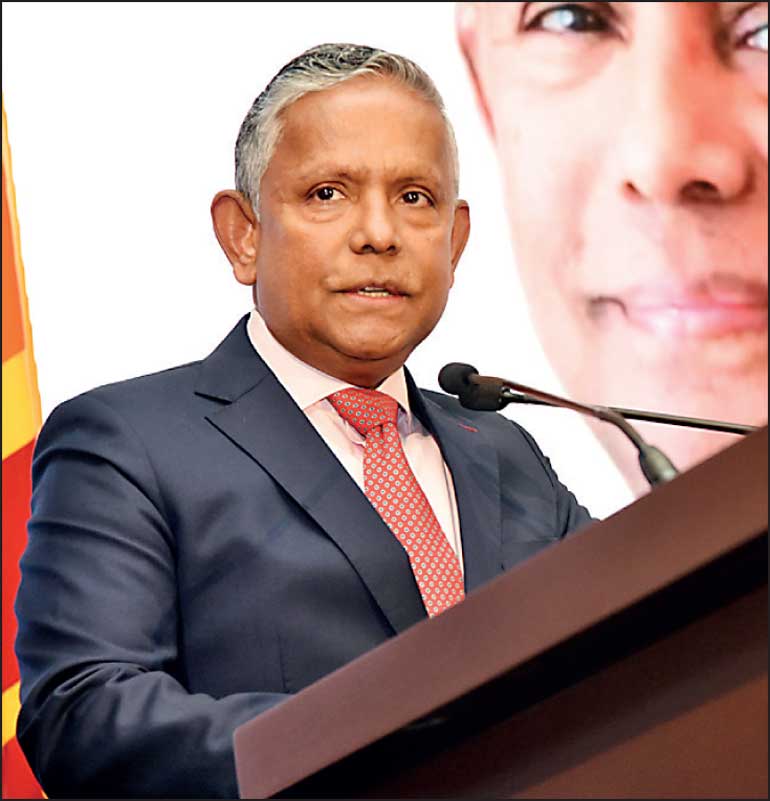
Directors should be less concerned about the cost of complying with governance requirements and more focused on ensuring boards discharge their responsibilities properly, Minor International Group CEO and Minor Hotels Thailand CEO Dillip Rajakarier said, arguing that strong governance protects corporate reputation and ultimately financial performance.
Speaking during a panel discussion at the recent Sri Lanka Corporate Director Summit 2026: ‘Future-Ready Sri Lankan Directors,’ Rajakarier dismissed suggestions that governance requirements had become an unnecessary burden on business, saying the real issue was how boards approached their responsibilities rather than the regulations themselves.
His remarks came in response to an all-too-familiar question on whether increasingly stringent governance and compliance requirements had become a hindrance to doing business, following the withdrawal of an international bank from Sri Lanka’s retail banking sector after more than a century amid rising compliance costs.
“I think governance is the key these days,” Rajakarier said.
Drawing on his experience serving on boards across several countries, he said the quality of governance often depends less on regulation than on the attitude of directors.
“In some countries, governance becomes a tick-box exercise. In most countries, it becomes a truly governance agenda as well. Again, it depends on your company board; as to how strong they are and how they govern the company,” he said.
Rajakarier said weak boardroom practices, rather than regulation, were often the bigger concern.
“I sit on a few boards, actually, in Sri Lanka, but there is one board I sit on, I don’t attend the board meetings because they come into the board meeting and it’s five minutes,” he said. “One time, I said to the Chairman, ‘You really need to go to the toilet. If you need to go to the toilet, please go and then come back and we can convene the board meeting,’ because it’s as if you’re in a hurry.”
Rajakarier said such an approach reflected a failure to appreciate the importance of proper board oversight.
“It’s really annoying that people really don’t give the importance of independence and to ensure that the boards are properly governed,” he said.
Rajakarier also questioned whether some directors described as independent were exercising independent judgement.
“As I said, independents are truly independent as well. It’s not someone who’s picked up their friends and they echo their voice and they say yes to everything,” he said.
He said directors ultimately carry responsibility not only for governance and compliance but also for safeguarding corporate reputation.
“The responsibility they have towards the reputation of the company is really key because not many companies actually assess the risk of reputation,” Rajakarier said.
While companies devote considerable attention to financial controls through auditors, audit committees, and nomination and governance committees, Rajakarier said reputational risk often receives far less attention despite its direct impact on business performance.
“Most companies assess the risk of financial discipline. Of course, the auditors are there, the audit committee is there, the nomination and governance committee is there, but not many people look at the reputation. If your reputation goes under, you’re dead,” he said.
He said that is precisely where governance matters most. “So, I think it’s really important and that’s where governance comes in.”




