Thursday Oct 15, 2026
Thursday Oct 15, 2026
Monday, 4 May 2026 05:49 - - {{hitsCtrl.values.hits}}
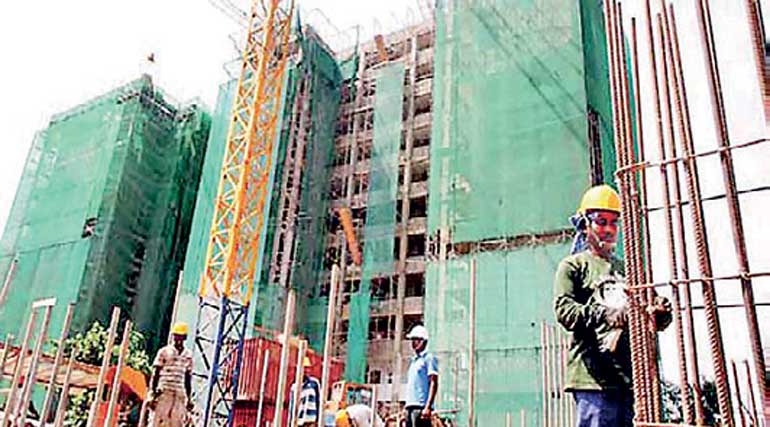
The Sri Lanka Purchasing Managers’ Index for Construction (PMI – Construction), as reflected by the Total Activity Index, registered a value of 57.1 in March, indicating continued expansion in construction activities, albeit at a slower rate compared to 70.3 in February.
Its compiler, the Central Bank of Sri Lanka (CBSL) said many respondents reported a challenging operating environment, mainly due to limited availability of fuel and raw materials, rising costs, and logistical bottlenecks stemming from the conflict in the Middle East.
The New Orders Index continued to expand during the month, with most respondents reporting that project flows remained robust.
The Employment indices expanded to 57.1 compared to 56.8 in February, while Quantity of Purchases indices also increased, indicating that firms continued with planned hiring and procurement despite prevailing uncertainties.
Many respondents noted that amid expectations of further price increases, most firms sought to build up stocks, while suppliers tended to hold back on materials.
However, the Suppliers’ Delivery Time lengthened notably during the month, mainly reflecting transportation-related delays.
The CBSL said expectations for construction activities over the next quarter remained above the neutral threshold, supported by a steady pipeline of projects, though somewhat tempered by uncertainties surrounding the ongoing Middle East conflict.
The construction sector is transitioning from post-crisis recovery to an expansion phase, supported by reconstruction demand and a multi-year public investment pipeline, according to CT Smith Securities.
The sector, which typically grows at around 2.8 times GDP, contributed Rs. 1.9 trillion in 2025 and is expected to benefit from both public and private demand drivers.
Reconstruction following Cyclone Ditwah is a key near-term catalyst, with damage estimated at about 4% of GDP and rebuilding costs projected at Rs. 878 billion.
Over the medium term, public investment is expected to dominate, with around Rs. 2 trillion allocated to construction-related sectors under the 2026-2028 program, led by highways, irrigation, and housing.
Risks remain. Rising material and energy costs, potential Middle East conflict-driven shocks, labour shortages, and tighter financing conditions could weigh on margins and delay projects, with smaller contractors more exposed.




