Saturday Sep 12, 2026
Saturday Sep 12, 2026
Wednesday, 29 July 2026 00:08 - - {{hitsCtrl.values.hits}}
By Safna Malik
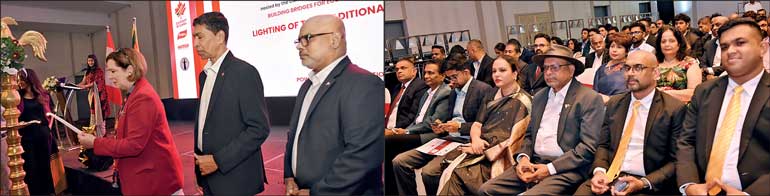
The Canadian Chamber of Commerce in Sri Lanka recently explored new avenues for bilateral trade, investment, and tourism at the "Canada Day Dialogue: Aligning with Canada's Indo-Pacific Strategy," marking the 159th anniversary of Canadian Confederation.
The conversation gathered three panellists from banking, public policy, entrepreneurship, design, and tourism to detail the ground-level steps required to transform this high-level strategy into commercial reality.
Canada’s CAD 500 b commitment to expand economic engagement over the next decade is expected to create new opportunities for Sri Lanka across energy, technology, mining, manufacturing and tourism, as well as green infrastructure and human capital development. CanCham Sri Lanka is working with more than 20 Canadian Chambers of Commerce across the Indo-Pacific to establish a unified platform to promote trade, investment, innovation and inclusive growth.
The Canada–Sri Lanka relationship dates back to the 1950s, beginning with Colombo Plan support that brought diesel-electric railway engines to Sri Lanka and Canadian financing that helped build the country’s international airport, a legacy still reflected in the name of the road leading to it. The panel looked at how that decades-old relationship could be reshaped for a very different economic landscape in 2026.
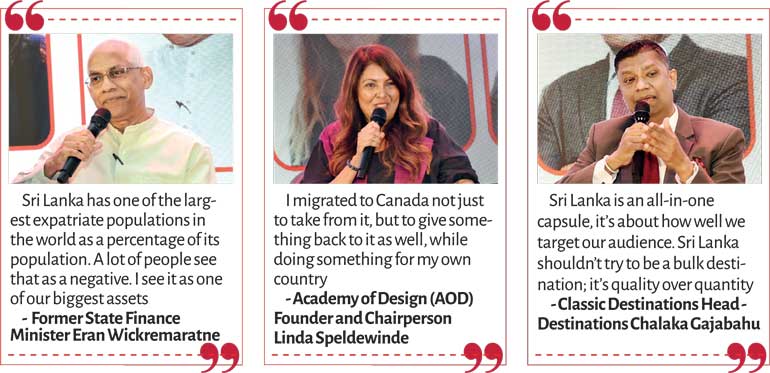
The panel featured former State Finance Minister Eran Wickramaratne; the Design Corp Group of Companies (Academy of Design – AOD) Founder and Chairperson Linda Speldewinde; and Classic Destinations (Expolanka Holdings PLC) Head - Destinations, the UNWTO Committee on Tourism and Competitiveness Vice Chair, and the Sri Lanka Tourism Promotion Bureau former Chairman Chalaka Gajabahu.
How does Canada's Indo-Pacific Strategy open new pathways for Sri Lanka in energy, technology and manufacturing?
Wickramaratne said Canada’s Indo-Pacific Strategy is moving in the right direction, given that global economic growth is increasingly centred in Asia and the wider Indo-Pacific region. He noted that ASEAN had been the primary focus of the strategy for around 45 years and had seen strong economic expansion, but said South Asia should now receive greater attention within the framework.
He described South Asia as “the fastest-growing subcontinent in the world, not only in population but in economic growth,” pointing out that the region accounts for close to a quarter of the global population and could account for around 45% of global GDP, moving towards 50% in the coming years.
Referring to Canada’s demographic positioning, Wickramaratne highlighted its strong global connectivity, noting that migrants have played a key role in shaping the country’s identity. With around 20% of Canada’s population directly linked to other countries, he said this remains an important factor in how Canada engages internationally. While the United States remains Canada’s largest trading partner, he added that the Indo-Pacific has already become its second-largest trading region, emphasising the need for deeper engagement with South Asia, including Sri Lanka.
On bilateral economic relations, he said Sri Lanka should realistically aim to account for at least 2% of Canada’s global trade, which would translate into around $2.4 b in two-way trade. He added that Canadian investment into Sri Lanka, currently about $20 m, remains far below potential, and suggested that a more balanced investment flow could reasonably reach about $400 m if structural issues are addressed.
At a broader level, Wickramaratne said, “Sri Lanka and Canada have a lot in common. One is our shared philosophy, democratic societies and humanity. The second is that both are largely open economies, so we need to expand trade and investment to build sustainable growth.”
He also noted that Canada knows how to manage relationships with big neighbours. “Sri Lanka is also a small island with large neighbours around it, so we have something in common there and what we've learned is that this isn't won through guns and war, but through negotiation, and through taking a principled stand when it matters. Canada has done that recently, and I think it's something that should strengthen the resolve of small countries like ours: that we can move forward based on principle.”
Wickramaratne pointed to opportunities across energy, information technology, manufacturing and tourism, alongside maritime cooperation. He said Sri Lanka’s position within international maritime law frameworks, including the UN Convention on the Law of the Sea, provided a strong basis for deeper engagement with Canada, particularly in areas linked to maritime governance and naval capability development.
On the technology side, “you'll hear more about intelligence and cybersecurity. Sri Lanka is fairly advanced on the legal side, we were the first country in South Asia to sign on to some of the international cybercrime conventions. That matters, because we're seeing a great deal of financial fraud and online scams, and this is an area where we can work together, including at the bureau level.”
Education partnerships, he added, remain one of the most effective ways of strengthening long-term bilateral ties, as overseas study creates people-to-people connections. While Canada’s scholarship and fellowship programs are currently focused in ASEAN countries, he said similar initiatives should be extended to South Asia to deepen engagement and strengthen regional links.
Reflecting on his experience as a banker in India during the 1990s, Wickramaratne recalled the implementation of non-resident investment schemes, noting that 30 years later, these initiatives have clearly helped drive the growth of the Indian economy. He said Sri Lanka’s large expatriate community should be viewed as an asset rather than a disadvantage, as it represents a significant source of capital, skills, and global networks.
“Our diaspora is highly educated, has savings and investment capacity,” he said, adding that while the first generation maintains strong ties through family and professional links, second and third-generation communities, though less emotionally connected, are often well established in senior positions abroad and can contribute through investment, training and technology transfer.
“We need to welcome our diaspora,” he said, sharing his personal view that second- and third-generation members should be granted citizenship or permanent residency to give them a true sense of belonging.
He also pointed to administrative and visa-related barriers affecting investors citing “If we want to build these partnerships properly, we need to confront this reality,” he said, adding that such bottlenecks discourage investment and long-term engagement. He expressed hope that the new electronic Board of Investment (e-BOI) initiative would help streamline approvals and improve the overall investment climate.
How can Sri Lankan businesses move up the value chain through Canada?
Speldewinde said Sri Lankan businesses can move up the value chain by shifting from fragmented supply chains to direct access to global consumers. She said her company, Urban Island, expanded into Canada in 2022, taking Sri Lankan cottage industry products, including handmade items such as palmyra baskets, which are woven from the leaves of the palmyra palm commonly found in northern Sri Lanka and produced by rural artisan communities into retail markets in Canada and the United States.
She said the key shift was moving to a direct-to-consumer model. “The biggest opportunity was taking the product direct to the consumer,” she said, noting that traditional export structures in Sri Lanka often pass through multiple intermediaries, reducing margins for producers.
Speldewinde said Sri Lankan crafts and fashion products are now reaching premium consumers in Toronto, supported by a retail presence in Rosedale and growing exposure to the US market.
She said the model is built on collaboration rather than extraction, including partnerships with institutions such as York University in Canada, where design work is developed alongside Sri Lanka’s artisan and manufacturing base.
“I migrated to Canada not just to take from it, but to give something back to it,” she said, adding that such cross-border collaboration can help Sri Lankan entrepreneurs scale globally while retaining local production strengths.
How can two-way tourism be grown between Canada and Sri Lanka?
Gajabahu opened by challenging the country’s own marketing instincts, arguing that Sri Lanka is still widely misunderstood in international markets as a sun-and-sea destination, despite its “all-in-one” capsule ability to offer wildlife, culture, history and coastline within a matter of days. He noted that in countries such as India, the same range of experiences would take weeks to cover.
He cited the filming of Indiana Jones and the Temple of Doom in Sri Lanka in 1979, often mistakenly assumed to have been shot in India. He said major Hollywood figures including George Lucas, Steven Spielberg and Harrison Ford spent around 40 days filming in the country. “Sri Lanka was a natural studio,” he said, adding that the country’s geographic diversity allows visitors to move from coastal heat to cooler hill regions within a few hours, underscoring its versatility as a destination.
Rather than chasing a single generic tagline in the mould of “Incredible India” or “Amazing Thailand”, he said Sri Lanka’s advantage lies in storytelling, hospitality and quality over volume. The country consistently ranks in global top-ten lists for its cuisine and beaches and has been named home to the world’s best train journey by National Geographic; its hospitality rankings, he said, are typically top five worldwide.
He pointed out that during the pandemic, tourists, particularly backpackers were taken into local homes when accommodation options ran out and the emotional scenes when Sri Lankan cricket fans wore Australian yellow Jerseys to thank Australia’s team for touring during the country’s economic crisis as the kind of story that resonates more than any conventional slogan.
“The most important thing is telling the Sri Lankan story properly,” he said, adding that tourism strategy should focus not only on branding but also on clear communication of product quality, sustainability practices and visitor experience.
He compared Sri Lanka with the Maldives, noting that while both destinations receive similar annual arrivals, the Maldives generates significantly higher average daily spend. He said Sri Lanka’s priority should be attracting the right market segments, while still maintaining space for budget-friendly tourism, which he described as an investment in future professionals and decision-makers who will retain long-term affinity for the country.
He added that sustainability has become increasingly important for European and North American travellers, with several Sri Lankan hotel groups already moving in that direction. While acknowledging the continued role of backpacker tourism, he said growth must be balanced with higher-spending segments to avoid overcrowding and environmental strain.
Gajabahu said Sri Lanka’s pricing structure often led to misperceptions, with high-end experiences appearing inexpensive compared to regional competitors. He said the country must better position itself as a value-for-money destination offering high-quality experiences at competitive rates.
Is there a gap in Sri Lanka’s luxury and experience tourism?
Speldewinde highlighted an untapped gap in Sri Lanka’s tourism market: high-spending travellers willing to pay around $1,000 a day for authentic, community-connected experiences rather than conventional five-star resorts. She noted that while Sri Lanka caters well to budget and traditional luxury tourists, it overlooks this premium niche that values local life, craftsmanship, and culture.
Drawing from her business experience in Canada, Speldewinde explained that her customers value knowing the specific artisan stories behind their purchases. Furthermore, she noted that operating in Muskoka, a high-end Canadian leisure destination, taught her how to design exclusive, authentic experiences that can be successfully adapted for Sri Lanka.
Gajabahu agreed, pointing to traditional martial art Angampora and village-based culinary experiences areas where his company already works with several hundred community-based providers as the kind of high-margin, low-footprint tourism Sri Lanka should be building out, while cautioning against unsustainable practices such as irresponsible safari tourism that put pressure on national parks.
What is holding back renewable energy collaboration?
Turning to clean energy, Wickremaratne said Sri Lanka’s commitment to its climate targets, including those made at COP summits, was not in question, but implementation of solar and wind projects has lagged. He cited the country’s substantial wind potential, particularly around the Mannar Strait, but noted recurring tension between scaling up renewable capacity and environmental and community concerns, including the impact on bird populations and nearby residents.
Wickramaratne said such tensions reflected a broader development challenge in Sri Lanka, where natural resource utilisation has often been delayed or constrained. Drawing on past experience in the mining sector, he recalled an initiative during his tenure as CEO of the National Development Bank to promote value-added phosphate processing instead of exporting raw material. While an investor had been identified and financing support was available, the project faced strong opposition and was ultimately not implemented.
He said that returning to the same area more than two decades later, he found that living standards had not significantly changed, raising questions about how effectively natural resources are converted into long-term economic value. He said this highlighted the need for a more balanced approach to development that combines environmental protection with sustainable economic use.
Wickramaratne said clean energy was one area where Sri Lanka could benefit from closer cooperation with Canada, particularly in technology transfer, planning frameworks and sustainable resource management.
How is technology reshaping the tourism experience?
Gajabahu said AI-driven technology was rapidly reshaping the tourism industry, noting that destination management has traditionally relied on direct, personal contact, especially in mature markets such as Canada, the US and Europe. He said several countries and private companies already operate platforms capable of generating a fully personalised, multi-day itinerary in seconds, complete with alternative options, and argued Sri Lanka risks falling behind competitors, including India, that have moved faster on this front.
Speaking on the role of the industry, he said SLAITO and other private-sector players were examining digital platforms, but stressed that the sector needed to come together to tell Sri Lanka’s story more effectively. He described the country as a small island with immense variety “an all-in-one capsule” and said that distinctiveness needed to be communicated clearly through digital channels.
He said Sri Lanka’s tourism identity should be packaged in a way that was immediate, memorable and authentic, much like its cuisine, where a simple base of rice and curry can produce a wide range of distinct experiences. He added that the private sector would have to lead the transition, while infrastructure and policy support would need to follow.
What actionable commitments should be made before the next Canada Day?
Closing the discussion, each panellist set out a priority for the year ahead. Speldewinde said Sri Lanka should view Canada not only as a migration destination, but as a strategic base for business expansion. She said entrepreneurs should actively explore Canada as a platform to scale operations across North American markets, while also leveraging it to bring higher-value tourism and diversified consumer segments into Sri Lanka. “It’s about seeing Canada as a base for that part of the world, and using it to bring impact and expansion back to Sri Lanka,” she said.
Gajabahu said Sri Lanka should set a clear and measurable tourism target, noting that Canadian arrivals had grown steadily over the past five years to around 40,000 annually. He said the country should aim to increase this to between 100,000 and 120,000 arrivals within the next 12 to 18 months, while maintaining a focus on high-value, quality tourism. “We need to be clear on who exactly we’re targeting,” he said, adding that industry stakeholders and the Chamber should work together to promote Sri Lanka in the Canadian market. He also urged stronger destination marketing efforts, saying: “Please visit Sri Lanka, and spread that message.”
Wickramaratne said that while Sri Lanka’s macroeconomic stabilisation under the IMF program had been “commendable,” the next phase of growth would depend on attracting real investment inflows. He said the country’s relatively low domestic savings rate meant it remained dependent on foreign direct investment to drive growth and improve living standards.
He said priority areas included manufacturing and IT, but stressed that the key constraint remained the investment climate. He added that improving ease of investment and easing immigration-related processes were essential reforms on Sri Lanka’s side. “If we can get more Canadian investment into manufacturing, IT, or whatever the relevant sector may be, our commitment has to be improving the investment climate,” he said.




