Friday Oct 23, 2026
Friday Oct 23, 2026
Thursday, 29 January 2026 05:06 - - {{hitsCtrl.values.hits}}
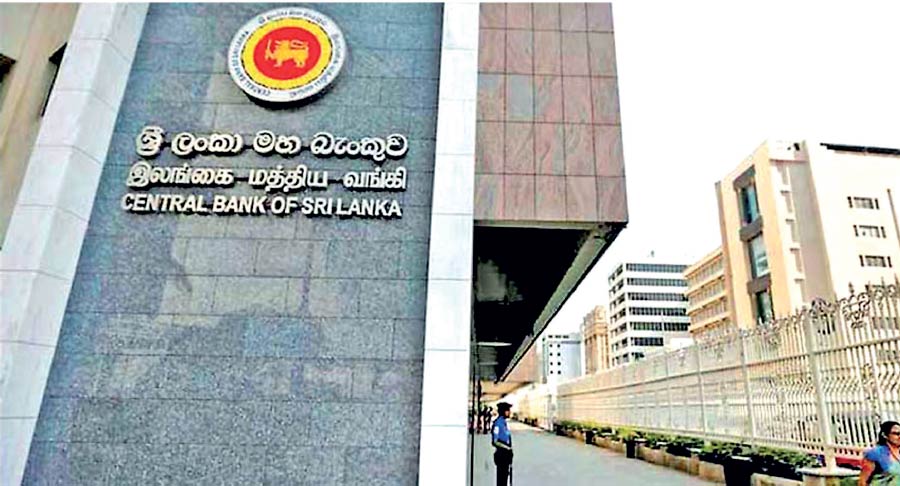
The Monetary Policy Board at its meeting held on Tuesday decided to maintain the Overnight Policy Rate (OPR) at the current level of 7.75%. The Board arrived at this decision after carefully considering evolving developments and the outlook on the domestic front and global uncertainties.
The Board is of the view that the current monetary policy stance will support steering inflation towards the target of 5%, the Central Bank of Sri Lanka (CBSL) said yesterday.
Inflation measured by the Colombo Consumer Price Index (CCPI) remained unchanged at 2.1% in December 2025. However, food prices edged higher in December compared to November. This was due to supply chain disruptions caused by Cyclone Ditwah and higher demand for food during the festive season. Inflation is projected to accelerate gradually and move towards the target of 5% by the second half of 2026.
Core inflation, which excludes price changes in volatile food, energy, and transport from the CCPI basket, has also shown some acceleration in recent months. Going forward, core inflation is expected to accelerate further as demand in the economy strengthens. Meanwhile, inflation expectations appear to be well anchored around the inflation target.
The economy grew by 5% during the first nine months of 2025. Despite the slowdown in economic activity following Cyclone Ditwah in late 2025, early indicators reflect greater resilience.
Credit disbursed to the private sector by commercial banks and other financial institutions continued its notable expansion in late 2025. This reflects increased demand for credit amid improving economic activity and increased vehicle imports. Post-cyclone rebuilding is expected to sustain this momentum.
The external current account is estimated to have recorded a sizeable surplus in 2025, despite the widening of the trade deficit. Foreign remittances remained healthy during 2025. Despite large debt service payments during the year, gross official reserves were built up to $ 6.8 billion by the end of 2025. This was mainly supported by the net foreign exchange purchases by the CBSL and inflows from multilateral agencies. The Sri Lanka rupee depreciated by 5.6% against the US dollar in 2025 and has remained broadly stable thus far during this year.
The Board remains prepared to implement appropriate policy measures to ensure that inflation stabilises around the target, while supporting the economy to reach its potential.
The projections reflect the available data, assumptions, and judgements made at the forecast round in January 2026. They are conditional on the forecasts of global energy and food prices, the expected growth path of Sri Lanka’s major trading partners, the anticipated fiscal path of the Government, and global financial conditions implied by the Fed Funds rate. Further, the projections are conditional on the model-consistent interest rate path and the resulting macroeconomic responses. Any notable changes in these assumptions could lead to the realised inflation path deviating from the projected path.
There are upside risks to the realisation of inflation projections stemming from factors such as the possible development of higher-than-anticipated demand pressures fuelled by the lagged impact of strong credit growth and Ditwah-related relief fund issuances; possible depreciation of the Sri Lanka rupee at higher levels; possible adverse weather events affecting the agriculture and energy sectors, thereby exerting upward pressure on food and energy inflation; and possible uncertainty arising from heightened geopolitical tensions, which could disrupt global supply chains and commodity markets, thereby posing upside risks to inflation.
Meanwhile, downside risks to the realisation of inflation projections include possible persistence of inflation at lower levels; improved continuity in recultivation activities following Ditwah-related disruptions, supporting agricultural output and easing food price pressures; and the possibility of a slower-than-expected increase in energy and transport sector inflation due to lower-than-expected effective fuel costs.




