Thursday Oct 22, 2026
Thursday Oct 22, 2026
Wednesday, 22 July 2026 05:53 - - {{hitsCtrl.values.hits}}
 The winner in this race would not be the most visible hotel. They would be the most trusted hotels - AVEN Hospitality, Director of Sales (India & Southeast Asia), Anshul Kumar
By Dilrukshi Fernando
 Artificial intelligence is no longer a future trend; it is already transforming the hospitality industry and reshaping how people plan, book and experience travel. A 2026 McKinsey survey found that 84% of travellers who use AI say it enhances their travel experience, while around 80% report saving between one and three hours on every trip using AI-powered tools, according to the Hospitality Financial and Technology Professionals (HFTP).
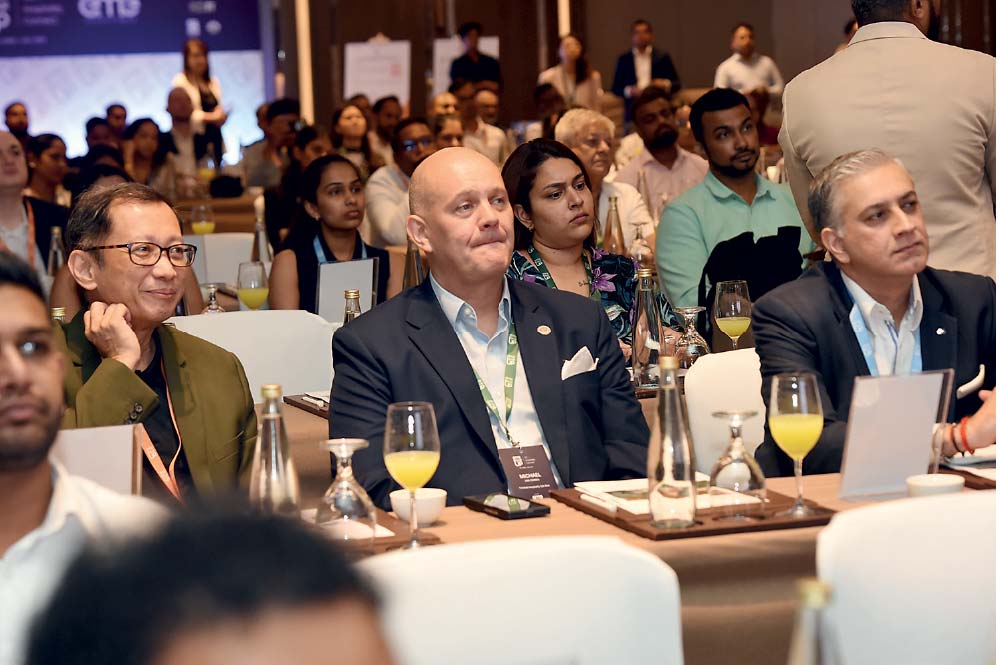
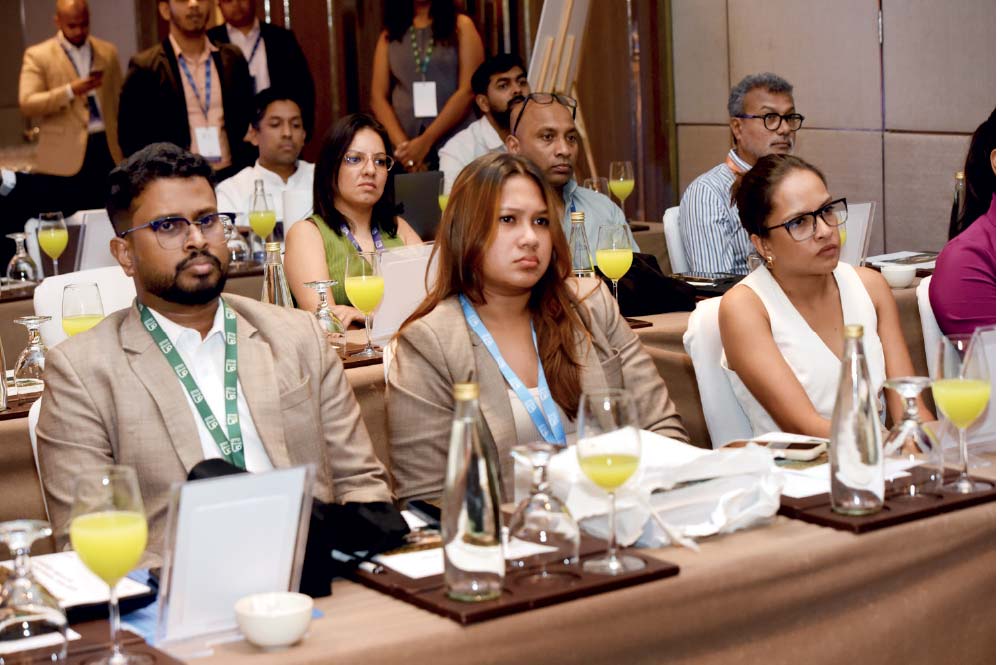
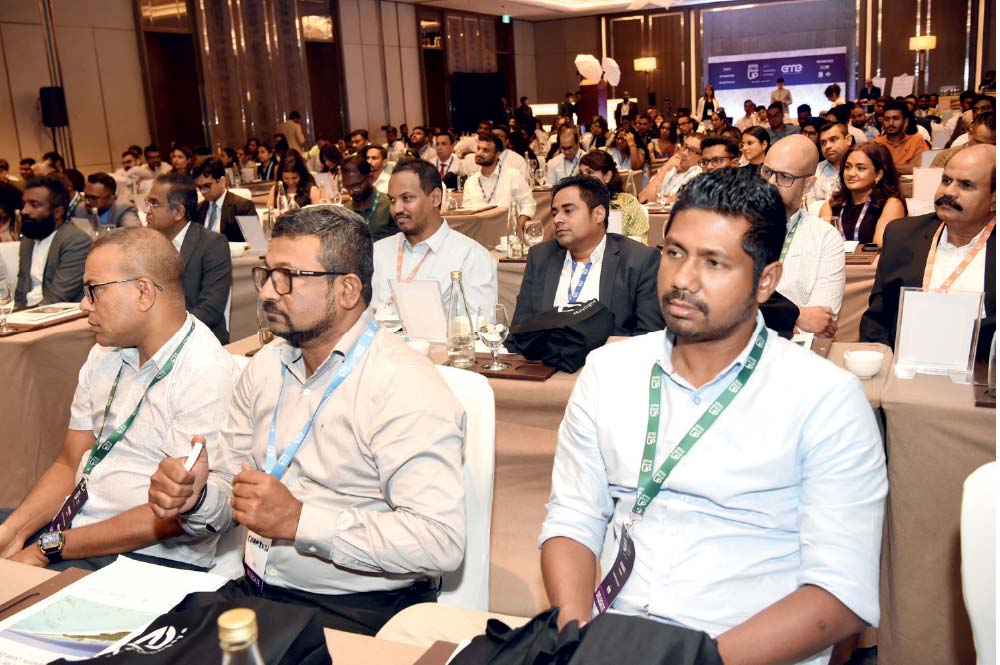
These are just two future-focused insights that took centre stage at the ‘EME Level Up: AI Hospitality Connect Sri Lanka 2026’, organised by eMarketingEye Ltd., recently at the Shangri-La, Colombo. The conference featured 7 curated sessions, over 10 speakers, and nearly 200 delegates from Sri Lanka and the Maldives, where industry leaders, hotel executives and digital marketing experts explored how emerging technologies and evolving traveller behaviour can help the Sri Lankan hospitality industry remain competitive in today’s rapidly evolving digital landscape.
The shift from search to conversation
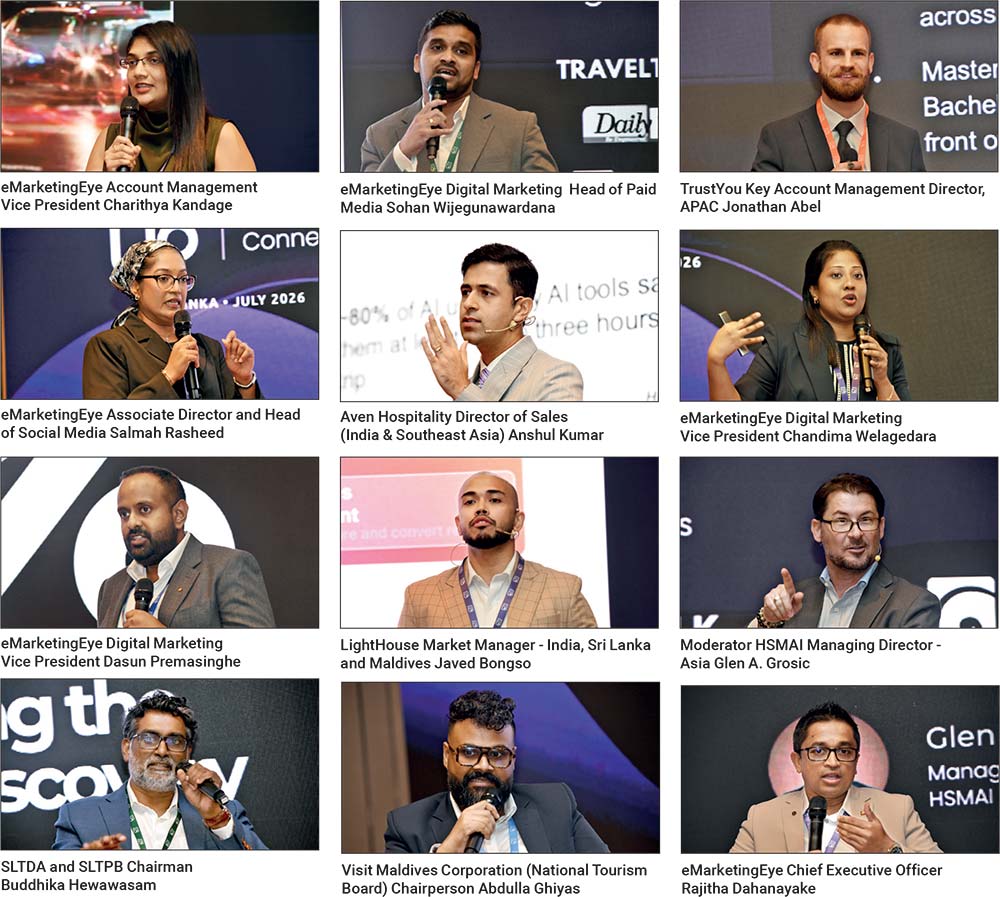
Travellers will always find reasons to travel, regardless of the prevailing socio-economic climate. While global uncertainties may influence their choices, demand often shifts from international to regional or domestic destinations rather than disappearing altogether. According to eMarketingEye, Vice President - Account Management, Charithya Kandage, nearly 50% of all travellers currently use Generative AI tools for trip planning, with 28% to 30% of AI-based searches being on the informational module, 26% on ‘how to’, and 20% on recommendations.
“AI has changed what people search for, how they search and what they search as well,” said Kandage, elaborating how people use Large Language Models (LLMs), such as ChatGPT or Gemini, to have complex, query-based conversations, to plan their travel, as they do in other aspects of life.
“It’s a complex customer journey. AI conversations are clouding or influencing every touchpoint of the customer that we know,” Kandage pointed out.
This complex journey has, in effect, replaced the conventional marketing funnel with an ‘infinity loop’, where the key stages of a customer journey take place in a non-linear and often repetitive fashion, according to the insights presented by eMarketingEye, Director - Digital Marketing/Head of Paid Media, Sohan Wijegunawardana, and eMarketingEye - Associate Director/Head of Social Media, Salmah Rasheed. Through their session, ‘Your AI-Powered Paid Media Playbook’, the duo shared insights from practical case studies on how AI-led paid media frameworks sharpen signals, elevate creative relevance, and deliver proven direct booking performance. The learnings demonstrated how the technology can enable hospitality industry personnel to transform explicit intent into implicit audiences.
Aven Hospitality, Director of Sales (India and Southeast Asia), Anshul Kumar, representing a platform comprising 35,000 properties, questioned this shift in his session, ‘Redefining Hotel Bookings in the AI Era’. “Why are guests moving to this? The shift is happening because the traditional search has become exhaustive. It became very cumbersome for a traveller to go to a different site for flights, a different site for hotels, and maybe use a different app to book a cab. They want to do everything in one place,” explained Kumar.
Generative AI presents today’s traveller with just that by compressing everything to a single conversation on their platforms. Interestingly, queries on an AI interface are typically three times longer than traditional searches, engaging guests or potential guests in a more in-depth and personalised manner, using structured data and user history. This experience is in sharp contrast to the in-person guest experiences at hotel properties, where queries are often handwritten, leaving a significantly higher margin of error.
“The future of AI looks all agentive. The only missing piece is the bookability part of it,” said Kumar, referencing the McKinsey and Skift research ‘Remapping Travel with Agentic AI’, noting how 70% of the survey respondents were happy to manage everything related to their travel within an AI-Agentic ecosystem. While noting the importance of hotels owning the conversation, Kumar highlighted the need to build a good relationship with emerging technology platforms.
“As with any relationship that you bring into your life, trust is very important. This trust will eventually become the new demand currency for your hotel. The winner in this race would not be the most visible hotels. They would be the most trusted hotels,” Kumar said further.
What if hotels actually knew what guests were saying, and they could actually do something about it? - TrustYou, Key Account Management Director - APAC, Jonathan Abel
AI visibility: Sri Lanka at a glance
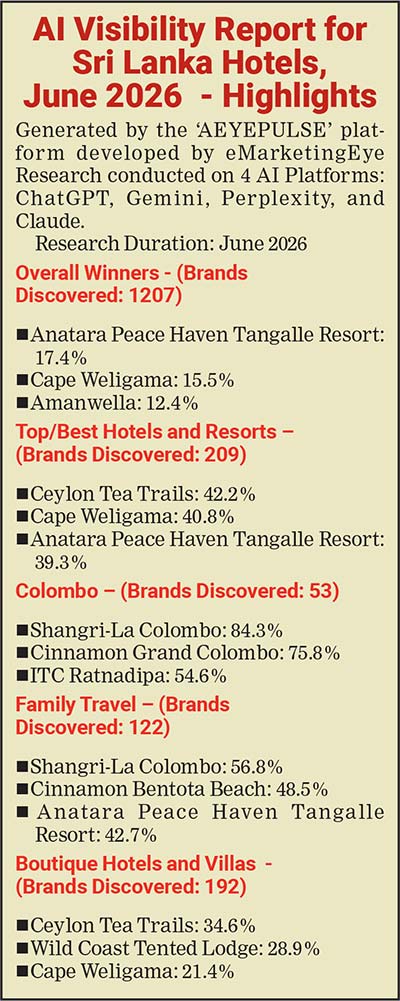
The availability of the ‘AI Visibility Report for Sri Lanka Hotels, June 2026’ was a key highlight at the forum. The report findings stated that 1,207 brands were discovered in Sri Lanka, across 32 segments, including family, beach, wildlife, Ayurveda, Top/Best, luxury, bungalows, wellness, honeymoon, and Colombo. AEYEPULSE, an AI brand visibility monitoring platform developed by eMarketingEye, generated the research scanning authored prompts across 04 AI platforms: ChatGPT, Gemini, Perplexity, and Claude. Additionally, eMarketingEye had replicated the search in the Maldives as well, discovering over 266 brands across 24 different segments.
TrustYou, Key Account Management Director - APAC, Jonathan Abel, also provided a report on Colombo, titled, ‘Turning Guest Data Into Revenue with AI: Benchmarking Colombo’s Guest Sentiment Against APAC’s Key Destinations’. Using a dataset of more than 2.4 million TrustYou guest reviews collected between June 2025 and May 2026, Abel compared Colombo with Bangkok, Singapore and Kuala Lumpur. The analysis showed Colombo performing strongly in positive sentiment for location, beach, service, pool facilities and food. Interestingly, the city also ranked highest—or second-highest—for negative sentiment relating to cleanliness, amenities, comfort and rooms, while Wi-Fi connectivity remained a key area for improvement.
The report focused on 394 properties in Colombo with a Reputation Performance Score (RPS) of 87.45%. However, in terms of the Score-to-Revenue calculation, which illustrates the value of 1 RPS point, Singapore stood at a staggering $ 641,000, followed by Bangkok at $ 283,000, and Colombo at $ 222,000, respectively.
Representing an organisation whose core business is guest intelligence, Abel stressed the importance of responding to and promptly acting on reviews to achieve a better reputation score, above industry standards.
“What if hotels actually knew what guests were saying, and they could actually do something about it? That’s why, in 2018, we decided to build a platform that would scrape the entire web for all of those reviews. We added surveys on top and brought it to a single platform, which transformed all the guesswork being done around reputation into insights that hoteliers could actually use. Today, we know how our guests feel. Today, we work with over 100,000 hotels in 100-plus countries,” said Abel, providing a comprehensive background to his work.
Abel observed that success will increasingly depend not only on exceptional hospitality, but also on how effectively hotels embrace digital transformation, data-driven decision-making and customer engagement. In reality, Abel explained, hotels have multiple operational systems that don’t communicate with each other, which creates a gap in guest experience and major inconsistencies.
“These inconsistencies have three consequences. The first is revenue leakage to Online Travel Agencies (OTAs), where hotels not only lose commission but also lose guest data, relationships and, ultimately, guest loyalty. Secondly, disconnected systems increase operational costs, with staff spending valuable time on manual reporting instead of higher-value work. Finally, valuable guest intelligence collected through reviews and surveys often remains underutilised, preventing it from informing critical decisions on CAPEX investment, marketing and pricing,” Abel added.
From SEO to GEO: Winning visibility in the AI era
As AI becomes an increasingly important gateway for hotel discovery, hospitality brands can no longer rely solely on traditional Search Engine Optimisation (SEO). Instead, speakers outlined the growing importance of Generative Engine Optimisation (GEO), an emerging approach that helps businesses improve their visibility across AI-powered search and recommendation platforms.
According to eMarketingEye, Vice President - Digital Marketing, Chandima Welagedera, unlike conventional SEO, GEO focuses on ensuring that intelligent systems can easily access, interpret and recommend a hotel’s digital content. This requires a combination of technical readiness, structured data, regularly updated content and clear, answer-focused information that AI technology can readily process.
“Visibility needs to be measured and monitored - not assumed,” said eMarketingEye, Vice President - Digital Marketing, Dasun Premasinghe. As travellers increasingly turn to emerging technology platforms to research and compare accommodation, hotel brands must actively measure and strengthen their AI visibility rather than assume they will be found. Premasinghe also pointed out that strong online authority and credible third-party mentions are becoming increasingly important, as AI platforms favour trusted, well-established sources when generating recommendations. Those who invest in GEO today, Premasinghe noted, will be better positioned to capture future demand as AI-driven travel planning becomes mainstream.
“GEO gets your hotel into ChatGPT. The reality is, it improves your discoverability, but it doesn’t guarantee recommendations. How do you define your recommendations? Then it ranks hotels like Google. AI generates answers based on user intent, and that is key. That’s why you rank differently in different prompts. Optimising your website isn’t enough. Consider your entire digital footprint,” said Lighthouse Market Manager – India, Sri Lanka and Maldives, Javed Bongso.
Drawing on real-world applications, Bongso demonstrated how hospitality businesses can harness emerging technologies to drive measurable commercial outcomes. He explored the complementary roles of Generative AI and Predictive AI, highlighting how a strategic approach to adopting the technology can improve decision-making, forecast demand and strengthen long-term competitiveness.
Beyond technology itself, the conference emphasised that AI should be viewed as a strategic enabler rather than a replacement for the human touch that defines outstanding hospitality, with AI serving to enhance rather than diminish meaningful guest interactions.
“AI will not replace teams. It is only helping your teams, adding more capabilities to your team from a language perspective or from a time perspective, whenever your teams are not aware. It is going to ensure that the time for your teams is freed up, where they can hold conversations that are much richer or more complex, and I’m sure they will appreciate that,” said Aven Hospitality, Director of Sales (India and Southeast Asia), Anshul Kumar.
AI generates answers based on user intent, and that is key… Optimising your website isn’t enough. Consider your entire digital footprint - Lighthouse Market Manager – India, Sri Lanka and Maldives, Javed Bongso
Navigating a new reality for destination marketing
Tourism leaders from Sri Lanka and the Maldives took on the ambitious topic of reimagining destination marketing as the final segment of the conference, which was moderated by Hospitality Sales and Marketing Association International (HSMAI) Managing Director for Asia, Glen A. Grosic. The panel discussion explored how destinations can balance traditional tourism marketing with the rapidly evolving AI landscape, while ensuring that technology complements rather than replaces long-term destination branding.
Reflecting on Sri Lanka’s evolving tourism strategy, Sri Lanka Tourism Development Authority and Sri Lanka Tourism Promotion Bureau Chairman, Buddhika Hewawasam, stressed the importance of maintaining a balanced approach that caters to diverse traveller segments while embracing emerging technologies. “We should not forget the traveller segments and the demographics of people visiting Sri Lanka,” he said, noting that while conventional marketing channels continue to play an important role, the country must also strengthen its presence across AI-powered platforms.
Describing Sri Lanka as being in a “transformative stage”, Hewawasam underscored the urgent need to build a rich repository of authentic, structured digital content, particularly for destinations that remain largely undiscovered online. “Without having genuine, reliable and structured content, we will have no future in tourism,” he cautioned, adding that showcasing the country’s lesser-known destinations would require a collective effort from destination management organisations, the hospitality sector and content creators alike.
Sharing the Maldivian perspective, Visit Maldives Corporation (National Tourism Board) Chairperson, Abdulla Ghiyas, explained how AI has enabled the island nation to evolve beyond its long-held image as a honeymoon destination. By leveraging AI-driven insights and audience segmentation, destination marketing has become increasingly personalised. “We are not promoting one Maldives to everybody. We are promoting the right Maldives to each segment,” he said, noting that this approach has helped highlight the country’s diverse experiences beyond its traditional “sun, sea and sand” appeal.
Presently working with both entities, eMarketingEye Chief Executive Officer, Rajitha Dahanayake, observed that AI is creating value across the entire hospitality ecosystem, particularly in customer engagement and campaign optimisation. He noted that brands failing to establish visibility during the traveller’s initial research phase risk losing trust long before a booking decision is made. AI-powered marketing tools, he added, are enabling businesses to optimise campaigns more effectively, respond quickly to changing market conditions and deliver increasingly precise audience targeting.
Closing the discussion, Ghiyas reflected on the close relationship between Sri Lanka and the Maldives, noting that despite their different tourism strategies and market positioning, the two island nations continue to complement one another. Describing it as “a journey of friendship”, he said there remains a significant opportunity for both destinations to learn from each other’s experiences as they navigate the future of tourism together.