Tuesday Nov 10, 2026
Tuesday Nov 10, 2026
Tuesday, 10 November 2026 00:45 - - {{hitsCtrl.values.hits}}
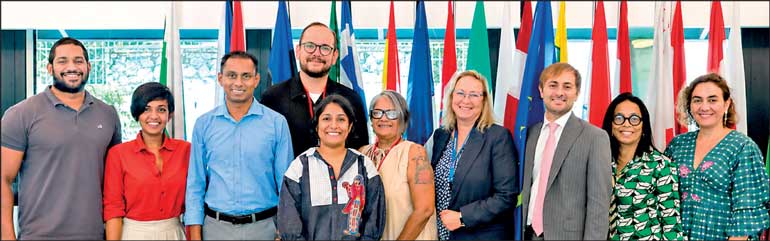
L-R_ Presentation on Sri Lanka- EU Cultural Relations and craft development_ Etosha Lankatilleke and Aparna Samarakoon, founders of ApiHappi_ Thilina Premjayanth, Country Head of Fibershed_ TIFC Founder & EU Cultur
Sri Lanka’s most effective craft campaign of the year may well have been the one that didn’t come out of a trade fair, an export pavilion or a government promotion. Miss World Sri Lanka Prathibha Liyanarachchi, a technical designer and graduate of the University of Moratuwa, has brought a very distinctly Sri Lankan visual language to the international arena. Her profile demonstrates how heritage can be made contemporary and relevant and suggests what more of the younger generation of creatives could achieve if given the right opportunities.
At The Art of Weaving, the Minister of Industry and Entrepreneurship Development described handloom as an ‘industry of the future’, called for products beyond the saree and set an export ambition of US$100 million or more. That ambition is welcome. Having spent decades on preservation programmes the real question is what needs to change in order to make that ambition a reality.
For Selyna Peiris and Robert Meeder (co-founders of The Institute for Future Creations) the answer is in building the creative economy of Sri Lanka rather than just talking about it. Five years after Sri Lanka helped to sponsor the UN resolution on the creative economy, the economic potential of the country is still very much to be defined.
“‘Craft gives us something very concrete to build an economy around,’ says Peiris. “We have makers, materials, knowledge and businesses already in place producing. The opportunity is to stop viewing them as just the recipients of conservation programmes and to start to see them as part of a contemporary productive economy.”
Handloom, batik, jewellery, ceramics, wood and fibre can all be sources of jobs, innovation, IP and exports.Growth doesn’t necessarily mean production alone. “The answer isn’t necessarily more handloom stations or more looms, says Meeder. “It’s about linking the capabilities we already have to markets and partners who are willing to pay a better price for a better product.
That was the basis of Creative Sri Lanka 2030 which was developed in conjunction with the Export Development Board (EDB) and subsequently supported by an EU led matchmaking programme. Six Sri Lankan brands were mentored, matched with international designers and have since secured export orders from Italy, the Netherlands, Germany, Denmark and the UK. The EDB is now rolling out the model on a larger scale, linking established exporters with 40 to 50 SMEs, artisans and designers.
The Chamber of Ethical Lifestyle Enterprises (CELE) grew out of the relationships that were formed through the programme. It’s a chamber which brings businesses together to tackle challenges that are very difficult to deal with on your own, whether that be sustainability requirements, technology, finding buyers, going into international markets etc. Shared infrastructure can help connect entrepreneurs with government, knowledge partners and markets.
That support is becoming increasingly important as the export rules develop. The EU’s emerging Digital Product Passport regime will require a great deal more product information and traceability. That will be a particular challenge for the resource poor MSMEs. If compliance costs go up whilst the craft remains in the low value product space then the small producer is going to be even more at risk of being excluded from the export market. Moving up the value chain is therefore absolutely essential.
“Small doesn’t have to mean low value,” says Peiris. Craft businesses don’t need to become factories. They need design, technology, market intelligence and partnerships that add value and get it to the people and communities behind the work.
Sri Lanka also needs the kind of creative talent that can bring communities together with manufacturers, with new materials and with international markets. It’s not about just producing another fashion label as a measure of design success. The education and industry sectors need to be supporting the hybrid product designer and innovator who can take existing sectors and transform them.
Nor should Europe be the only horizon. India has a wealth of craft knowledge, materials, designers, technology and a growing market of consumers all of which could be leveraged in a regional context. There are also opportunities in the area of regenerative materials and regenerative agriculture whereby design, technology and green investment could be used to re-establish the links between land, fibre and product.
For Meeder there’s no ‘sleeping giant’ out there to be found. Sri Lanka has hundreds of capabilities, hundreds of materials, hundreds of businesses and hundreds of knowledge systems. The job is to work out what works, stop doing what doesn’t work and invest in the ideas that actually create value.
The Minister’s $100m dream will be down to more than just volume. It will be about having better businesses, better products, creative talent and markets that are prepared to pay for Sri Lankan know-how and originality.
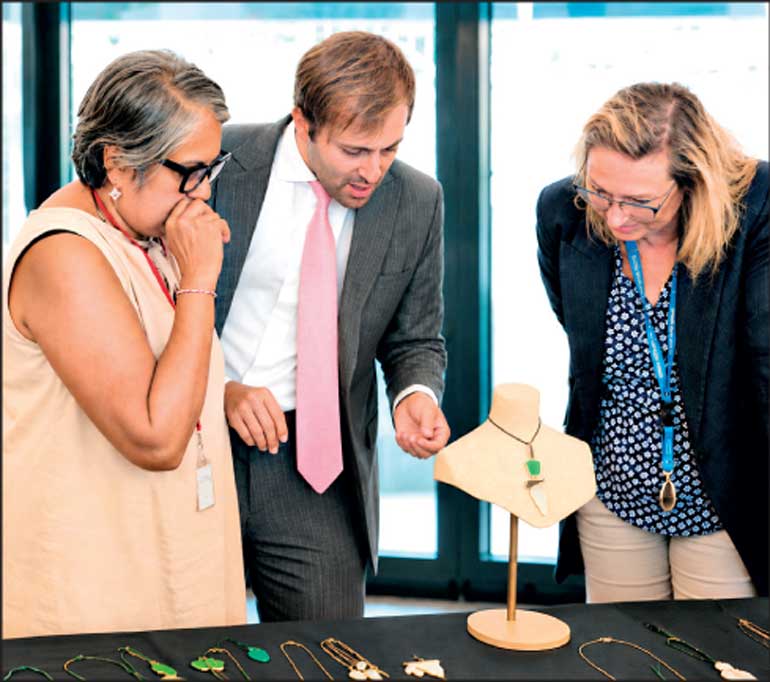
Mihiri Devendra presents her ocean glass collection to the Italian Deputy Head of Mission to Sri Lanka, Alberto Arcidiacono, and the Delegation of the European Union to Sri Lanka Head of Political, Trade and Commun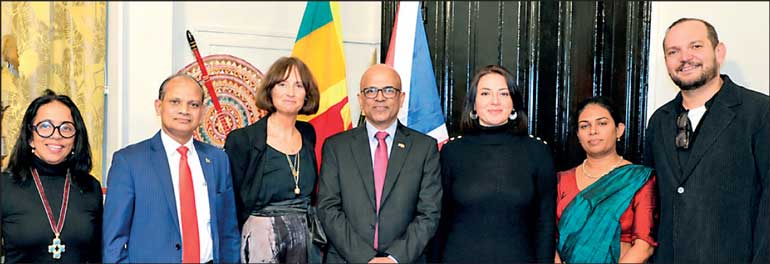
L-R, at the Sri Lankan High Commission presentation on the Future of Sri Lankan Craft_ Sonali Dharmawardena, Batik Designer_ Somasena Mahadiulwewa, Acting Director General of Commerce_ Hannah Middleton, University 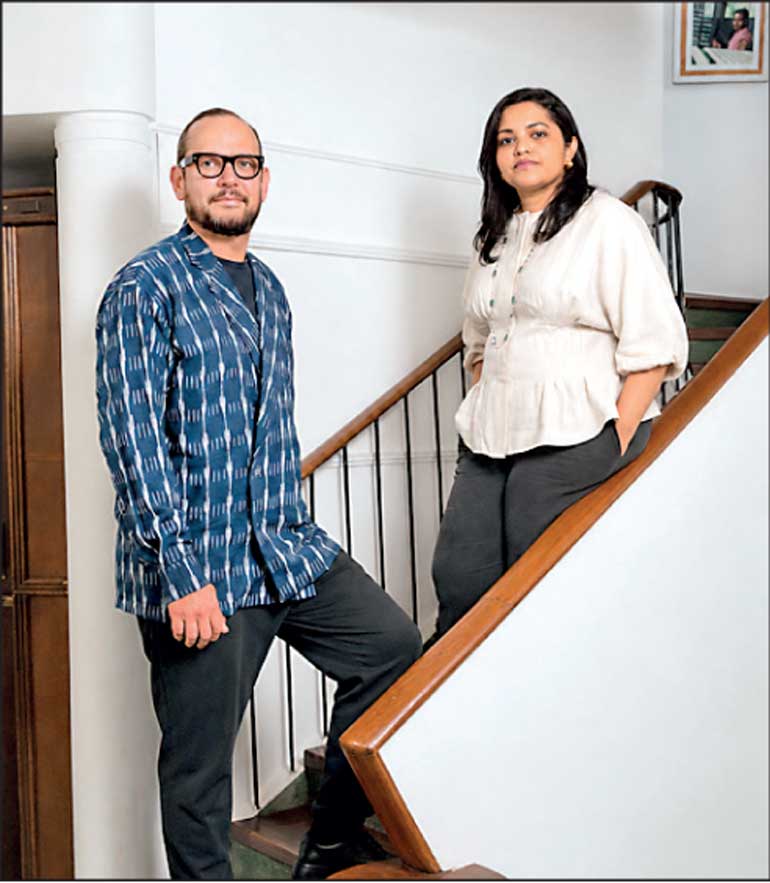
TIFC Founders Robert Meeder and Selyna Peiris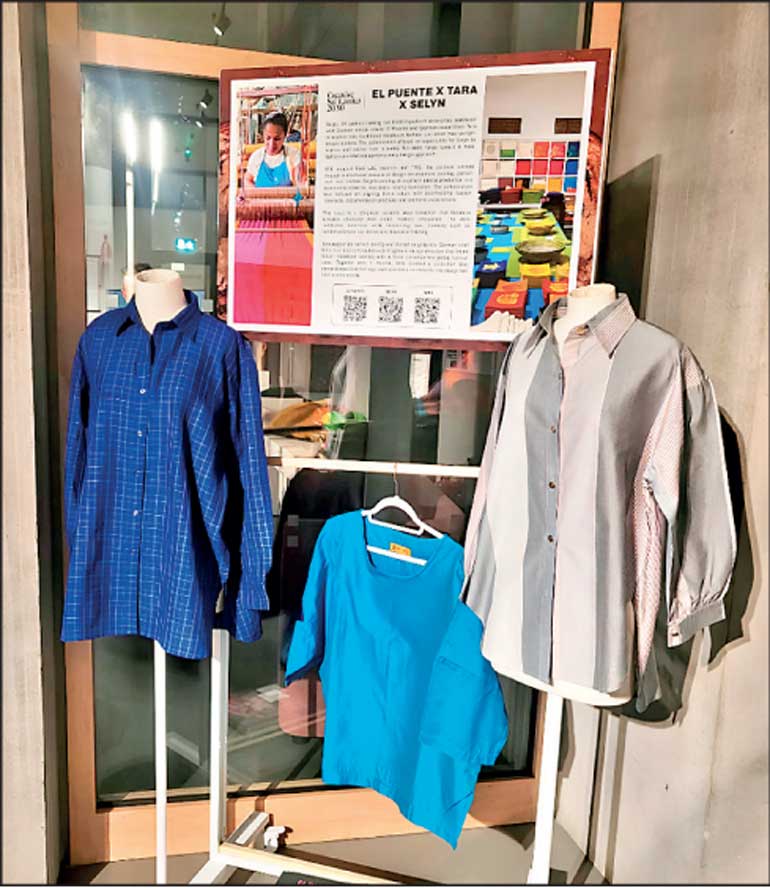
London Exhibition of Sri Lanka's Match making with Selyn, El Puente and Tara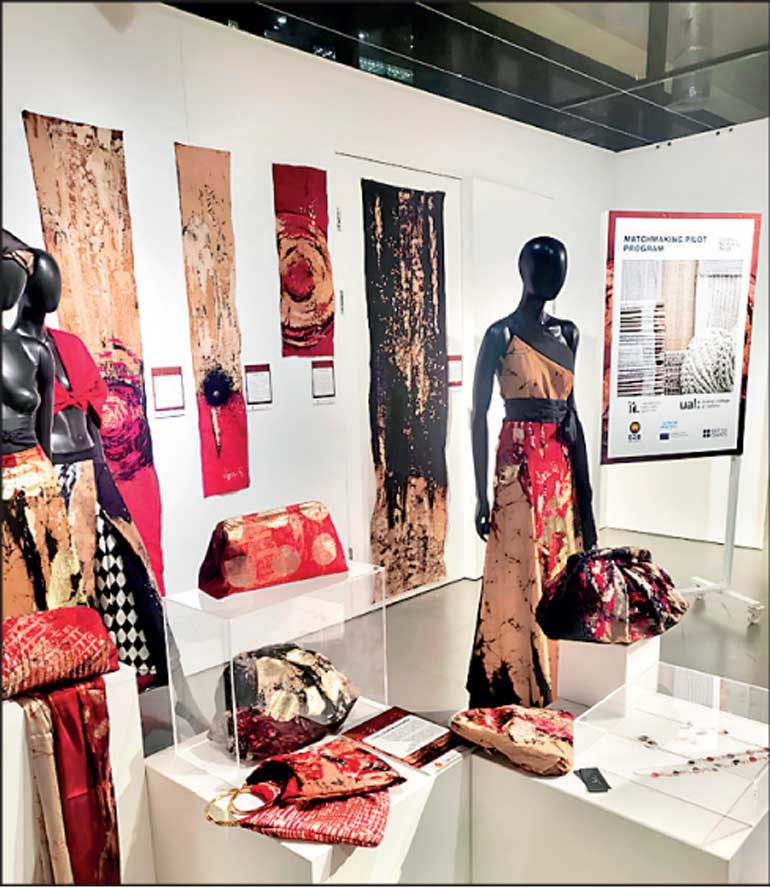
London Exhibition of Sri Lanka's Match making with Sonali Dharmawardena and Caterina Roppo




