Saturday Oct 17, 2026
Saturday Oct 17, 2026
Tuesday, 12 May 2026 00:53 - - {{hitsCtrl.values.hits}}
 |
 |
| Address by Industry and Entrepreneurship Development Ministry Assistant Director | Opening remarks by AICRSL Project Chief Technical Specialist Dr. Jagathdeva Vidanagama |
The inception workshop for the development of a Net Zero Roadmap for Sri Lanka’s textile and apparel sector was held recently at Hilton Colombo Residences, marking the official launch of a nationally significant initiative under the European Union (EU)funded ‘Accelerating Industries’ Climate Response in Sri Lanka’ (AICRSL) project.
The EUR 7.56 million initiative is implemented by the United Nations Industrial Development Organisation (UNIDO) in partnership with the Industry and Entrepreneurship Development, Environment, and Energy Ministries.
Sri Lanka’s textile and apparel sector is a cornerstone of the economy, contributing 40.7% of merchandise exports, generating over $ 5 billion in export earnings in 2025, and directly employing around 350,000 people. Deeply integrated into global value chains, the sector relies heavily on export markets, with approximately 31.3% of Sri Lanka’s textile and apparel exports directed to the EU in 2025. However, as an energy intensive industry sector, it requires urgent decarbonisation to maintain global competitiveness and safeguard market access, making the development of a robust Net Zero Roadmap both timely and essential.
EU Delegation to Sri Lanka and the Maldives Head of Cooperation Dr. Johann Hesse emphasised the broader significance of the initiative.
“Sri Lanka is a key partner in the EU’s textile and garment supply chains, with many European brands sourcing from its manufacturers. As climate and sustainability expectations tighten for companies and their suppliers, it is vital that this industry can measure and reduce its emissions. By supporting a Net Zero Roadmap for Sri Lanka’s textile and apparel sector, we help build more resilient, climatefriendly supply chains for the EU market while supporting quality jobs and longterm competitiveness in Sri Lanka,” he said.
The Roadmap will be developed through a structured, multiphase analytical process, including comprehensive baseline assessments, evaluation of decarbonisation pathways, and extensive stakeholder consultation to ensure that outcomes are technically sound, practical, and aligned with both national priorities and international best practices.
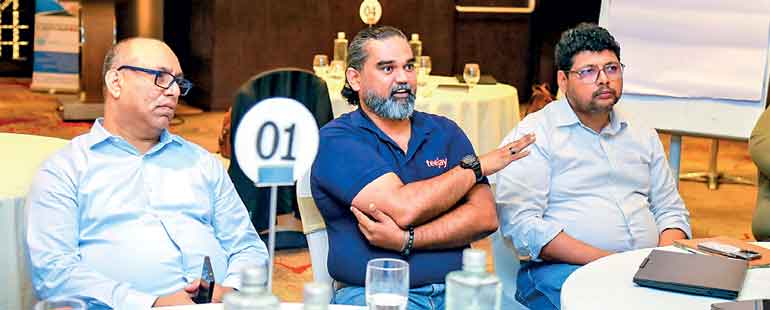
Industry representatives from the textile and apparel sector participate in discussions
The inception workshop, organised by the UNIDO, brought together a broad crosssection of stakeholders, including Government institutions, industry representatives, technical experts, utilities, technology providers, financial institutions, and development partners. The session focused on aligning stakeholders on the Roadmap’s methodology, initiating data collection, and ensuring strong institutional ownership from the outset.
AICRSL project Chief Technical Specialist Dr. Jagathdeva Vidanagama underlined how the initiative supports national policy implementation.
“This roadmap is intended to support the implementation of Sri Lanka’s industrial and climate policies in the textile and apparel sector. By providing robust data, technical analysis, and clear guidance for investment and action, it will help public institutions and industry translate policy objectives into concrete measures that reduce emissions, improve efficiency, and strengthen the sector’s longterm competitiveness, he said.
As Sri Lanka advances its economic recovery and climate commitments, this initiative marks a key step in aligning industrial growth with sustainability, reinforcing the EU’s support for a lowcarbon, climateresilient textile and apparel sector and for more sustainable trade, investment, and longterm stability.
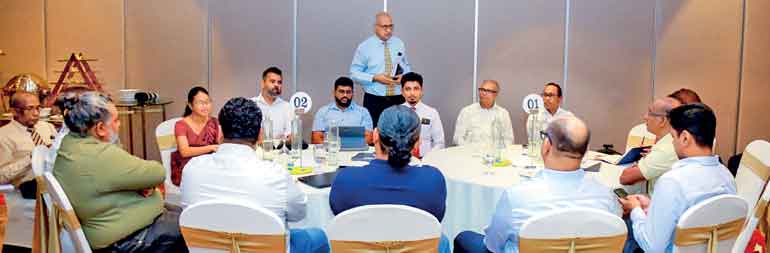
Consultation session with industries, Government representatives and other stakeholders




