Wednesday Sep 02, 2026
Wednesday Sep 02, 2026
Wednesday, 2 September 2026 00:02 - - {{hitsCtrl.values.hits}}
By Joint Apparel Association Forum
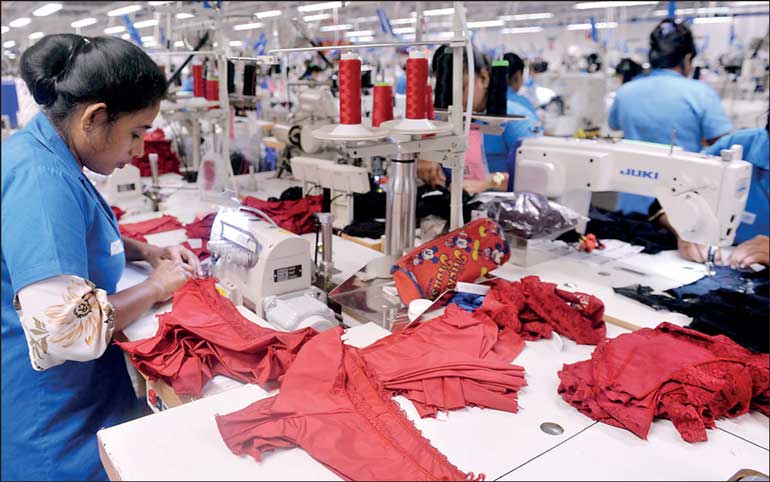
Efficiency on the factory floor is no longer enough to get an order out on time. Fabric and trims need to reach the factory on schedule, and once production is done, finished garments still need to clear the port or airport within the buyer's window. What matters to an international buyer is simple: does the shipment arrive when promised. A few extra days lost to a customs clearance inside Sri Lanka mean nothing to that schedule. Apparel competitiveness today isn't decided by wages and tariffs alone. Time spent within the port and the regulatory system has become part of the cost of the export itself.
Sri Lanka's export policy conversation revolves around new trade agreements, GSP+ and market access. All of it matters. But a more basic question deserves equal attention: how much extra time, cost and uncertainty do our own border procedures create for exporters? This isn't confined to apparel. It's a hidden, domestic barrier running through Sri Lanka's entire export economy.
Sri Lanka has made progress. The UN Digital and Sustainable Trade Facilitation Survey shows our index rising from 43.01% in 2015 to 63.44% in 2025. But that same year, India recorded 93.55%, Malaysia 90.32%, Thailand 88.17% and Vietnam 77.42%. We've moved forward. Our competitors have moved faster. Committing to the WTO Trade Facilitation Agreement on paper and an exporter actually experiencing faster service are not the same thing. The question now isn't whether reforms were announced, but whether they've cut real time and cost.
The most significant reform underway is the National Single Window, one digital submission instead of repeating documents to multiple institutions. In the 2025 UN survey, Sri Lanka's system was still at the planning stage. By 2026, the OneTRADE/TNSW program is redesigning and connecting processes across 18 institutions, a step that should be judged by fewer documents and faster clearance, not by its launch date.
Sri Lanka Customs' pilot paperless CusDec program, using electronic signatures instead of physical documents, is a solid parallel step. But if a document submitted online to one institution still has to be printed and handed to another, digitisation loses its point. The goal should be a system that never asks for the same information twice, and one where multiple agencies function, from a business owner's view, as a single connected Government.
Checking documentation before goods physically arrive means the process doesn't need to halt until the vessel reaches port. Pre-arrival processing and risk management are still not fully operational here, and that matters most for apparel: a delayed fabric shipment can derail a production schedule, forcing a costly switch from sea to air freight just to meet the shipping date. An extra day at port isn't administrative delay. It's a production cost. Inspecting every container identically isn't efficient either.
An exporter with years of clean compliance and a high-risk trader shouldn't be treated the same. That's what the Authorised Economic Operator (AEO) system is for, faster clearance for trusted operators, freeing Customs to focus limited inspection resources on genuine risk. Even a good digital system fails if containers sit for days in a physical examination yard. Limited space, poor infrastructure, a shortage of scanning equipment and manual inspection all cause delay, and delay means damage risk, storage costs and higher production costs. None of it is a tax paid to Government. But it hits exporters' bottom line the same way a tariff would.
Apparel factories plan orders and shipping months ahead. A sudden change to a border procedure creates real uncertainty. The answer isn't freezing regulation, necessary reforms should happen, but with industry consultation, advance notice and clear transition guidelines. Progress also needs data: average clearance times, permit processing times, the share of consignments physically inspected. Publishing this regularly would show exactly where delays occur, turning trade facilitation from a promise into a measurable public service. None of this is apparel asking for special treatment. A single window, paperless documentation, risk-based inspection and faster clearance would benefit every exporter, tea, rubber, electrical goods, processed food, not apparel alone. Trade facilitation isn't a subsidy. It's economic infrastructure, no different from roads, ports or electricity.
In the next six to twelve months, a public dashboard on clearance times, pre-arrival processing for compliant exporters, simpler AEO enrolment, and an end to submitting the same document to multiple institutions would make a real difference, alongside minimum notice periods for new regulations. By 2027, the priority should be making OneTRADE/TNSW's results tangible: redesigned processes across all 18 institutions, fewer documents, connected systems, and paperless approvals. Moving a manual process onto a screen isn't reform. Simplify first. Digitise second. Looking to 2030, the single window shouldn't be the final goal but the foundation for the next stage, electronic exchange of trade documents with trading partners, backed by stronger risk analysis and mutual AEO recognition.
Sri Lanka's apparel industry faces real challenges ahead, foreign tariffs, sustainability rules, regional competition. We can't control all of it. But whether an exporter submits the same information three times, or whether clearance times are ever made public, these are decisions entirely within our own hands. If we want greater access to foreign markets, we owe our own country the same commitment to making it easier to get goods out of it. A foreign tariff is beyond our control. The tax of time, delay and procedure we impose on our own exporters is not. Gaining a new market matters. But before we can win it, we have to clear the obstacles at our own border first. If we can't, our exports won't move quickly through the door a trade agreement opens. If we can, trade facilitation becomes Sri Lanka's next competitiveness reform.



