Thursday Oct 22, 2026
Thursday Oct 22, 2026
Monday, 31 August 2026 00:18 - - {{hitsCtrl.values.hits}}
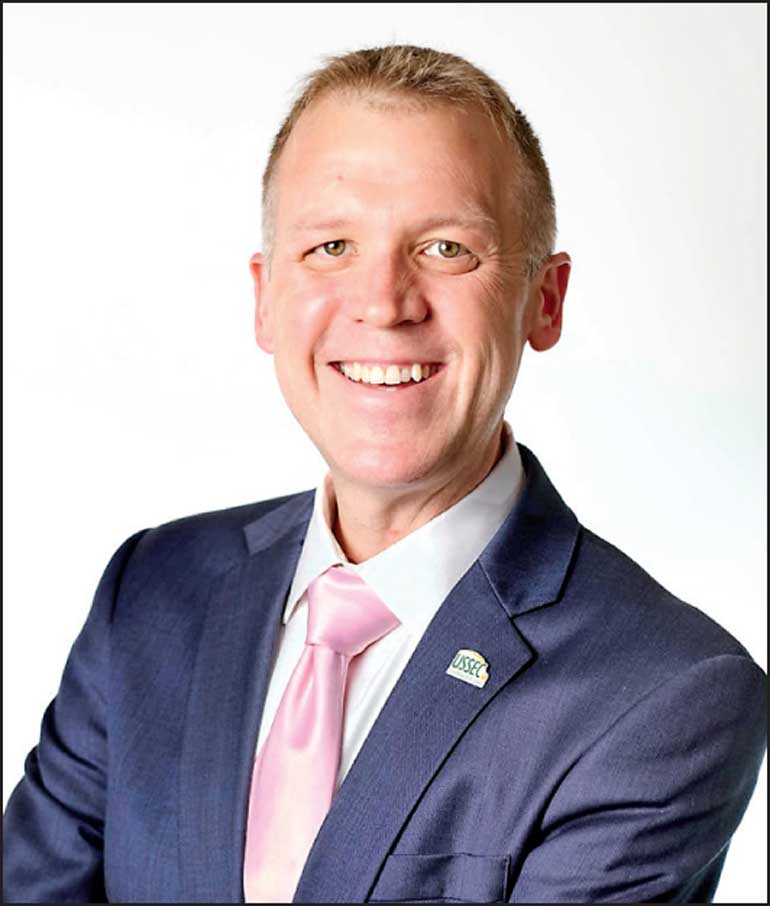
US Soybean Export Council Executive Director Kevin Roepke
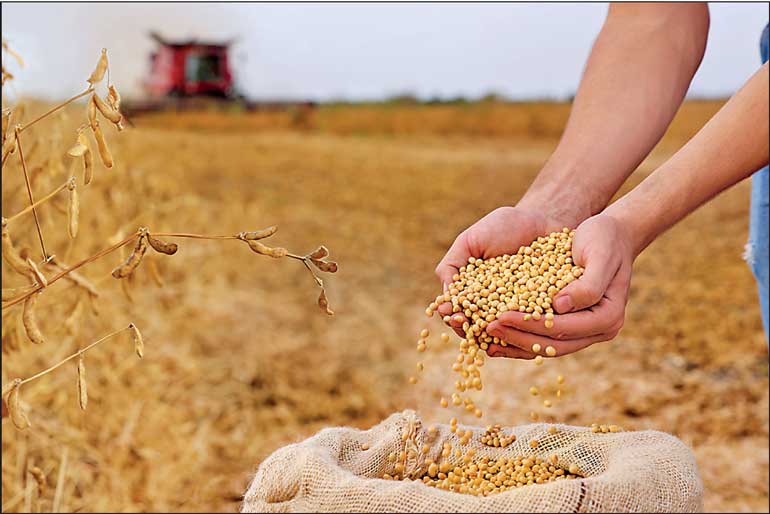
 Sri Lanka is not a large country by soybean standards. It grows none of its own. Yet in 2025 it imported roughly 255,000 tons of US soybean meal in shipping containers, a figure on track to cross 300,000 tons this year, with volumes climbing steadily every year. It is, by USSEC’s own numbers, the largest containerised market for US soybean meal in the world. For a country of 22 million people still working its way out of a currency crisis, that is not a small fact. It is the backdrop against which Kevin Roepke, Executive Director at the US Soybean Export Council (USSEC), spoke about what keeps Sri Lankan feed millers and poultry producers loyal to American soy, even when cheaper origins are one phone call away.
People before product
Roepke’s answer to why Sri Lankan buyers choose US soy starts, deliberately, before the product itself. He frames it as a people business first: farmer to buyer relationships, built over site visits, conferences and years of repeat trade. It is a framing USSEC has used elsewhere too, including at the recent inauguration of the Sri Lanka Association of Animal Nutrition in Kandy, where Roepke was quoted describing Sri Lanka as South Asia’s largest market for US soybean meal and pointing to the strength of the supply relationship as a reason the industry has stayed resilient through disruption.
Most US soybean farms are still family operations, and Roepke leans on that fact often. It is true in the aggregate: the vast majority of US farms, including soybean farms, remain family owned and operated across generations, which is part of why USSEC repeatedly brings overseas buyers to visit farms directly rather than simply quoting them a price sheet. The same thread runs through the buying side in Sri Lanka. Several of the country’s feed millers and poultry producers are themselves multigenerational family businesses, and the ones that have since gone public are already preparing for tighter ESG disclosure requirements, giving both sides of the relationship more in common than a straightforward supply contract would suggest.
Price versus value
Ask Roepke about price and he redirects, gently but firmly, to value. His pitch is that Sri Lankan feed formulators buying US soybean meal are not buying a commodity so much as a tightly specified bundle of digestible amino acids, metabolisable energy and low variability, which lets nutritionists shrink their safety margins and get more predictable output from the same tonnage. USSEC calls this its “4Ds” pitch (naturally sun dried, lower damage, higher digestibility, and deforestation free production), language it has used consistently in its own Sri Lanka messaging this year.
It is a real trade off, not just marketing. Sri Lanka’s animal feed industry produces around 1.3 million metric tons of feed a year, almost entirely built on imported protein meal, so consistency in that one ingredient has an outsized effect on the industry’s overall cost and quality control.
The protein gap, and a guideline shift that landed at just the right time
On the question of weak nutrition regulation in Sri Lanka, Roepke points to Right to Protein, USSEC’s consumer awareness campaign built to argue that South Asia, broadly, under consumes protein relative to recommended levels. The campaign actually launched in 2019, a year before COVID, though its growth and relevance accelerated through the pandemic years as health and immunity became dinner table conversation across the region. It now runs across India, Pakistan, Bangladesh, Nepal and Sri Lanka, with its own World Protein Day campaign every February.
The guideline shift Roepke references is real and recent. The US Dietary Guidelines for Americans 2025 to 2030, released in January 2026, raised the recommended protein intake from 0.8 grams per kilogram of body weight, a figure that had stood for decades, to a range of 1.2 to 1.6 grams per kilogram. For an average adult, that is roughly a 50 to 100% increase, and it has already become a reference point USSEC uses across its South Asia messaging as evidence that the old “just enough protein” thinking undersold what people actually need.
Sri Lanka’s container habit
The container question is where the interview gets genuinely specific to Sri Lanka. Roepke describes the US as a supplier that can meet almost any buyer’s format preference, GMO or non GMO, bulk or container, standard or high oleic, and Sri Lanka has settled firmly into the container camp. Part of that comes down to regulation rather than taste: Sri Lanka permits genetically modified soybean meal for animal feed, but only in already processed form, not as whole beans, which is why the country imports meal rather than crushing its own soy domestically. Add a strong domestic preference for coconut oil over soybean oil (Sri Lanka is among the world’s larger coconut producers) and there is little local incentive to crush whole soybeans even if the rules allowed it. Containers also suit smaller, more frequent purchasing that fits mid-sized Sri Lankan feed millers better than committing to a full bulk vessel.
The sustainability label, and a Sri Lankan first
Sri Lanka was not just an early adopter of USSEC’s Sustainable US Soy label, it was the first mover in the entire South Asia and Sub Saharan Africa region. New Anthoney’s Farms signed the licensing agreement in July 2023, becoming the first company in either region to put the label on packaging, and its CEO Neil Suraweera has since become something of an unofficial spokesman for the label at USSEC events, saying that the label was helping the company grow market share faster than the category itself was growing. As of this year, USSEC counts 16 Sri Lankan poultry producers and feed millers that have signed licences for the Sustainable US Soy or Fed with Sustainable US Soy marks, though, as Roepke was careful to clarify, not all of them have finished rolling the logo onto production packaging yet. Elsewhere in the USSEC network, South Korea’s Sajo Daerim reported a 23% sales increase within a year of adding the label to its soy paste products, a data point Roepke’s team likes to cite as proof the label moves more than sentiment.
Building the next generation
USSEC’s Soy Excellence Centre program, which Roepke describes as targeting early to mid-career professionals rather than executives, is a genuinely global initiative, not something built around Sri Lanka specifically. It runs training hubs across the Americas, Asia, the Middle East and North Africa, and Sub Saharan Africa, with a dedicated India center launched in February 2024 that had already trained over 500 professionals within its first year. Since 2019, the broader program has reached more than 31,000 participants across over 40 countries. The pitch Roepke makes, that graduates take something learned on a Monday and apply it at work by Tuesday, is consistent with how USSEC positions the program elsewhere: less an academic credential, more an applied skills pipeline for people already inside feed mills, hatcheries and processing plants.
A bilateral relationship that cuts both ways
Roepke’s closing point, that the US buys more from Sri Lanka than it sells, checks out against official trade data. US goods imports from Sri Lanka reached an estimated 3.1 billion dollars in 2025, while US exports to Sri Lanka were just under 370 million dollars, making the US Sri Lanka’s single largest export market overall, ahead of the UK and India. Soybean meal flows the other way, a small but symbolically useful counterweight in a trade relationship still dominated by Sri Lankan apparel and tea.
Taken together, the numbers back up most of what Roepke argues in the interview: Sri Lanka’s scale as a container buyer is real and recently made it the region’s top market of its kind, the protein guideline shift he cites happened almost exactly as described, and the sustainability label’s Sri Lankan roots go back further and run deeper than almost anywhere else in the region.
(The author, Managing Director of Mark and Comm, attended the flagship US Soy Connext 2026 from 5 to 7 August in Chicago organised by the US Soybean Export Council)



