Thursday Sep 10, 2026
Thursday Sep 10, 2026
Thursday, 10 September 2026 04:40 - - {{hitsCtrl.values.hits}}
|
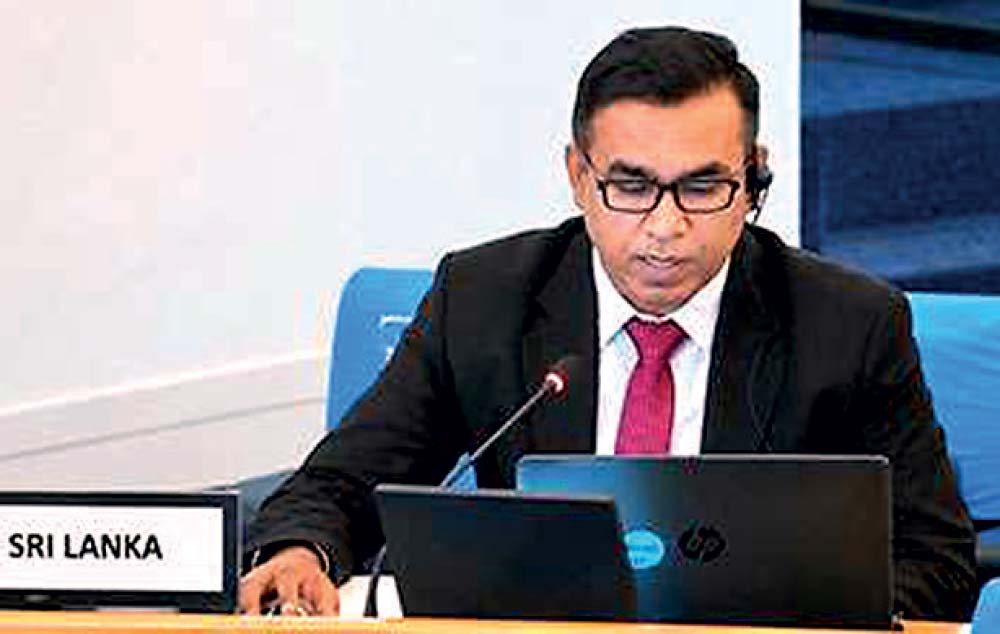
Fisheries, Aquatic and Ocean Resources Secretary Dr. B.K. Kolitha Kamal Jinadasa |
Sri Lanka presented a series of proposals on fisheries policy, sustainable management of marine resources, protection of small-scale fisheries and regional cooperation at the 37th Session of the Committee on Fisheries (COFI 37).
COFI 37 is being held at the Food and Agriculture Organisation (FAO) headquarters in Rome from 7-11 September, 2026.
The Fisheries, Aquatic and Ocean Resources Ministry said the session brings together policymakers, researchers, industry professionals and other stakeholders to discuss challenges and priorities in global fisheries and aquaculture, including the State of World Fisheries and Aquaculture (SOFIA 2026) report and measures against Illegal, Unreported and Unregulated (IUU) fishing.
Fisheries, Aquatic and Ocean Resources Secretary Dr. B.K. Kolitha Kamal Jinadasa, representing Sri Lanka, said digital transformation, effective data management and science-based decision-making should be given greater priority in fisheries management, particularly in developing countries.
While acknowledging the value of FAO’s FishStat database, he called for developing countries to strengthen their own stock assessment capabilities and pressed for greater knowledge-sharing and data-driven policymaking through the Bay of Bengal Program Inter-Governmental Organisation (BOBP-IGO).
On small-scale fisheries, Dr. Jinadasa said the sector’s definition should not rest solely on technical criteria such as vessel length or engine horsepower, but should also account for the social, economic and institutional realities of fishing communities. He called for international fisheries policies to better reflect conditions faced by fishing communities in developing countries.
Sri Lanka also flagged the completion this year of the Dr. Fridtjof Nansen fishery survey program in its waters, with a dedicated data collection unit now being established for more systematic data gathering. The country said fisheries information continues to be submitted through mechanisms including the Indian Ocean Tuna Commission (IOTC) and the Vessel Monitoring System (VMS).
On reducing post-harvest losses, Sri Lanka said measures were under way to improve cold-chain facilities at fishery harbours and landing sites to protect product quality and market value.
Noting that Sri Lanka has completed ten years since joining the Agreement on Port State Measures (PSMA), Dr. Jinadasa stressed the need for stronger coordinated action against IUU fishing and for closing gaps between legal frameworks and their implementation, while making fuller use of regional initiatives such as the Bay of Bengal Large Marine Ecosystem (BOBLME) program.
Speaking on behalf of the BOBP-IGO leadership, Sri Lanka called for deeper fisheries cooperation among member countries — Sri Lanka, India, Bangladesh and the Maldives — and urged the FAO and other international bodies to continue technical assistance, capacity building and policy guidance to developing countries.
Around 800 sector leaders from close to 130 countries are participating in the session.