Wednesday Sep 16, 2026
Wednesday Sep 16, 2026
Monday, 6 July 2026 04:27 - - {{hitsCtrl.values.hits}}
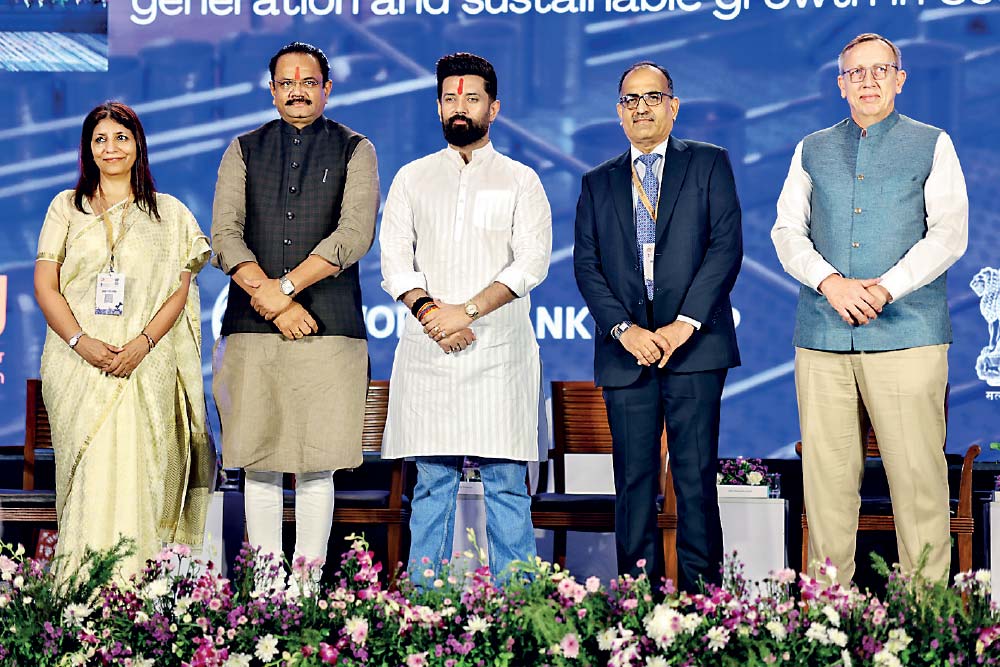
From left: Gates Foundation Country Director for India Archna Vyas, Government of Gujarat Agriculture Minister Jitubhai Vaghani, Food Processing Industries Union Minister Chirag Paswan, MoFPI Secretary Avinash Joshi, and World Bank Acting Country Director for India Paul Procee at the inauguration of Regional High-Level Policy Dialogue “SAPLING (South Asian Policy Leadership for Improved Nutrition and Growth) Dialogue 2026” in Gujarat
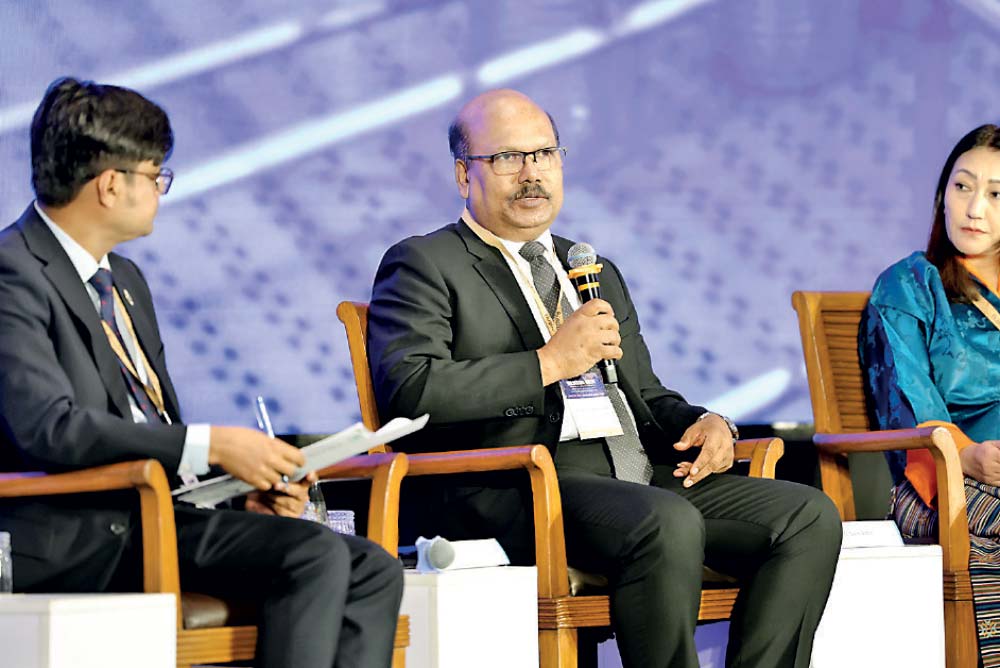
Trade, Commerce, Food Security Ministry Secretary K.A. Vimalenthirarajah speaks at the session on safe food and strong markets
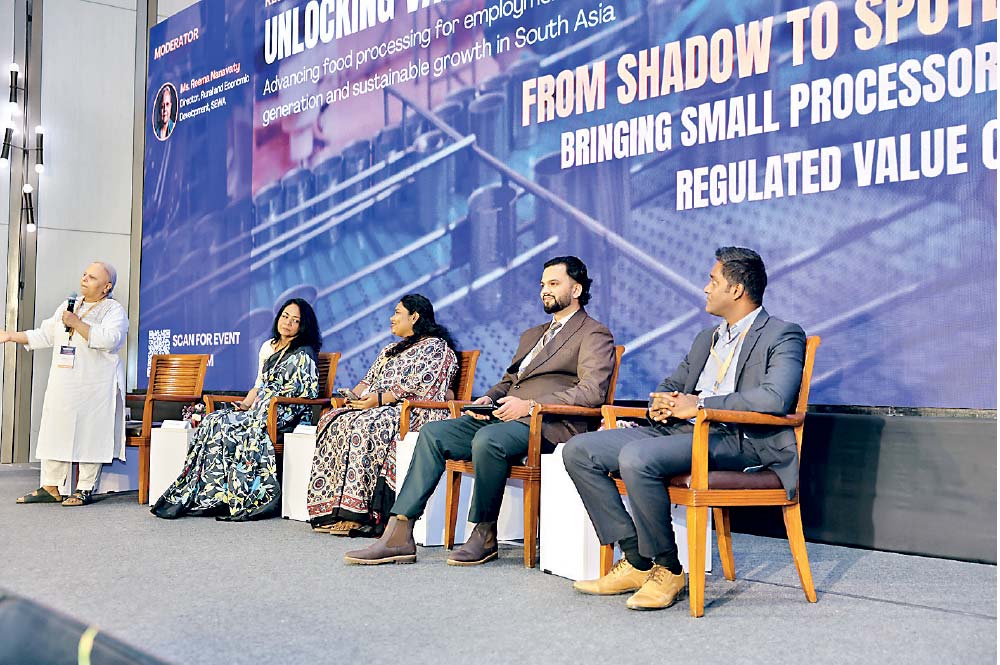
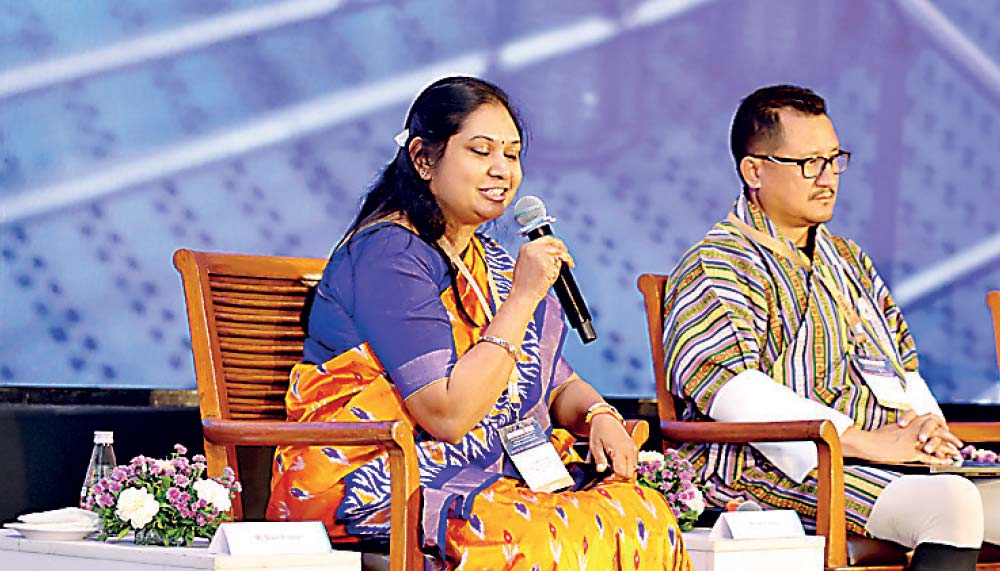
Sri Lanka’s Agrithmics CEO and Founder Prashanth Premakumar (right) at the session on bringing small processors into regulated value chains
By Nisthar Cassim
|
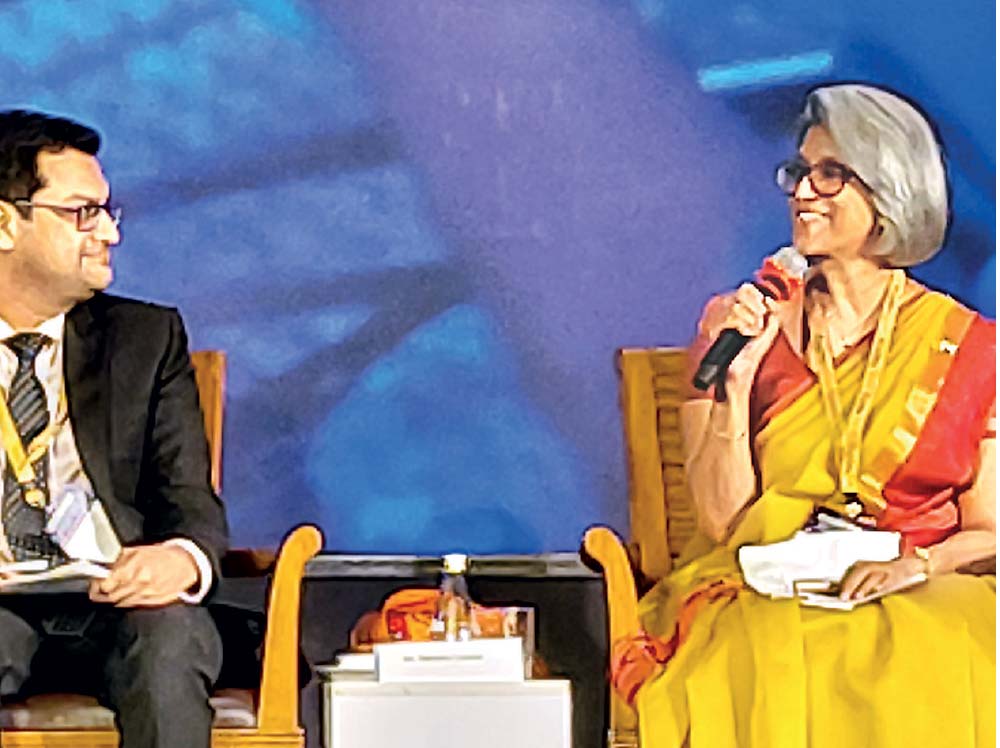
Sri Lanka’s High Commissioner in India Mahishini Colonne (right) speaks at the session on Regional collaboration and policy action in South Asia |
|
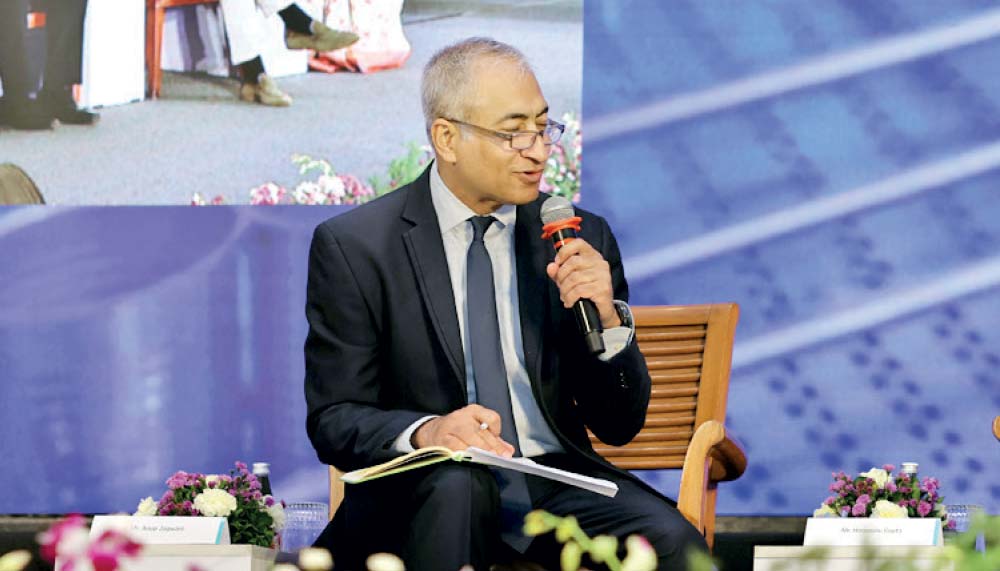
World Bank Group Global Director Anup Jagwani |
|
Gates Foundation Manager Srivalli Krishnan
|
The two-day Regional High-Level Policy Dialogue “SAPLING (South Asian Policy Leadership for Improved Nutrition and Growth) Dialogue 2026”, jointly organised by the Ministry of Food Processing Industries (MoFPI), Government of India and the World Bank Group concluded successfully recently in Ahmedabad, Gujarat.
The Dialogue, held under the theme “Unlocking Value: Advancing Food Processing for Employment Generation and Sustainable Growth in South Asia”, brought together around 200 participants including policymakers, industry leaders, international organisations, development partners, researchers, startups, financial institutions, and representatives from South Asian countries to deliberate on strengthening resilient, inclusive, and sustainable food systems in the region.
The Sri Lankan delegation included Secretary to the Prime Minister Pradeep Saputhanthri, Assistant Secretary Mihiri Thennakoon, Trade, Commerce, Food Security and Cooperative Development Ministry Secretary K.A. Vimalenthirarajah, National Institute of Post-Harvest Management Chairman Prof. B.D. Rohitha Prasantha, MILCO Chairman G.V. Hemajeewa Gotabhaya, Agrithmics CEO Prashanth Premakumar, Dilmah Ceylon Manager Agriculture Innovation Nucleus Anuradha Ranasinghe, Keells Supermarkets Manager (fresh Technical Expert) Dhanushka Anuradha, Ocean Trade and Logistics Ltd., Managing Director Sudesh Mendis, SenzAgro Solutions Founder Miller Rajendran and Chief Technical Officer Brunthavan Murugaiah, World Bank Sri Lanka Senior Agriculture Economist Felipe F. Dizon, and World Bank External Affairs Officer Dilinika Peiris. Vimalenthirarajah, Sri Lanka’s High Commissioner in India Mahishini Colonne and Agrithmics’ CEO Premakumar spoke at the event as panellists.
India’s Union Minister for Ministry of Food Processing Industries, Chirag Paswan, while addressing the inaugural session, highlighted India’s growing role as a global food processing hub and emphasised the importance of value addition, technology adoption, and regional collaboration in transforming South Asia’s food economy.
The opening plenary featured participation by senior dignitaries, including Government of Gujarat Agriculture Minister Jitubhai Vaghani, World Bank Acting Country Director for India Paul Procee, Gates Foundation Country Director for India Archna Vyas, and , India’s Ministry of Food Processing Industries Secretary Avinash Joshi.
On the occasion, the report titled “Assessment of the Level of Food Processing in India”, commissioned by the Food Processing Industries Ministry, was released by the Ministers and dignitaries. The report presents a comprehensive assessment of food processing levels across major agricultural commodities and highlights the significant progress made in India’s food processing sector, with overall processing levels increasing from around 10% in 2016 to nearly 17% in 2023. The study also identifies substantial opportunities for value addition in perishable commodities such as fruits, vegetables, and dairy, and provides strategic policy recommendations to strengthen infrastructure, reduce post-harvest losses, enhance farmer incomes, and boost India’s global competitiveness in the food economy.
Addressing the concluding session, Joshi emphasised that food processing is not merely an economic opportunity but a national and regional imperative for South Asia. Highlighting India’s commitment through its flagship schemes and long-term development vision, he reaffirmed that India stands ready to serve as both a catalyst and a committed partner in advancing regional food processing transformation. He further underlined that food processing-led growth must focus on employment generation, MSMEs, women entrepreneurs, and farmer welfare, ensuring that the benefits of growth reach rural communities and small businesses.
Highlighting the importance of collaboration, Joshi stated that governments, industry, and development institutions must work together to translate ideas into impactful action. He noted that the SAPLING Dialogue has demonstrated the strength of multi-stakeholder partnerships in advancing resilient and sustainable food systems across South Asia.
On behalf of the Ministry of Food Processing Industries, Joshi expressed deep appreciation to the World Bank Group and the SAPLING team for conceptualising and co-organising the Dialogue. Gates Foundation was also a partner of the Dialogue.
He also thanked the distinguished delegates from South Asian countries for their valuable contributions, noting that their perspectives enriched the deliberations and reinforced the spirit of regional solidarity and cooperation.
The two-day SAPLING Dialogue 2026 concluded with a strong call for a concrete action plan and deeper collaboration between the Ministry of Food Processing Industries (MoFPI) and the World Bank Group for the holistic development of the food processing sector in South Asia.
The SAPLING Regional High-Level Policy Dialogue is aligned with the World Bank Group’s AgriConnect initiative and SAPLING platform, which seek to accelerate resilient and nutrition-focused food systems across South Asia through policy reform, investment mobilisation, and technology-driven solutions. Sri Lanka hosted last year’s SAPLING forum.
The event included an Innovation Fair showcasing breakthrough solutions in cold-chain logistics, digital traceability, sustainable packaging, smart processing technologies, and storage systems. The fair aims to strengthen partnerships among innovators, policymakers, and industry stakeholders.
Food processing the missing link between agriculture and prosperity
Organisers said food processing is often the missing link between agriculture and prosperity, generating jobs, raising farmer incomes, reducing food loss, and strengthening food security when food moves beyond the farm into value-added products and modern supply chains.
It was emphasised that South Asia›s food systems stand at a critical turning point. Rapid urbanisation, climate volatility, and evolving consumer expectations are reshaping how food is produced, processed, and consumed across the region, even as persistent challenges remain: food loss and waste, fragile farmer incomes, limited value addition, and widespread underemployment, particularly among women and youth.
Countries that have successfully modernised their food systems have done so by building strong food processing ecosystems, linking farmers, entrepreneurs, technology, finance, and markets into dynamic value chains. South Asia has a significant opportunity to accelerate this transition by positioning food processing as a strategic sector connecting agriculture, nutrition, climate resilience, and industrial growth.
In that context the regional high-level policy dialogue aimed at fostering cross-country learning, unlocking private investment, empower MSMEs, strengthening food safety systems, and ultimately creating more and better jobs while increasing farmer incomes across the food value chain.
Think big, act local
The emphasis was “think big, act local” with the Dialogue having two sessions on the theme.
First session examined how South Asia can unlock the full potential of food processing to drive jobs, value addition, and resilient food systems. It focussed on global trends and lessons for South Asian countries within the evolving global food landscape, highlighting key trends shaping food markets, including sustainability, nutrition, innovation, and changing consumer demand.
Speakers shared international experiences on how countries have leveraged food processing to generate jobs, increase agricultural value addition, attract private investment, and strengthen food system resilience. These global benchmarks, it was stressed, will help inspire new thinking and identify proven policy pathways for sector transformation.
The session was moderated by World Bank Group Global Director Anup Jagwani and panellists included global multinational Nestle Group Leader, Regulatory and Scientific Affairs (General Foods) Himanshu Gupta, Ajinomoto Associate General Manager Shigeyuki Takeuchi, Rabobank
Head of RaboResearch Food and Agribusiness – Asia Dirk Jan Kennes and Food Industry Asia Country Head for India Parna Dasgupta.
Session two of the “Think big, act local” endeavoured to chart South Asia’s Path Forward. It focussed on country priorities and regional opportunities for advancing food processing across South Asia. The panel discussed the ecosystem conditions needed to unlock growth, including market access, investment opportunities, MSME competitiveness, and enabling policy frameworks. In the spirit of the World Bank’s AgriConnect initiative, the discussion explored how governments, multilateral institutions, and the private sector can work together to mobilise finance, technology, and partnerships for sector development.
The panellists were Bayer CropScience Ltd., CEO and Bayer Country Group Head Simon Wiebusch, Bonton Foods Ltd., Managing Director Shamim Ahamed, Maldives State Trading Organisation (STO) Plc Commercial Operation Manager Hamdhana Abdul Rahman Hussain, and World Bank Practice Manager for Food and Agriculture - South Asia Tomas Rosada. It was moderated by Bhutan’s Royal Insurance Corporation ex-CEO Karma Karma.
From farm to factory
The Dialogue also discussed how to strengthen agricultural supply chains for the food processing sector. The session on “From Farm to Factory” stressed that a strong food processing sector begins at the farm and ensuring reliable supply of high-quality raw materials requires closer alignment between agricultural production and the needs of processors.
The session highlighted how improved on-farm practices, quality standards, and traceability systems can strengthen linkages between farmers and processors. Discussions focussed on the role of contract farming models, research on processing-suitable crop varieties, farmer training, and investments in storage and post-harvest infrastructure to reduce losses and improve supply reliability. Participants were told that by strengthening these upstream connections, countries can help smallholders participate more effectively in modern value chains and processing markets.
Gates Foundation Manager Srivalli Krishnan moderated this session with panellists being Bhutan Agro Industries Ltd., CEO Sherab Namgay, Fib-Sol Life Tech Founder and CEO Dr. Kavitha Sairam, GAIN Country Director for Bangladesh Dr. Rudaba Khondker and India Ministry of Food Processing Industries Joint Secretary Ranjit Singh.
Bringing small processors into regulated value chains
“From Shadow to Spotlight: Formalising the informal - bringing small processors into regulated value chains” was another useful session at the Dialogue. It was stressed that millions of small-scale processors are the unsung heroes of South Asia’s food economy: feeding cities,
sustaining rural livelihoods, and keeping supply chains moving. Yet they remain largely invisible to policy, cut off from the finance, markets, and technology that could help them grow. Issues addressed included what would it take to change that? And what is the cost of leaving them behind?
The session addressed the structural barriers that keep small processors outside formal systems, from burdensome compliance requirements and limited access to certification support, to weak linkages with formal buyers and financial institutions. Panelists shared evidence on what works: graduated regulatory frameworks that match compliance demands to firm capacity, incentive-based formalisation pathways, cluster based approaches that help microenterprises collectively meet standards, and digital tools that reduce the cost of compliance and traceability. It also explored the role of anchor firms, cooperatives, and public programs in pulling informal processors upward into structured value chains.
Speakers were Bangladesh’s Ispahani Agro Ltd., Director Fawzia Yasmeen, Indian Institute of Management, Ahmedabad Centre for Management in Agriculture Professor Dr. Vidya Vemireddy, Manaram Group, Poshilo Foods Managing Director Prithwi Parajuli and Sri Lanka’s Agrithmics CEO and Founder Prashanth Premakumar. It was moderated by India’s single largest central trade union for women in the informal economy the Self-Employed Women’s Association SEWA Director, Rural and Economic Development Reema Nanavaty.
Transforming food processing through technology
The Dialogue’s second day kicked off with a session of “Smart Tech, Bold Innovations: Transforming food processing through technology.” The basis for this session, according to the World Bank, was that technology and innovation are rapidly reshaping the future of food processing. From biotechnology and advanced processing techniques to modern cold chain systems and smart packaging, new solutions are helping reduce food loss, extend shelf life, and improve efficiency across food value chains.
Therefore the session highlighted emerging technologies that are transforming storage, transport, and processing, from low-carbon cooling systems and renewable energy-powered storage to innovations such as irradiation, dehydration, and digital traceability. The participants were told
how new business models, such as cooling-as-a-service, shared logistics, and data-driven supply chains, are enabling more efficient, scalable, and commercially viable food processing ecosystems.
The speakers were GreenPod labs CEO and Founder Deepak Rajmohan, Rukart Technologies Co-Founder and COO Sharayu Kulkarni, Novonesis Director of Food and Beverage Biosolutions Anurag Chadha, aQysta Country Manager Sujan Dulal and Bambrew Co-Founder and CBO Kunal Prasad. The moderator was ThinkAg Co-Founder Hemendra Mathur.
Safe food and strong markets
The Dialogue also focused on the aspects of “safe food and strong markets” with emphasis on health, quality, and standards for competitive trade
It was stressed that safe and high-quality food is essential for protecting public health while enabling countries to compete in global markets. As South Asia expands its food processing sector, stronger food safety systems and modern standards are becoming critical foundations for growth.
This session explored how countries can strengthen food safety frameworks while supporting industry innovation and export readiness. Discussions highlighted advances in food safety science,
laboratory systems, digital monitoring, and traceability tools, as well as practical approaches to improving compliance through risk-based regulation, training, and performance-based incentives. The session also examined how aligning national systems with Codex standards can help strengthen consumer confidence and expand market access.
Sri Lanka’s Trade and Food Ministry Secretary K.A. Vimalenthirarajah was one of the panellists along with Bhutan Food and Drug Authority Director Gyem Bidha, Bangladesh Food Safety Authority Chairman Anwarul Islam Sarker, Government of Gujarat’s Organic Products Certification Agency Director Anil Patel and Only What’s Needed Founder Director Revant Himatsingka. The session was moderated by SAARC Director Agriculture, Rural Development and SDF Tanvir Ahmad Torophder.
Farm, firm and finance
Mobilising investment for food processing growth was also tackled at the Dialogue with a session titled “Farm, Firm and Finance.” It emphasised that scaling food processing across South Asia will require significant investment, strengthen infrastructure, and modernise value chains. Unlocking this capital will depend on innovative financing models and stronger partnerships between the public and private sectors.
The session enlightened participants how blended finance, public–private partnerships, and risk-sharing mechanisms can mobilise greater investment in food processing. It also examined opportunities to attract foreign direct investment, strengthen regional value chains, and leverage digital and infrastructure investments to support sector growth.
Speakers included Bhutan Development Bank CEO Tshering Om, NABARD Gujarat Regional Office General Manager Nidhi Sharma, Prowess Advisors CEO Rohit Bahadur, Bangladesh Ministry of Food Joint Secretary Mohammad Manir Hossain and Arshia Gupta, World Bank Rural Development Specialist. It was moderated by Gates Foundation Principle Officer Private Sector Megha Jain.
Regional collaboration and policy action in South Asia
The Dialogue also focussed on “Regional Collaboration and Policy Action in South Asia” driving the need to shape a shared food future. This session brought together leaders from Government, industry, start-ups, academia, and farmer organisations to reflect on the key insights emerging from the dialogue. The discussion highlighted priority policy actions, opportunities for regional collaboration, and the roles different stakeholders can play in advancing food processing and food systems transformation across South Asia. It explored how national and local priorities can align with regional ambitions, and how platforms such as SAPLING, together with initiatives like the World Bank Group’s AgriConnect, can help translate dialogue into sustained collaboration, knowledge exchange, and concrete action.
It was moderated by Institute for Integrated Development Studies Fellow and Policy Lead, Food Security and Nutrition Senior Research Dr. Yamuna Ghale and the panellists were Maldives Fuvahmulah City Council Mayor Ismail Rafeeq, India’s Food Processing Industries Ministry Joint Secretary Devesh Deval, Sri Lanka’s High Commissioner in India Mahishini Colonne, ITC Ltd., Executive Vice President and Head – Social Investments Lingareddy Prabhakar and BIMSTEC Lead Specialist, Agriculture and Food Security Sourav Ghosh.
The Policy Dialogue’s closing plenary focussed on call to action to unlock value in food processing in South Asia. It captured key insights from the Dialogue, highlighting the most important policy, investment, and innovation priorities identified across sessions. It also focussed on shaping a forward-looking regional pathway for food processing-led growth in South Asia. The speakers were IFC Senior Manager Kalim Shah, Gujarat Government’s Principal Secretary – Agriculture Ramesh Chand Meena and India’s Food Processing Industries Ministry Secretary Avinash Joshi.
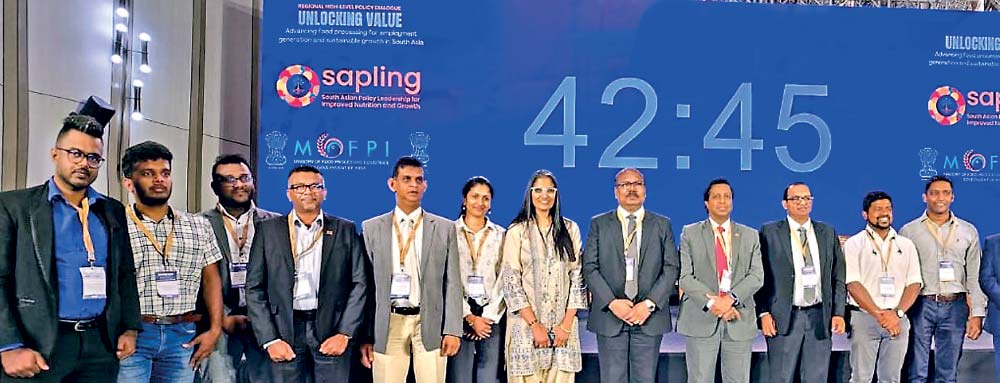
Some of the members of the Sri Lanka delegation at the Regional High-Level Policy Dialogue “SAPLING (South Asian Policy Leadership for Improved Nutrition and Growth) Dialogue 2026” in Gujarat