Wednesday Sep 16, 2026
Wednesday Sep 16, 2026
Friday, 19 June 2026 00:00 - - {{hitsCtrl.values.hits}}
As global markets place increasing emphasis on sustainable and deforestation-free supply chains, Sri Lanka’s rubber sector is taking proactive steps to strengthen its competitiveness. These efforts are being advanced through a European Union-supported capacity-building initiative to meet emerging international requirements.
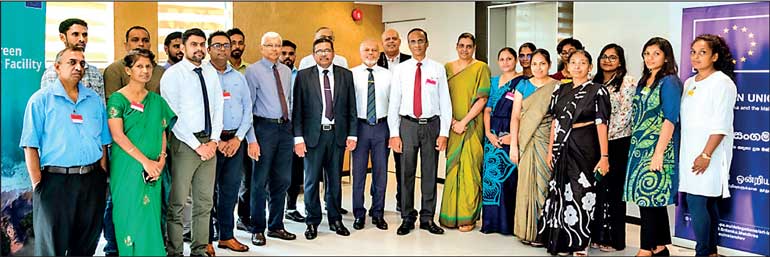
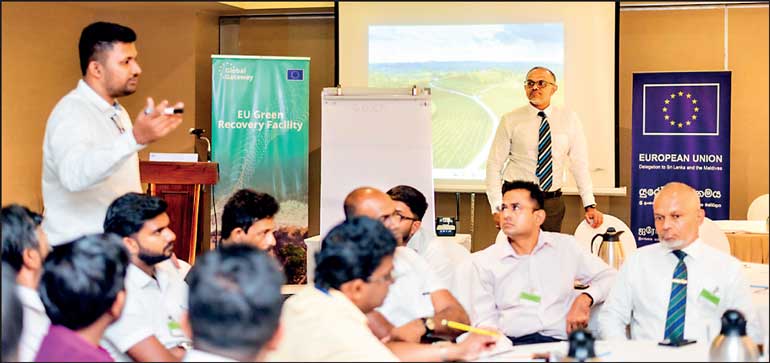
Over 80 stakeholders from across Sri Lanka’s rubber value chain recently gathered in Colombo to help shape the country’s response to the European Union Deforestation Regulation (EUDR), a key sustainability measure that will influence future access to European markets.
Participants at the Stakeholder Consultation Workshop included government institutions, plantation companies, smallholder farmer organisations, processors, exporters, manufacturers, industry associations, and development partners.
Organised by the Rubber Development Department in collaboration with the European Union-funded Green Recovery Facility, implemented by Expertise France under the EU Global Gateway strategy, the workshop formed part of ongoing efforts to enhance Sri Lanka’s readiness for the EUDR and strengthen the long-term sustainability and resilience of the country’s rubber sector.
Designed to foster deforestation-free supply chains and sustainable agricultural production, the EUDR supports global commitments on climate action, biodiversity conservation and forest protection. For Sri Lanka, which has been classified as a ‘low-risk’ country under the Regulation, it presents an opportunity to advance sustainability across the rubber sector, strengthen traceability and due diligence mechanisms, and reinforce its position as a trusted supplier in global markets.
The workshop forms part of a broader initiative under the EU-funded Green Recovery Facility to support the sector’s adaptation to EUDR requirements. Combining assessments, stakeholder consultations and targeted capacity-building activities, the initiative seeks to enhance traceability and due diligence practices across the rubber value chain while helping safeguard continued access to key export destinations.
The initiative underscores the European Union’s commitment to promoting sustainable production systems, environmental stewardship and the long-term competitiveness of Sri Lanka’s export sectors.
Opening the workshop, Plantation and Community Infrastructure Ministry Secretary Gunadasa Samarasinghe emphasised the importance of ensuring that Sri Lanka’s rubber sector remains competitive and well-positioned to respond to evolving sustainability expectations and seize emerging opportunities in international markets.
Discussions explored stakeholders’ current levels of awareness and compliance with the EUDR, the role of government institutions in supporting implementation, international best practices and available traceability tools, and the priority capacity-building needs of actors across the rubber value chain.
The recommendations generated through the workshop will help shape the design of the initiative’s capacity-building program, including the development of a three-and-a-half-day Training of Trainers (ToT) program and stakeholder-specific training activities. The initiative is expected to directly train approximately 280 stakeholders across the rubber value chain, further strengthening the sector’s readiness to meet EUDR requirements. Positioning Sri Lanka’s rubber sector for a more sustainable, competitive and globally compliant future, the initiative will continue to build the capacities needed to meet evolving international market expectations.




