Thursday Oct 15, 2026
Thursday Oct 15, 2026
Monday, 13 July 2026 02:59 - - {{hitsCtrl.values.hits}}
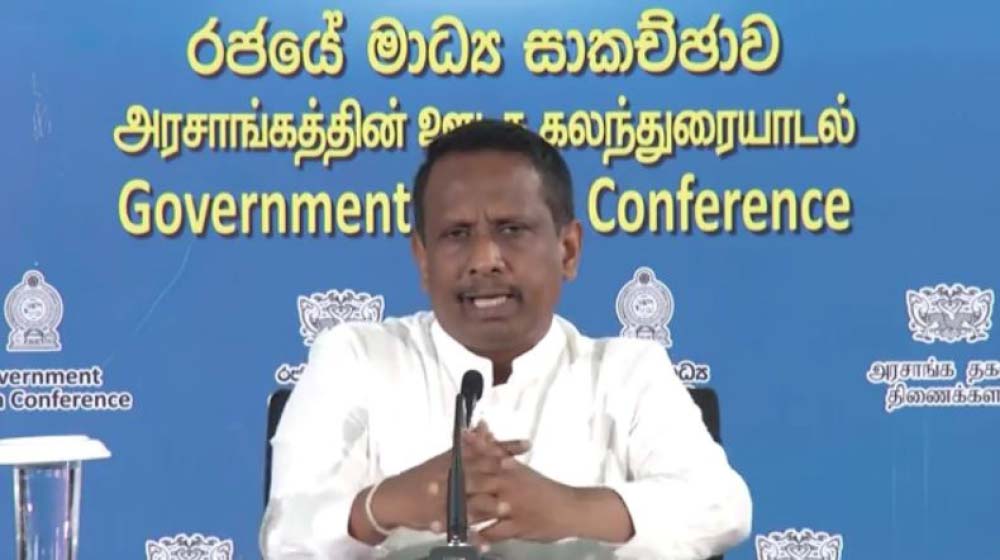
Plantation and Community Infrastructure Minister Samantha Vidyaratne
The Government will launch its flagship ‘Ceylon Tea Village' program this week, aiming to establish 500 cluster tea villages across the country as part of an ambitious strategy to raise annual tea production to 400 million kilograms (Mn/Kgs) and increase export earnings to $ 2.5 billion by 2030.
The inaugural event will be held on 15 July at Halgolla Hapugastalawa in the Kotmale area of the Nuwara Eliya District.
Announcing the initiative at a media briefing last week, Plantation and Community Infrastructure Minister Samantha Vidyaratne said the first phase will commence in 144 tea villages across 11 districts.
The program, spearheaded by the Plantation and Community Infrastructure Ministry, will be implemented with the leadership of the Tea Small Holdings Development Authority (TSHDA), Tea Research Institute (TRI), Sri Lanka Tea Board (SLTB), and National Plantation Management Institute (NPMI).
Vidyaratne said Ceylon Tea has long been one of Sri Lanka’s strongest economic pillars and globally recognised brands, and expressed confidence that the new initiative would significantly strengthen the industry’s contribution to the national economy.
“Through the establishment of 500 tea villages, we expect to substantially increase production, generate an additional $ 1 billion in export earnings, and strengthen both tea growers and the national economy,” he said.
The Minister noted that 95% of Sri Lanka’s tea production is exported, while only 5% is consumed domestically. He also pointed out that smallholder tea growers account for approximately 75% of the country’s total tea production, underscoring their importance to the industry’s future growth.
The initiative aims to improve the incomes of small tea growers through higher productivity, promote value-added tea products, integrate tea cultivation with tourism, introduce modern and sustainable agricultural practices, improve infrastructure in identified tea villages, and establish cooperative societies to strengthen community participation.
Vidyaratne stressed that the selection of the 144 tea villages included in the first phase had been carried out scientifically by officials of the TRI and the TSHDA without any political interference. He said the initiative is expected to deliver broad benefits to smallholders and other stakeholders across the tea value chain while contributing to Sri Lanka’s broader economic and export development objectives by 2030.




